


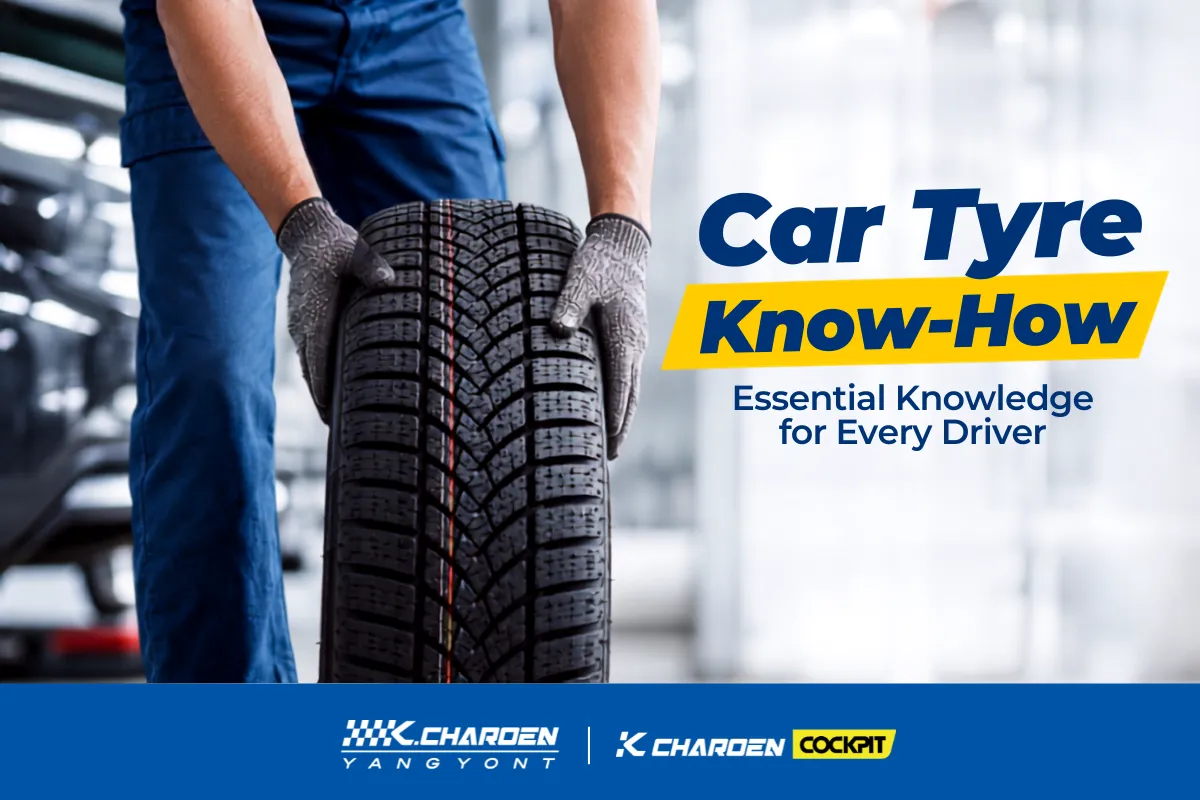
“Changing Car Tyres”: Essential Knowledge for Every Vehicle Owner
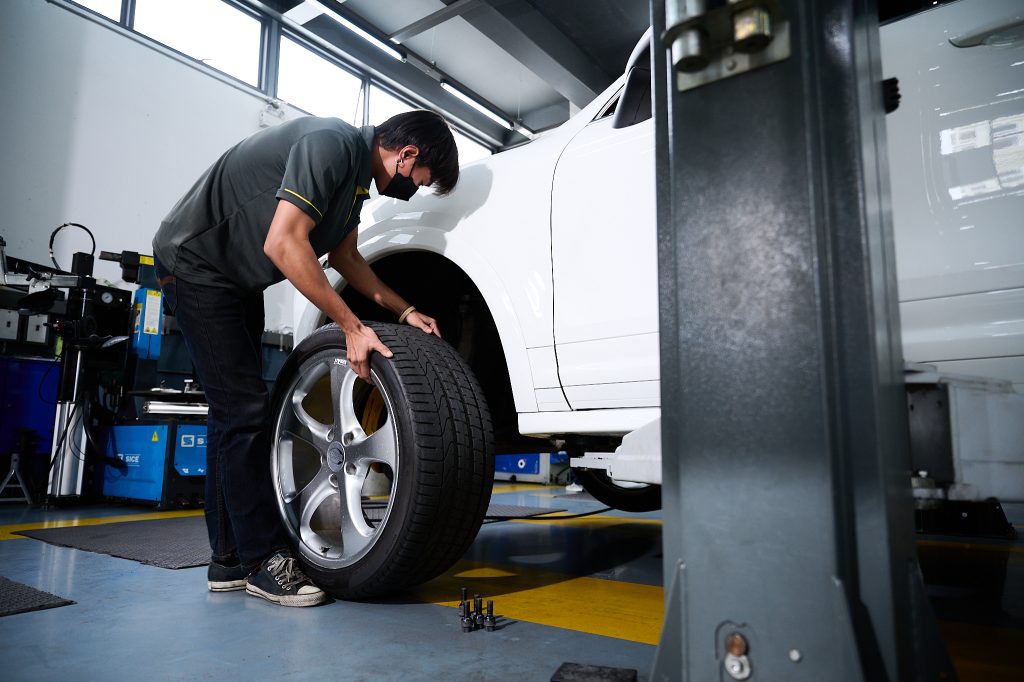
Changing car tyres is a matter that many vehicle owners do not pay as much attention to as they should. However, in reality, car tyres are a vital component that does not only function to propel the vehicle forward but also serves to support the vehicle’s weight and helps reduce impacts from vibrations during driving.
How do you know when it is time to change your car tyres?
Many people may be concerned and wonder how long the lifespan of a car tyre actually is, and how to know exactly when to change them.
Typically, car tyres have a lifespan of 2–5 years or approximately 30,000 – 40,000 kilometers. If either of these milestones is reached first, it can be inferred that it is time for a tyre replacement.
In addition, vehicle owners should check the condition of their tyres at least once a year to see if there is any deterioration or wear.

Thanks to images from Shutterstock.
Basic Methods to Manually Check Your Tyre Condition
Even though car tyres can have a lifespan of 3–5 years, you may sometimes need to replace them before that time if you detect these warning signs:
Insufficient Tread Depth
Checking your tread is simple; you can visually inspect whether the tread shows more wear than usual by looking at the Tread Wear Indicator (TWI), which is the raised bar within the tread grooves.
If the tread depth is lower than 1.6 mm, it is time to replace the tyre to reduce driving risks, especially when driving on wet roads during the rainy season.
Cracks or Cuts on the Sidewall
Driving on rough roads can sometimes cause wounds on the tyre. Look for cracks or signs of tearing on the sidewall by visually inspecting or feeling the surface. Large cracks or cuts can often be seen immediately.
If such marks are found, the tyre should be replaced immediately, as continued use could lead to a tyre blowout.
Tyre Bulges
A tyre bulge is very easy to notice as the tyre will have a visible swelling, lump, or protrusion from its normal shape. These bulges can occur on both the tread and the sidewall. If this abnormality is found, vehicle owners should not continue driving and should replace the tyre immediately, as it can cause the vehicle to lose balance and lead to an accident.
Hardened Rubber
Another way to check the condition yourself is to observe the rubber texture. If the tread surface feels harder than usual, or if you try to press your fingernail into it and it leaves no mark, it may mean the tyre has expired. In this case, you should change to new tyres; otherwise, it may affect your driving, reducing braking efficiency and potentially causing an accident.
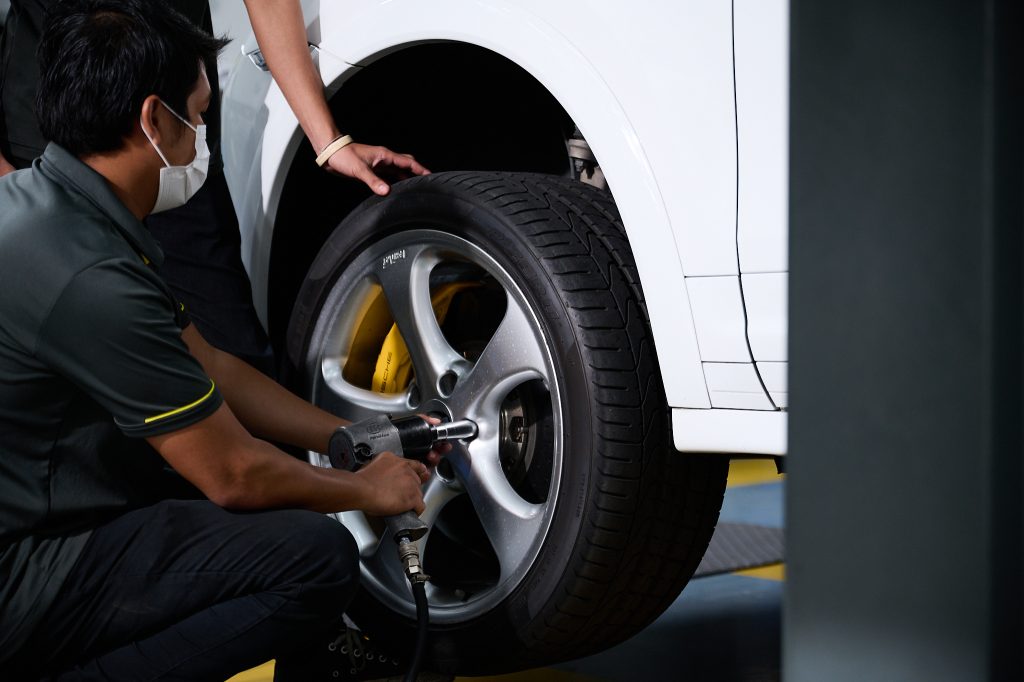
What Causes Tyre Damage?
The lifespan of a tyre depends on various factors. Besides general usage patterns, several other causes contribute to tyre damage or deterioration:
Road Conditions
Driving on potholed roads, gravel, or roads under repair—as well as steep or winding mountain paths—is a major cause of tyre damage. These conditions cause tyres to deteriorate much faster than driving on smooth, even surfaces without obstacles.
Weather Conditions
Extremely hot or cold weather also affects tyre deterioration. In Thailand, for instance, extreme heat or parking in direct sunlight for long periods are factors that make your car tyres more susceptible to damage.
Driving Habits
Many drivers may unknowingly damage their tyres through their driving style, such as aggressive acceleration, high-speed starts, sudden braking, or cornering without slowing down. These habits significantly shorten the service life of the tyres.
Heavy Loads
Car tyres are responsible for supporting the vehicle’s weight. Therefore, carrying excessively heavy loads increases the burden on the tyres directly, leading to faster wear and tear or damage.
Improper Tyre Pressure
Inflating tyres to the incorrect pressure is another cause of premature wear, deterioration, or uneven tread surfaces. Typically, each vehicle model has specific recommended pressure levels for both front and rear tyres. Maintaining the proper tyre pressure not only preserves the condition of the tyres but also improves weight distribution, road grip, acceleration, and braking efficiency.
Summary
Car tyres are a vital component for every type of vehicle. The most important factor users should consider when changing tyres is safety. Therefore, we should carefully inspect the external condition of the tyres to ensure they are ready for use and to prevent accidents.
Additionally, knowing how to choose the right tyres is equally important. You should consider the appropriate size for your vehicle model, your usage patterns (such as prioritizing comfort and quietness or focusing on road grip), and the production year to ensure you get the highest quality tyres. If you check and find that your tyres have problems and you are unable to manage them yourself, looking for a standard mobile tyre service like K. Charoenyangyont and K. Charoen Cockpit is an alternative that saves time and adds convenience. This allows you to be confident in your safety immediately without the risk of driving a vehicle with damaged tyres to the shop.
For further inquiries, please contact:
K. Charoenyangyont Branch
Location: K. Charoenyangyont (Sukhumvit 91 Branch)
Operating Hours: Monday – Saturday, 08:30 – 18:00
Tel: 02 331 9911, 02 331 8882-4
Link: @kc4418
K. Charoen Cockpit Branch
Location: K. Charoen Cockpit (Udomsuk 28 Branch)
Operating Hours: Monday – Saturday, 08:30 – 18:00
Tel: 02 393 3356, 086 318 1401
Line: @kcockpit
SHARE THIS STORY


RELATES TAGS
More Post


Get to Know Car Tyres: The Essential Component That Makes Your Vehicle Perfect
Read More →
"Wheel Alignment and Balancing Near Me": How to Choose the Right Service for Your Vehicle
Read More →


On-Site Tyre Replacement Near Me by Expert Technicians – Fast Service (K Tyre Express)
Read More →