


Pro Guide: How to Choose Car Tyres (Comprehensive, Safe, and Worth the Value)
Choosing the right car tyres is not just about price or brand; it directly involves the safety of you and your loved ones. Tyres are the only point of contact between the vehicle and the road. If you choose incorrectly or use worn-out tyres, even an expensive car with high-quality brakes may not be able to help during an emergency. Whether you are selecting car tyres for city driving that requires quiet comfort, tyres for long-distance driving that require durability, or looking for high-quality budget tyres, today K. Charoenyangyont and K. Charoen Cockpit will take you through what to look for when choosing car tyres that suit your vehicle and usage.
Signs that indicate it is time to change your tyres
Before looking at how to choose the right car tyres, let’s first see when they should be replaced. Driving with worn-out tyres is like risking your life every time you hit the road.
Check the tread and tread depth
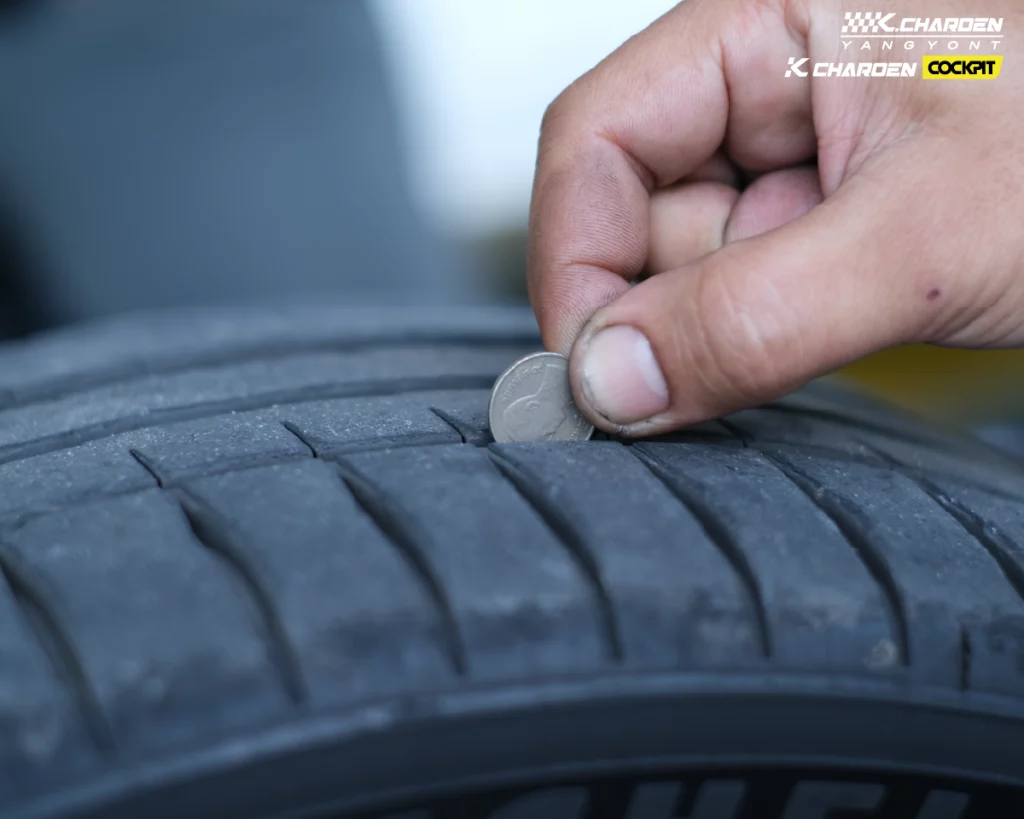
The tread consists of the grooves on the tyre surface that help drain water and increase road grip. As the tread becomes shallower, road grip worsens, especially when it rains, making the car much more prone to slipping. The standard states that you should replace your tyres when the tread depth is less than 1.6 mm. However, for better safety, many suggest replacing them when they reach 3 mm.
A simple method is to insert a 1-baht coin into the tread groove; if you can see the entire boat’s head, the tread is too shallow. Alternatively, look for the TWI (Tread Wear Indicator), which is a small raised bar within the tread grooves. Once the tread wears down to the same level as this bar, it is time for a replacement.
Tyre age and condition
In addition to the tread, age is also very important. Even if the tyres still have plenty of tread left, if they are too old, the rubber will start to harden, crack, and lose its original flexibility. Generally, it is recommended to change tyres every 5-6 years, regardless of mileage, as tyres gradually deteriorate from exposure to air, sunlight, and humidity.
You can check the manufacture date from the DOT code on the tyre sidewall. The last 4 digits indicate the week and year of manufacture; for example, “2419” means it was produced in the 24th week of 2019. Furthermore, you should look for cracks on the tyre surface, bulges, or cuts from sharp objects. If you encounter any of these, do not wait and have a technician inspect them immediately.
Understanding tyre sizes in detail
After knowing when to change your tyres, the next step is choosing the appropriate size. Many people are often confused by the numbers on the sidewall, but it is actually not as difficult as it seems.
What do the numbers and letters on the sidewall mean?
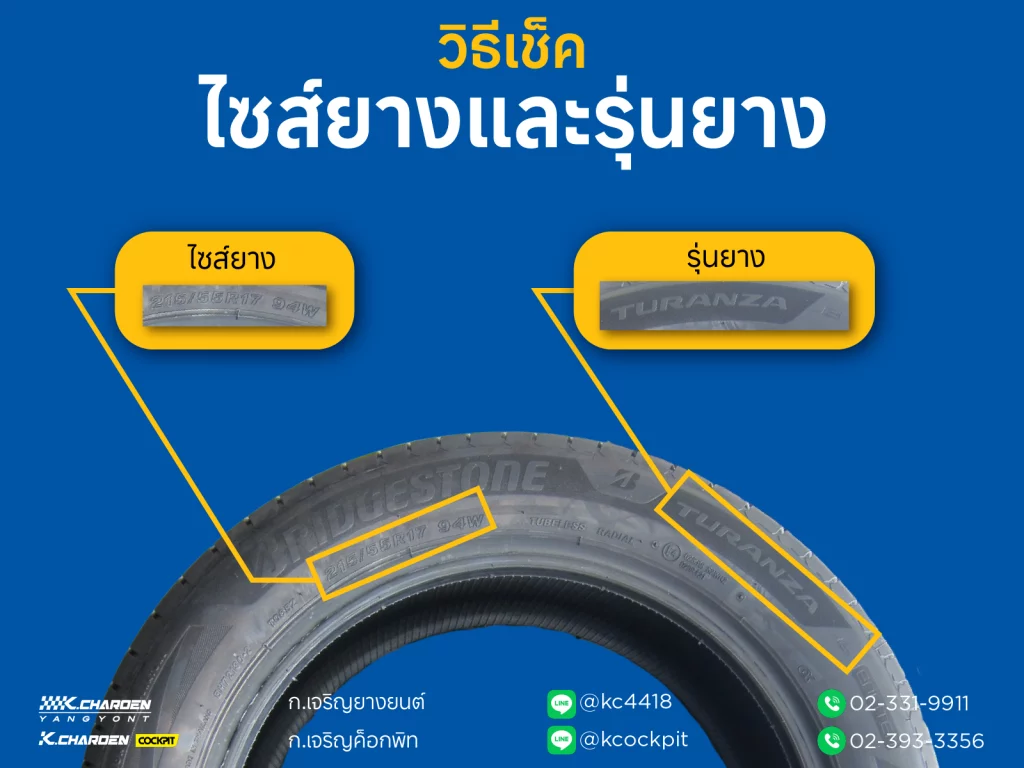
Take a look at the side of the tyre, and you will see a code similar to this: 205/55R16 91V. Each character has the following meaning:
- 205 is the width of the tyre in millimeters.
- 55 is the aspect ratio of the tyre height to its width (as a percentage).
- R stands for Radial, which is the radial tyre structure (almost all modern car tyres use this).
- 16 is the diameter of the wheel rim in inches.
- 91 is the load index, indicating the maximum weight the tyre can carry.
- V is the speed rating, indicating the maximum speed the tyre can support (V = 240 km/h).
Once you understand these codes, choosing tyres becomes much easier.
How to find the “suitable tyre size for your car”
Many people may wonder where to find tyre size information. In fact, there are several very simple methods:
Check the car manual – The most accurate way is to open the owner’s manual that came with the vehicle. It will specify the standard tyre size recommended by the manufacturer, as well as the appropriate tyre pressure.
Look at the tyre placard on the vehicle – Most of these are located on the driver’s side door pillar, the door edge, or the fuel filler cap. The label will indicate the tyre sizes for both the front and rear, along with the recommended air pressure. If you are unsure, you can look at the current tyres, but you must ensure those tyres are indeed the standard size and not something a previous owner changed.
Tyre types and usage
Choosing tyres should primarily begin with the standards specified by the vehicle manufacturer. Engineers have already calculated the appropriate tyre type that matches the weight and suspension of that specific car model. Selecting tyres according to factory specifications is therefore a fundamental key to safe driving. Aspects such as quietness, comfort, or personal preferences can be considered as additional factors in the next step.
Let’s look at the different types of tyres categorized by vehicle characteristics and usage, so you can choose what best suits your needs and correctly fits your car’s specifications.
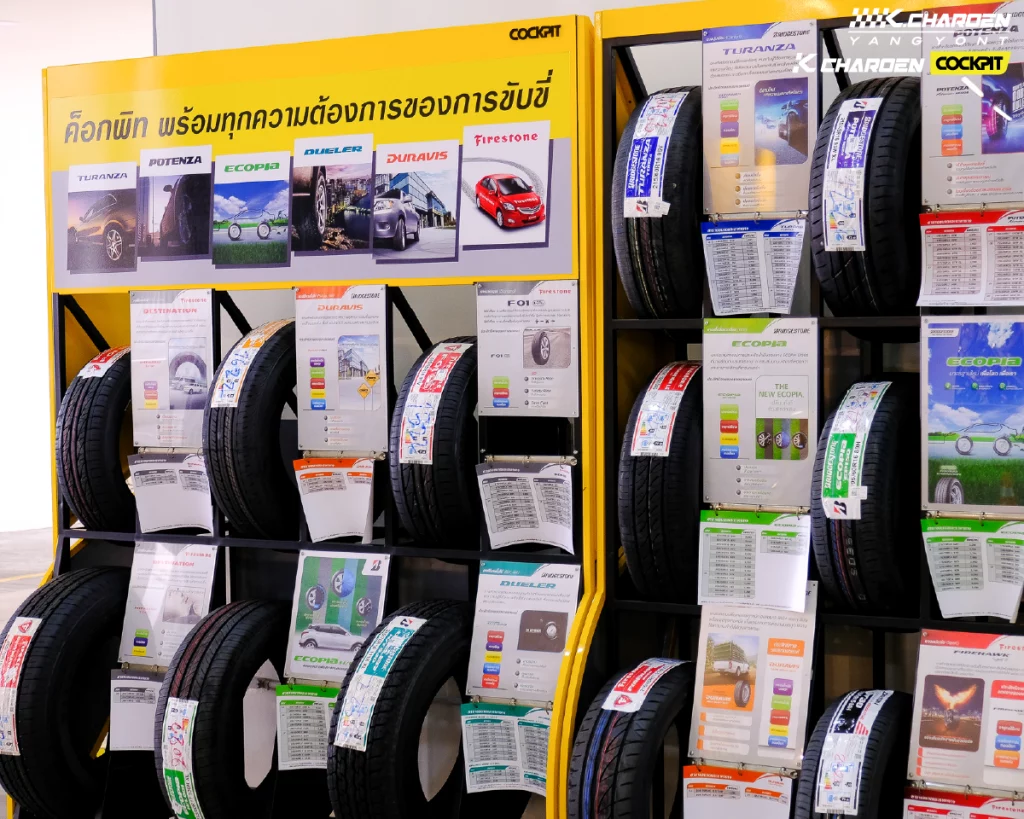
Comfort and Quiet Tyres
These tyres are very popular for city driving or short distances. They are designed specifically for silence and plush comfort.
Suitable for general roads: If you mostly use your car for work, shopping, or school runs, these tyres are the perfect fit. They reduce road noise, making for a comfortable and less fatiguing drive, especially during traffic or long sessions behind the wheel.
Pros/Cons: The pros are they are quiet, soft, comfortable, and generally affordable for daily use. The cons are that the road grip may not be as good as sport tyres, and the lifespan might be slightly shorter if driven aggressively or at high speeds.
Fuel-Efficient Tyres (Eco Tyres)
For those concerned about long-term costs, these tyres are an interesting choice, designed with low rolling resistance.
Reduced friction helps save fuel: Using a special rubber compound and specific tread patterns, these tyres roll more easily, meaning the engine doesn’t have to work as hard. This results in actual fuel savings. For those who drive long distances frequently, a few percent in savings adds up over the long run. However, these tyres may not be as soft or grippy as other types, and the price is often slightly higher than standard tyres.
Sport Tyres / Ultra High Performance (UHP)
If you enjoy power, high speeds, or prioritize vehicle handling, sport tyres are the answer.
For high speeds and superior control: High-performance tyres are designed for excellent road grip, sharp cornering, firm braking, and high-speed stability. They offer precise steering response, making them suitable for serious drivers or track use.
The trade-offs: Sport tyres tend to be stiffer, reducing comfort. They are louder, wear out faster, and are more expensive than general tyres. They aren’t the most cost-effective choice for light city driving.
All-Terrain Tyres (A/T)
For those who drive pickup trucks or SUVs and frequently encounter both paved roads and occasional gravel, dirt, or mud.
Suitable for 4×4 / SUVs: All-Terrain tyres are designed to handle both situations. The tread is thicker and deeper than standard tyres, helping grip the soil and navigate difficult road conditions while remaining reasonably comfortable on normal roads. Ideal for those who enjoy driving to the mountains, beaches, or rural areas. However, these tyres are noisier on asphalt, consume more fuel, and are relatively high in price.
Run Flat Tyres
An innovative tyre that increases safety in emergencies, often found as standard equipment on many models, especially European cars.
Keep driving even with a puncture: The highlight of Run Flat tyres is that even if you hit a nail or suffer a blowout, you can continue driving for approximately 80 kilometers at a speed not exceeding 80 km/h (depending on the specific manufacturer’s specifications). The reinforced sidewalls support the vehicle’s weight even without air pressure, eliminating the need to stop and change a tyre in dangerous roadside locations.
The downsides: They are significantly more expensive than standard tyres, provide a stiffer and less comfortable ride, and are noisier. Once they are damaged, they must usually be replaced rather than repaired. Additionally, not every shop has the specialized equipment required to install this type of tyre.
Factors to consider before making a decision
Choosing car tyres does not end with just picking a type; there are several other factors to consider to ensure you get the most suitable tyres, as everyone’s driving habits are different.
Actual Driving (Driving Style)
Your driving style significantly impacts your choice. Different styles truly require different types of tyres:
- City Driving: If you mostly use your car in the city, often face traffic, and rarely drive at high speeds, comfort and quiet tyres or fuel-efficient tyres are the most suitable. There is no need to spend more on sport tyres whose full potential you won’t utilize.
- Long-Distance Driving: If you frequently drive long distances, you should choose durable tyres with a long lifespan. Fuel-efficient tyres can also significantly reduce long-term costs.
- Driving on Wet Roads: For areas with frequent rain, you must focus on tyres with tread designs that drain water effectively to prevent hydroplaning. Brands like Bridgestone, Michelin, and Yokohama often have models specializing in this.
Road Conditions
The road conditions in your area play a major role. Thailand mainly has two seasons: hot and rainy.
Tyres for High-Rainfall Areas: If you live in the South or areas with frequent rain, choose tyres with deep and wide tread grooves for better water drainage. Brands like Firestone or Toyo Tires have models specifically designed for wet conditions.
All-Season Tyres: Since Thailand does not have snow, general All-Season tyres are sufficient as they handle both dry and wet conditions well without the need for seasonal changes.
Budget and Value for Money
Money is important, but you must look at the big picture. Do not decide based on price alone.
Compare Price and Lifespan: Cheap tyres may seem economical at first, but if they wear out quickly or are unsafe, you may end up spending more on frequent replacements or, worse, an accident. Conversely, leading brands like Michelin or BF Goodrich, though more expensive, have a longer lifespan and better performance, which may result in a lower cost-per-kilometer in the long run.
At K. Charoenyangyont and K. Charoen Cockpit, as a comprehensive tyre retailer and service provider, we offer straightforward recommendations to ensure customers get the best quality tyres that most appropriately fit their budget and usage.
Manufacturer’s Warranty
The warranty is another factor to consider as it reflects the manufacturer’s confidence in the product.
– Warranty Period: High-quality tyres usually come with a clear warranty. Some brands offer a mileage warranty, such as 80,000 or 100,000 kilometers, while others offer a time-based warranty, such as 3–5 years. You should read carefully what is covered.
– Claim Conditions: You must clarify the terms. Some only cover manufacturing defects, while others cover premature wear or require regular tyre rotations to remain valid. Buying from a reliable shop with good after-sales service makes insurance claims much easier.
For leading brands, every tyre comes directly from the company. At K. Charoenyangyont and K. Charoen Cockpit, we provide a road hazard warranty for up to 1 year (depending on the specific brand’s terms) along with a 4–7 year manufacturing quality warranty for maximum driving confidence. You can read more details in our Warranty Terms.
Tips for inspecting tyres before installation
Before making your payment and having the technician install the new tyres, there are a few things you should check to ensure you receive high-quality products and true value for your money.
Check the condition of every tyre
Do not be careless; even with new tyres, you must inspect every single one.
Verify the source and warranty: Check that the tyres are authentic, sent directly from the manufacturing company, and come with a clear quality warranty. This ensures safety standards and allows you to make a claim if manufacturing defects are found.
Check for consistent tread depth: Ensure that all four tyres have equal tread depth and are free from damage or defects caused by transportation or storage.
Avoid installing tyres with significant size differences
Many people may want to save money by purchasing only 1 or 2 tyres, but you must be careful about the size and type.
Safety and stability: Using tyres with significantly different sizes, brands, or models on the same vehicle can cause loss of balance. Some wheels may rotate faster or slower than others, affecting the braking system, suspension, and causing the ABS to malfunction. In an emergency, you might lose control of the vehicle. Even if the tyre size is identical, if one has 80% tread remaining and another has only 30%, it will have a similar negative effect. Therefore, you should change all four tyres at the same time if possible.
Frequently Asked Questions (FAQs) about How to Choose Car Tyres
In addition to the main content we have discussed, we have compiled frequently asked questions from our customers regarding tyre selection to help answer any lingering doubts you may have.
1. Is it necessary to change all 4 tyres at once?
Not always. If your budget allows and all 4 tyres are nearing their expiration at the same time, replacing them all together is the best choice. This ensures consistent performance, optimal handling, and maximum safety. However, if only 1-2 tyres are damaged while the others are still in good condition, you don’t necessarily have to change them all. Just ensure that the new tyres are the same brand, model, and size, or follow the specifications determined by the vehicle manufacturer.
2. Are second-hand tyres any good?
We really do not recommend them. Although they are much cheaper, you don’t know the tyre’s history—whether it has encountered deep mud, nails, or has been previously repaired. Risking your life to save a few thousand baht is not worth it. Furthermore, if they are imported used tyres, they might be older than you realize. Choosing new tyres from a reliable shop is much safer. At K. Charoenyangyont and K. Charoen Cockpit, we have a wide variety of quality brands at fair prices, along with free tyre condition inspections.
3. How often should I check tyre pressure?
It is recommended to check at least once a month or before a long trip. Inflating your tyres correctly according to the manufacturer’s recommended values affects safety, tyre life, and fuel economy. Under-inflated tyres wear out faster, increase fuel consumption, and risk bursting when they get hot. Conversely, over-inflated tyres lead to a harsh ride, potential impact damage, and longer braking distances due to a smaller contact patch with the road.
4. Which tyre is best for a sedan?
There is no single “best” tyre because it depends on your actual usage. However, for general sedans driven in the city, a highly popular brand that offers a good balance between quality and price is the Michelin Primacy series, which stands out for its silence, comfort, fuel efficiency, and long lifespan.
5. Any recommendations for tyres under 4,000 THB?
In this price range, there are several interesting options, especially for small to mid-sized sedans driven in the city. Popular high-quality options include:
– Bridgestone Ecopia EP150 – Focuses on fuel economy and quietness; ideal for city driving.
– Dayton DT30 – Good tread design at a very reasonable price.
– Firestone รุ่น F01 – Reliable quality from the Bridgestone group.
Every tyre brand at K. Charoenyangyont and K. Charoen Cockpit comes with a direct manufacturer’s warranty, ensuring safety even at affordable prices. Please note that prices fluctuate based on tyre size; smaller sizes may fit the budget, while larger sizes will be more expensive. With over 42 years of experience, we can provide straightforward advice on which tyre is the best value for you.
6. What is the difference between Bridgestone and Michelin?
Both are high-quality global brands, but they have different strengths:
Bridgestone
- Known for durability and a long lifespan.
- Prices are generally mid-range and accessible.
- They offer a wide variety of models covering all price points.
- Ideal for those who want reliable, long-lasting tyres.
Michelin
- Known for high-level road grip and safety.
- They are slightly quieter and softer.
- Prices are typically 10-20% higher than Bridgestone.
- Ideal for those who prioritize maximum safety, whether in rain or shine.
Summary: If your budget allows and you want maximum safety, choose Michelin. If you want value and durability, choose Bridgestone. You won’t be disappointed with either brand; it simply depends on your priorities and budget. At K. Charoenyangyont and K. Charoen Cockpit, we have both brands available, and our technicians can recommend which is better for you.
7. Where is a good place to change tyres, and what is the cost?
To choose a good tyre shop, look for these qualities:
Choose a shop that has:
- Experienced and trained technicians.
- Complete equipment, especially modern wheel balancers.
- An authorized dealership or service center status.
- Straightforward advice without over-selling.
- After-sales services such as free tyre rotation and inspections.
Regarding Price:
- Labour for removal, installation, wheel balancing, and nitrogen air is approximately 100-200 THB per tyre.
- Some shops offer free installation or promotions when purchasing a full set of 4.
At K. Charoenyangyont and K. Charoen Cockpit, we offer a comprehensive range of all major tyre brands at accessible prices, including Bridgestone, Michelin, Pirelli, Continental, Yokohama, Dunlop, Firestone, BF Goodrich, Goodyear, Hankook, Maxxis, Toyo, and Kumho.
Our services include free tyre condition inspections, professional installation, and wheel balancing. We also provide dedicated after-sales support, such as free tyre rotations every 10,000 kilometers and free nitrogen air refills. Furthermore, we offer road hazard warranties alongside direct manufacturer quality warranties.
For your convenience, we also provide an on-site tyre replacement service equipped with professional tools. Whether near or far, we are ready to serve you with over 42 years of experience. You can consult with us or inquire about prices through your preferred contact channel.
Summary: How to Choose Car Tyres
Choosing the right car tyres requires knowing when to replace them, understanding tyre sizes and types, and considering your actual usage and budget. Tyres are the only link between your vehicle and the road; investing in the appropriate tyres is an investment in your safety. At K. Charoenyangyont and K. Charoen Cockpit, we carry all leading brands and provide free inspections, free tyre rotations every 10,000 km, and on-site services. Don’t wait for a blowout to take interest—start caring for your tyres today, because a safe journey begins with choosing the right tyres.
What do our customers think?
“Fast service, friendly staff, and a clean, comfortable waiting area. The prices are fair!”
— Chutikorn P.
“Highly recommended. I bring all my cars here for tyre changes. I’ve been a customer for 10 years now—no doubts at all! 👍🏻”
— Napat P. | Regular customer for over 10 years
About the Author
This article was prepared by a team of expert technicians from K. Charoenyangyont, founded in 1983 out of a passion and love for automobiles. We began as a small tyre shop committed to serving with heart. Today, after more than 42 years, we have expanded into two branches: K. Charoenyangyont and K. Charoen Cockpit. Along with our increased experience, expertise, and team size, what has never changed is our dedication to providing attentive service to every customer just as we did on the very first day we started. Whether it is a tyre change service at our shop or an on-site tyre replacement service, we are always ready to serve you with expertise and sincerity.
K. Charoenyangyont Branch
Location: K. Charoenyangyont (Sukhumvit 91 Branch)
Service Hours: Monday – Saturday, 08:30 – 18:00
Tel: 02 331 9911, 02 331 8882-4
Line: @kc4418
K. Charoen Cockpit Branch
Location: K. Charoen Cockpit (Udomsuk 28 Branch)
Service Hours: Monday – Saturday, 08:30 – 18:00
Tel: 02 393 3356, 086 318 1401
Line: @kcockpit
SHARE THIS STORY


RELATES TAGS
More Post


Get to Know Car Tyres: The Essential Component That Makes Your Vehicle Perfect
Read More →
"Wheel Alignment and Balancing Near Me": How to Choose the Right Service for Your Vehicle
Read More →
On-Site Tyre Replacement Near Me by Expert Technicians – Fast Service (K Tyre Express)
Read More →