


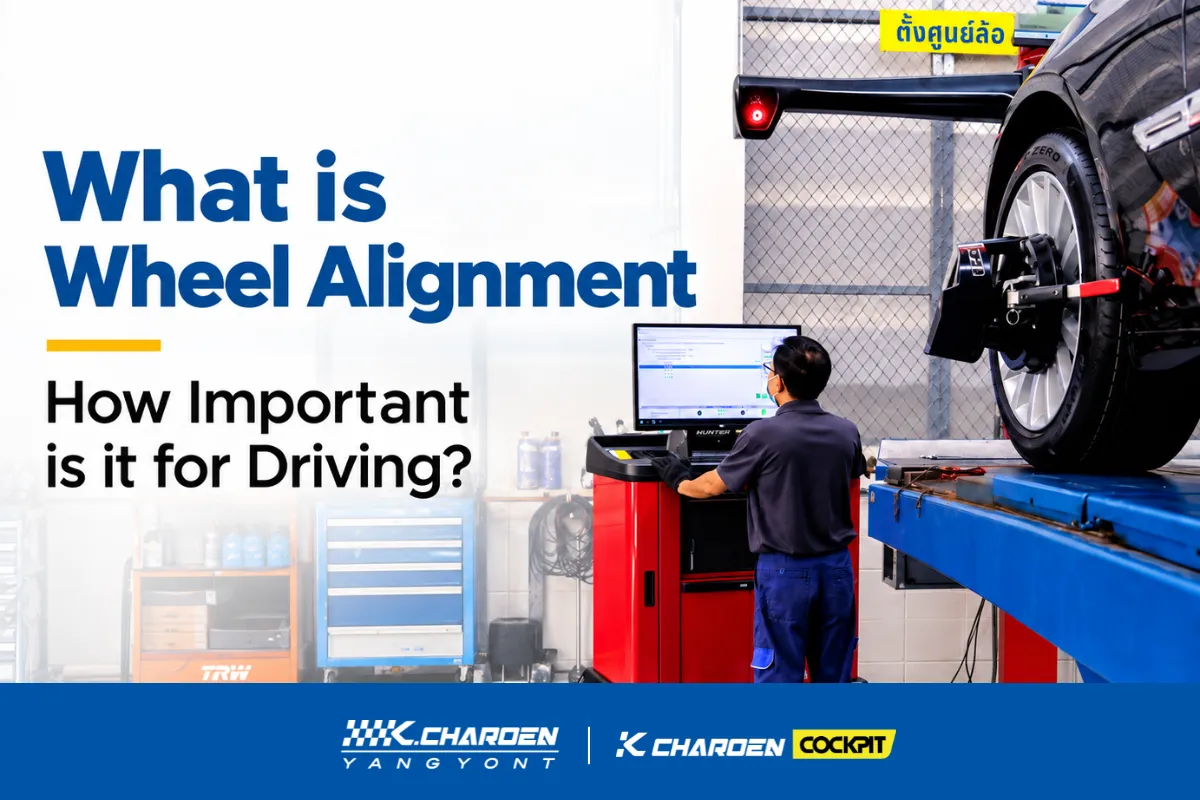
What is Wheel Alignment and How Important is it for Driving?
Although many car owners are familiar with “wheel alignment,” as it is standard practice to rotate tyres every 10,000 kilometers followed by an alignment check, we believe many people still wonder why this process is necessary. Today, K. Charoenyangyont and K. Charoen Cockpit will help you understand what wheel alignment is, when it needs to be done, and how it benefits your vehicle.
What is Wheel Alignment?
Typically, our vehicles are equipped with suspension and steering systems, each consisting of numerous components that can wear out through usage. For instance, the age of the vehicle can cause coil springs, bushings, or various rubber mounts to deteriorate, which can cause the wheel alignment to deviate from the vehicle’s original specifications.
Wheel alignment is, therefore, the process of adjusting these components to work together correctly. When both the front and rear wheel alignments are balanced, the car will drive straight and normally without pulling to the left or the right. Proper alignment is crucial because if the wheels are misaligned or improperly adjusted, it can lead to uneven tyre wear or premature deterioration, and most importantly, increase the risk of accidents.
How is Wheel Alignment Performed and What are its Principles?
Wheel alignment is the process of adjusting the various angles of the wheels to be as close as possible to the manufacturer’s specifications. When a technician inspects the alignment, they primarily consider these 3 angles:
1. Camber Angle
The Camber angle is the inward or outward tilt of the car tyre. Its main function is to support or counteract the vehicle’s lean while cornering. This is a key indicator of whether there is an alignment issue. You can perform a basic visual check of the Camber angle by looking directly at the front of the vehicle. If the wheels tilt excessively inward or outward, the Camber angle may be abnormal.
- If the bottom of the wheel (touching the ground) is narrower than the top, it is called Positive Camber.
- If the bottom of the wheel tilts outward and is wider than the top, it is called Negative Camber.
2. Toe-in and Toe-out
Toe-in: This angle is viewed from above. If the front edges of the tyres tilt toward each other in the direction of the vehicle’s front—where the distance between the front of the tyres is less than the distance between the back—the Toe-in has a positive value. Conversely, if the front distance is greater than the rear, it has a negative value. The correct Toe value should be zero, meaning the wheels are perfectly parallel.
Toe-out: This refers to the difference in the turning radii. Imagine when the car turns: both front wheels must rotate in sync. The Toe-out angle helps balance the center of the turn, ensuring smooth steering and preventing tyre wear.
3. Caster Angle
The Caster angle is the positioning of the steering axis when viewed from the side of the vehicle.
- When the steering axis tilts toward the rear of the car, the Caster angle has a negative value, which may cause the vehicle to skid or drift immediately when the steering wheel is released.
- On the other hand, when the steering axis tilts toward the front, the Caster angle has a positive value, which contributes to the stability of the wheels.
What signs indicate that your car needs a wheel alignment?
There are several signals indicating that your vehicle requires a new wheel alignment. Let’s take a look at these warning signs:
- Uneven tyre wear: The tread wears down inconsistently across the tyre surface.
- Vehicle pulling: The car pulls to the left or right more than usual.
- Off-center steering wheel: You are driving straight, but the steering wheel is tilted or not centered.
- Unstable handling: The car feels “darty” or wanders across the road, making it difficult to control.
When you notice these signs, you should immediately have your wheel alignment checked by an expert technician or a standard tyre service center. Before performing an alignment, a detailed inspection of the suspension system is necessary, as other damaged components can also cause abnormal wheel angles.
If you have any questions regarding tyre maintenance, you can inquire with K. Charoenyangyont and K. Charoen Cockpit through all available channels.
K. Charoenyangyont (Sukhumvit 91 Branch) : 02-331-9911
Line: @kc4418
K. Charoen Cockpit (Udomsuk 28 Branch): 02-393-3356
Line: @kcockpit
SHARE THIS STORY


RELATES TAGS
More Post


Get to Know Car Tyres: The Essential Component That Makes Your Vehicle Perfect
Read More →
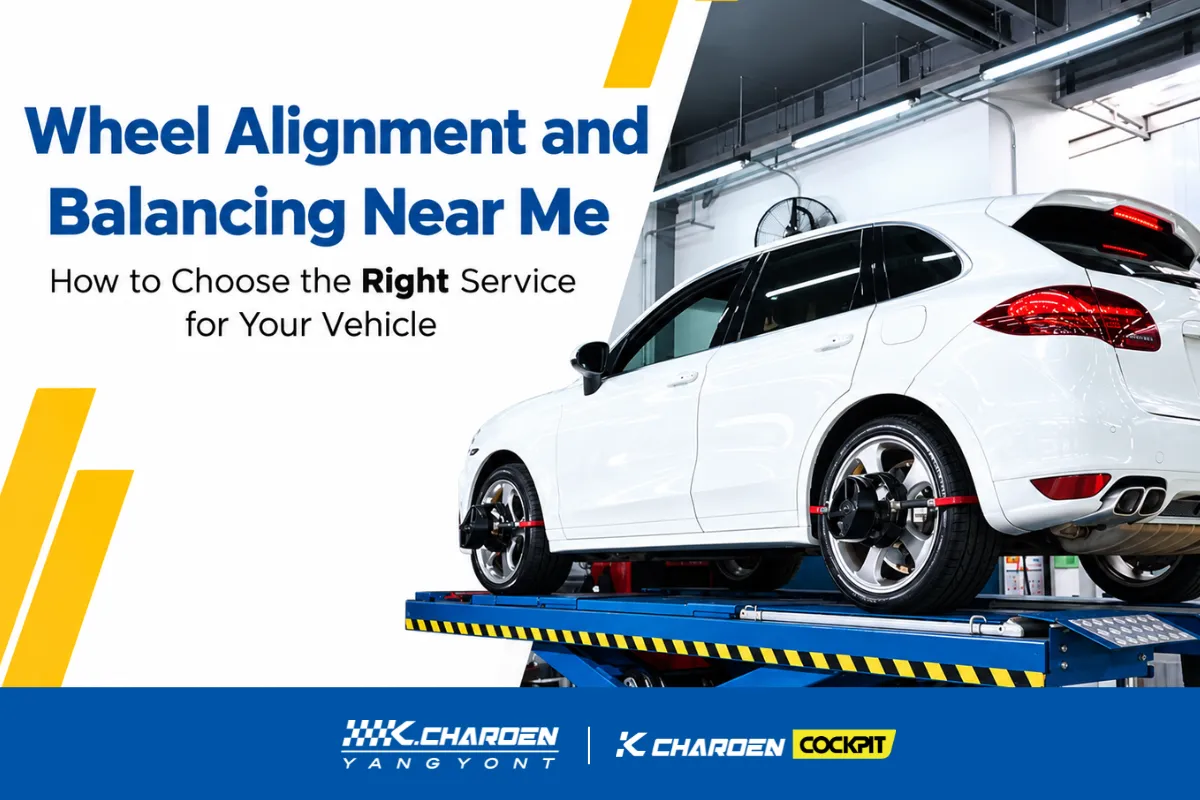
"Wheel Alignment and Balancing Near Me": How to Choose the Right Service for Your Vehicle
Read More →
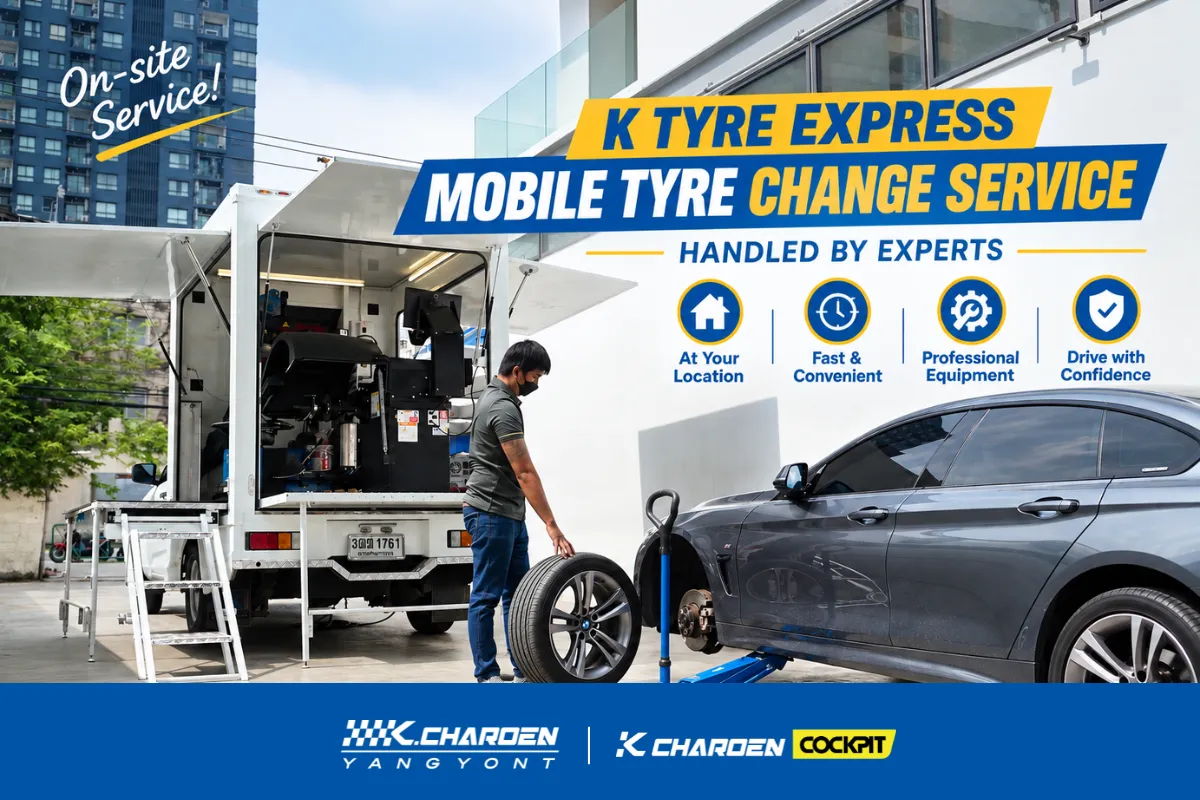
On-Site Tyre Replacement Near Me by Expert Technicians – Fast Service (K Tyre Express)
Read More →