



Can You Drive on a Torn Sidewall? An In-Depth Look at Tyre Sidewall Damage and the Correct Solutions
“Can you drive on a torn sidewall?” is one of the most common questions that many drivers search for when they discover damage on the side of their tyres. This is especially true in cases where the vehicle can still be driven normally, causing many people to hesitate between continuing their journey or changing the tyre immediately.
Therefore, this article will help you understand every crucial aspect regarding tyre sidewalls. This covers everything from the structure and function of the sidewall, distinguishing between “dangerous” and “non-dangerous” tears, and the primary causes of damage, to guidelines for maintaining and protecting your tyre sidewalls for long-term and safe usage. Consequently, this information will allow you to make the right decision and minimize the risk of future accidents.
Getting to Know the “Tyre Sidewall”: The Most Vulnerable Part of Your Tyre
The “tyre sidewall” is the lateral area located between the tyre tread and the wheel rim. Although it does not make direct contact with the road surface like the tread does, it plays a highly crucial role in supporting the vehicle’s weight, absorbing road shocks, and ensuring a smooth and comfortable ride.
The structure of the sidewall is specifically engineered to be highly flexible in order to handle torque, downward pressure, and impacts from various road conditions—such as rough roads, potholes, or driving up and down curbs. However, because it requires more flexibility than other parts, the sidewall is thinner and less rigid than the tyre tread. Consequently, this makes it the most vulnerable spot for damage to occur.
Additionally, the interior of the sidewall contains vital structural components, such as fabric plies or reinforcing cords, which help maintain the tyre’s shape and contain the internal air pressure. If this internal structure becomes damaged—whether from an impact or a tear—it can cause the tyre to deform, bulge, or significantly increase the risk of a sudden blowout while driving.
Distinguishing Between “Dangerous” and “Non-Dangerous” Tyre Sidewall Tears
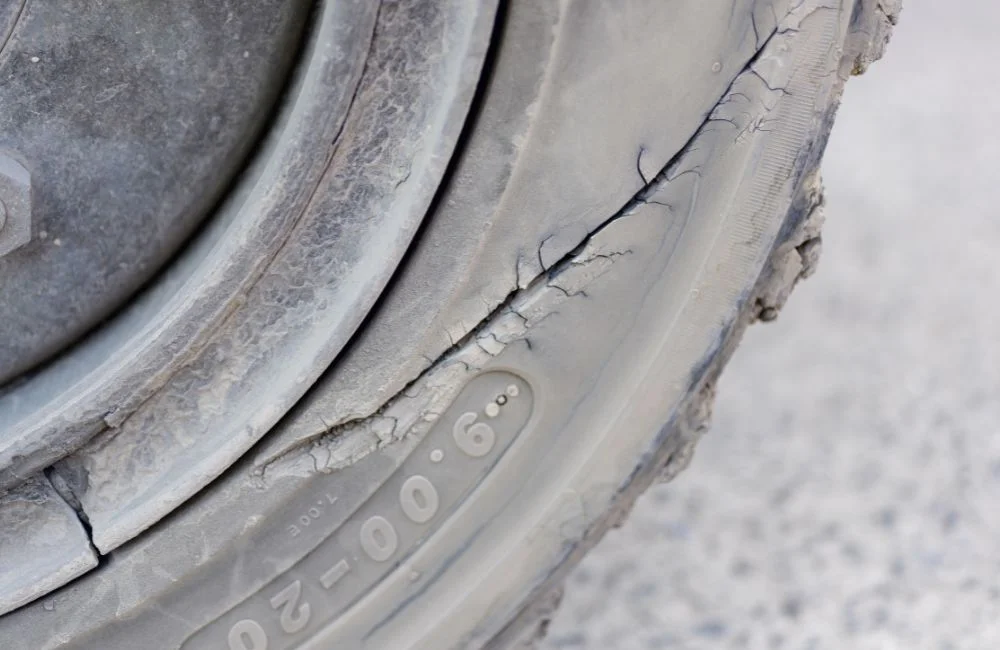
Shallow Scrapes on the Outer Rubber Surface
A shallow scrape or scuff on the tyre sidewall is the most common type of damage. It typically results from rubbing against curbs, scraping rough surfaces, or friction with hard objects during daily driving. Because this type of damage is merely a “surface scratch” on the outer layer of the rubber, it does not penetrate deep into the internal structure. In this case, it is not considered dangerous, and you can continue using the tyre, provided you have verified that:
- There are no deep tears.
- No internal steel wires or fabric plies are visible.
- The tyre is not bulging or deformed.
- There are no air leaks or abnormal drops in tyre pressure.
Deep Tears That Expose Internal Steel Wires or Fabric Plies
A deep sidewall tear that allows you to see the “internal structure”—such as steel wires or fabric layers—is considered “extremely dangerous” and must never be driven on under any circumstances.
This type of tearing is usually caused by severe impacts, such as hitting a curb at high speed, falling into a deep pothole, or being cut by a sharp object that pierces through the outer rubber layer. Consequently, the structure responsible for containing air pressure and supporting the tyre’s shape is directly destroyed. Even if the tyre appears usable or does not go flat immediately, it carries the following subsequent risks:
- The tyre bulging and deforming due to internal air pressure.
- A weakened tyre structure with reduced load-bearing capacity.
- A high risk of a sudden “tyre blowout” without warning, especially when driving at high speeds.
Most importantly, damage of this nature “cannot be repaired safely.” Because the damage affects the core structure of the tyre, external patching or repairs cannot restore its original strength.
Therefore, if you find a deep tear that exposes the internal wires or fabric plies, the correct recommendation is to replace it with a new tyre or look for an emergency mobile tyre replacement service (K TYRE EXPRESS) immediately.
Common Causes of Unnoticed Tyre Sidewall Damage
Most of the time, a torn sidewall is caused by “accumulated minor habits” that gradually weaken the tyre structure without the driver noticing. Among the most common causes are scraping against curbs, falling into potholes or experiencing harsh impacts, improper tyre pressure inflation, and vehicle overloading.
Can a Torn Sidewall Be Repaired? Or Must It Be Replaced Immediately?
Upon discovering a torn tyre sidewall, many people immediately wonder if it can be repaired to save on expenses. The answer to this question primarily depends on assessing the “level of damage” to the sidewall. However, in most cases, it usually ends with “replacing the tyre” rather than repairing it.
This is because if there is a deep tear, or if there are signs that the damage has penetrated into the internal fabric layers or steel wires—no matter how minor or severe—the safest recommendation is to replace it with a new tyre. Ultimately, this is a critical matter of road driving safety.
Preventive Methods to Keep Your Tyre Sidewall Strong and Durable
Although the sidewall is the most vulnerable part of a tyre, you can significantly extend its lifespan and minimize the risk of tearing if you maintain and use it correctly. This practice simply begins with your daily driving habits:
- Avoid Scraping Against Curbs: Be especially careful when parking or cornering in tight and narrow spaces.
- Watch Out for Harsh Impacts: You should reduce your speed every time you encounter uneven or rough road conditions.
- Maintain Appropriate Tyre Pressure: It is highly recommended to inspect your tyre pressure at least once a month.
- Avoid Overloading and Frequent Curb Mounting: Refrain from carrying excess weight and driving up and down curbs repeatedly.
- Inspect Tyre Condition Regularly: Routinely observe your tyres for scrapes, bulges, or tears. If you detect any abnormalities, they should be resolved immediately.
Conclusion
The “tyre sidewall” might be a minor component that many people overlook, yet it has a massive impact on driving safety. Understanding the characteristics of sidewall damage—whether it is a minor surface scrape or a deep tear—as well as knowing which condition allows for continued use and which requires immediate replacement, will help you make the right decision and significantly reduce unnecessary risks.
Contact Us
K. Charoen Yangyont Branch
Address: K. Charoen Yangyont (Sukhumvit 91 Branch)
Opening Hours: Monday – Saturday, 8:30 AM – 6:00 PM
Phone: 02 331 9911, 02 331 8882-4
Line: @kc4418
K. Charoen Cockpit Branch
Address: K. Charoen Cockpit (Udomsuk 28 Branch)
Opening Hours: Monday – Saturday, 8:30 AM – 6:00 PM
Phone: 02 393 3356, 086 318 1401
Line: @kcockpit
SHARE THIS STORY


RELATES TAGS
More Post




Get to Know Car Tyres: The Essential Component That Makes Your Vehicle Perfect
Read More →
"Wheel Alignment and Balancing Near Me": How to Choose the Right Service for Your Vehicle
Read More →


On-Site Tyre Replacement Near Me by Expert Technicians – Fast Service (K Tyre Express)
Read More →