


What is a Tyre Sidewall? Where is it, and How Critical is it for Safety?
Many people view car tyres as just “four round objects” that move the vehicle forward. In reality, the tyres are the only parts touching the road. They carry the heavy responsibility of both traction and stability. Drivers frequently overlook the tyre sidewall, despite its direct connection to safety. Today, K. Charoenyangyont and K. Charoen Cockpit will take you to understand what a tyre sidewall is, where it is located, and its functions. We will explain why technicians take even small sidewall marks seriously. We also show you how to make the safest decision when a tear occurs.
What is a Tyre Sidewall and Where is it Located?
The Tyre Sidewall is the side section of a car tyre located between the tread and the wheel rim. The sidewall doesn’t touch the road, yet it must constantly bear forces while in motion. These forces include the vehicle’s weight, impacts, and cornering torque.
The area displaying the tyre’s size, model, and symbols is the sidewall. Technicians view this area as a critical structural component. It supports the entire tyre to ensure safe driving.
The Function of a Tyre Sidewall: More Important Than You Think
Even though it does not touch the road directly, the tyre sidewall works extremely hard during every drive. The primary functions of the sidewall include:
- Supporting the weight of the vehicle, passengers, and cargo.
- Absorbing impacts from the road, potholes, and joints.
- Controlling the expansion and contraction of the tyre during cornering or braking.
- Maintaining the shape of the tyre tread to ensure proper contact with the road.
Based on our experience, the car feels ‘mushy’ or unstable once the sidewall weakens. You will lose confidence during cornering, even if the tread looks good. This increases the risk of sudden, severe damage at highway speeds.
What Do the Numbers and Symbols on a Tyre Sidewall Tell Us?
Beyond the brand name, the sidewall displays critical data like load capacity, speed rating, and safety. Knowing how to read these symbols reduces the risk of choosing the wrong tyre. This knowledge ensures your tyres perform at their full design efficiency.
Technical work shows that unsuitable tyre specifications often cause sidewall bulging and tearing. These issues usually arise from incorrect specs rather than heavy usage alone.
What is the Tyre Series (Sidewall Height)?
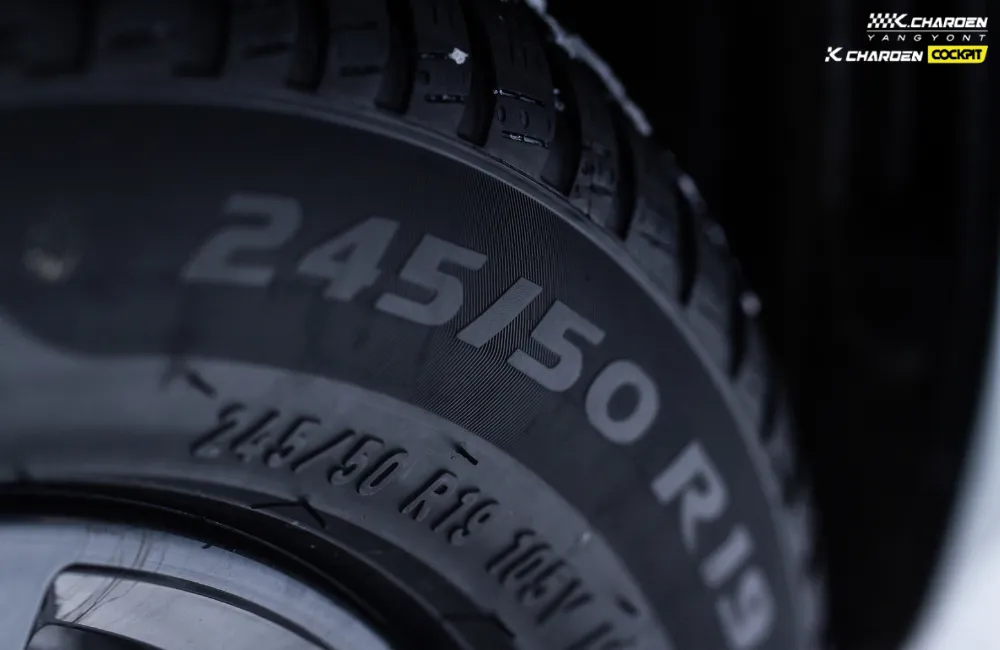
The tyre series represents the sidewall height as a percentage of the tread width. A 205/55 tyre size means the sidewall height equals 55% of the width. In this case, it is 55% of 205 mm.
This number directly affects how the tyre sidewall performs.
- High Series → High sidewall, good flexibility, and excellent shock absorption. Provides a soft, comfortable ride, but the steering response may be slightly slower.
- Low Series → Low sidewall, stiffer, and provides precise vehicle control. However, it absorbs less impact and carries a higher risk of damage.
At K. Charoenyangyont and K. Charoen Cockpit, we often find that tyres with lower sidewalls than specified fail faster. Even with the same driving habits, these tyres face much higher risks of cuts or tears.
How Do Load Index and Speed Rating Relate to the Sidewall?
- Load Index: This value indicates the maximum weight a single tyre can carry. This number is directly related to the structural strength of the tyre sidewall. A low Load Index forces the tyre sidewall to bear weight beyond its capacity. This causes ‘mushiness’ or bulging.
- Speed Rating: This indicates the maximum speed the tyre can safely maintain during operation. High-speed tyres feature stronger sidewalls and better heat resistance. These structures handle increased centrifugal forces and high temperatures during use.
Technical cases show that a low Speed Rating causes sidewalls to overheat. This happens even at low speeds and leads to faster degradation. This eventually shortens the tyre’s service life unnecessarily.
DOT (Week and Year of Manufacture) – Telling the True Age of a Tyre, Not Just a Number
The DOT code on the tyre sidewall ends with a 4-digit number, indicating the tyre’s production date. The first two digits show the manufacture week. The last two show the year. For example, DOT 1223 identifies a tyre from the 12th week of 2023.
We have found that many people choose tyres based primarily on the tread but overlook the tyre’s age. Long-term storage can harden tyre sidewalls, regardless of how the tread looks. Check your DOT code and sidewall condition regularly. These steps are essential if you frequently drive or park in direct sunlight.
TWI (Tread Wear Indicator) – How Does It Relate to the Sidewall?
The Tread Wear Indicator (TWI) consists of small rubber bars located within the tyre tread grooves. Its function is to signal whether the tyre has worn down excessively. Tread worn flush with these indicator bars signifies a major problem. It means the tyre has lost its essential traction capabilities.
As the tread becomes thinner, the tyre’s ability to absorb impacts decreases. Consequently, road forces impact the tyre structure and sidewall more heavily. This forces the sidewall to work harder and deteriorate faster. It also increases the risk of bulging, cracking, or tearing.
High Sidewall vs. Low Sidewall: Which One Should You Choose?
In reality, we cannot simply change tyre sizes according to personal preference. Choosing a sidewall height must primarily adhere to the “vehicle’s standard specifications.” Engineers design each car model to support a specific tread width and sidewall height. Follow the manufacturer’s sidewall specifications to ensure safety. This prevents speedometer errors and protects your suspension system from damage.
Who is a High Sidewall Suitable For?
A high sidewall is suitable for daily-use vehicles, driving on uneven roads, or for those who prioritize soft comfort. Its main strengths include reducing vibrations and protecting the wheels. It offers better impact resistance, especially on poor roads or during city driving.
What Are the Pros and Cons of a Low Sidewall?
A low sidewall provides precise handling, fast steering response, and confidence during cornering. However, this leads to a stiffer ride and increased road noise. You also face a higher risk of sidewall damage when hitting potholes or curbs. Technicians most frequently find sidewall cuts or tears on low-profile tyres during actual work.
What Causes a Tyre Sidewall Tear, and How Dangerous Is It?
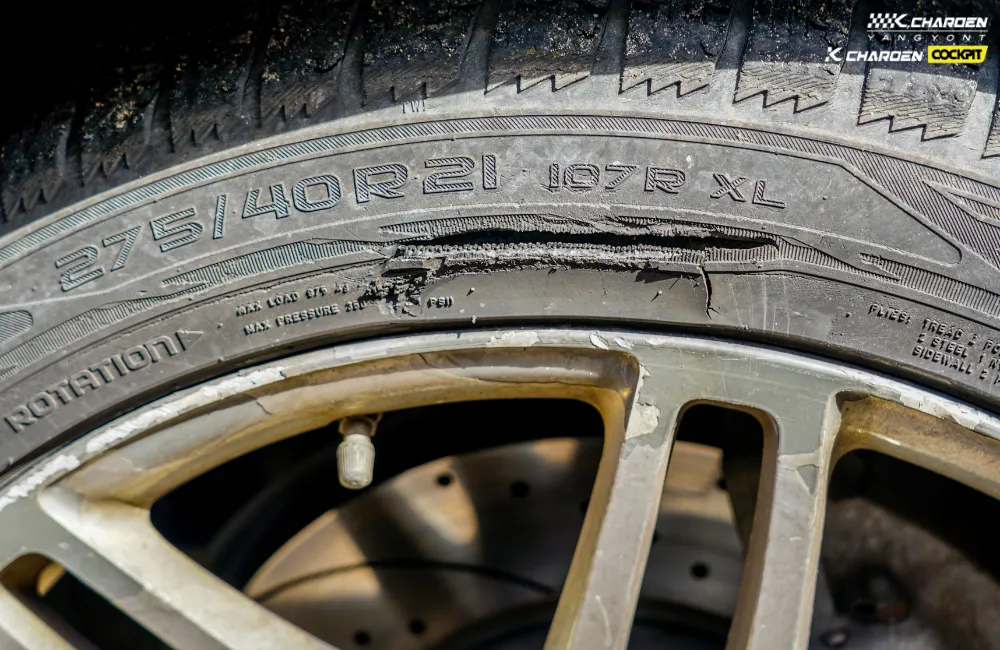
Never ignore a tyre sidewall tear. It poses a much greater danger than a tread puncture. The sidewall is the tyre’s core structural component. Any damage to this area significantly increases the risk of a sudden blowout.
Based on our experience, hitting curbs, driving over potholes at speed, or using under-inflated tyres often causes sidewall tears. These actions force the sidewall to flex beyond its capacity. The danger is that damage may not appear immediately. Instead, it accumulates until the tyre bursts unexpectedly. This often happens during long drives or at constant high speeds. From a technician’s perspective, even a minor sidewall tear makes the tyre unsafe for continued use.
Warning Signs That Your Tyre Sidewall Is Starting to Have Problems
A deteriorating tyre sidewall usually doesn’t fail instantly but will gradually show warning signs first. If car users notice and address these early-stage symptoms, it can significantly reduce the risk of tyre blowouts or accidents. You can observe the following symptoms that may indicate your sidewall is in trouble:
- Identifying Sidewall Bulging and Deformities
Internal sidewall tears or separations cause this symptom. They allow air pressure to push out and create a lump. While the tyre might not burst immediately, this creates a high-risk condition. The tyre could blow out at any time, especially during high speeds or on rough roads. - Cracks, Fissures, or Tears on the Side
Age, sun exposure, and curb scrapes often cause these marks. Monitor shallow cracks closely for changes. However, you must replace the tyre immediately if cracks are deep or fibers show. - Abnormal Mushiness, Even with Correct Air Pressure
Tyres may look flat or feel ‘mushy’ even with correct air pressure. This often means the sidewall has softened and can no longer support the vehicle’s weight. This is a sign of deterioration that is invisible from the outside. - The Car Becomes Unstable, Despite Normal Alignment and Balancing
The car may sway or give a ‘sinking’ sensation during cornering. This happens even when the suspension system is normal. It often means the sidewall can no longer control tyre expansion and contraction effectively.
Our technicians often find that vehicles with blowouts showed warning signs beforehand. These symptoms usually appear long before the tyre fails mid-journey. Drivers often overlook these signs because they think the issues are minor or don’t yet impact daily driving. Regularly checking your tyre sidewalls is the simplest way to reduce danger. This habit is far more important than many people realize.
Should You Repair or Replace a Damaged Sidewall?
Based on professional technical experience, avoid the risk of repairing a damaged tyre sidewall for continued use. Because the sidewall serves as the tyre’s core structural component, replacement offers the safest option. While technicians can sometimes repair tread damage in safe zones, the sidewall requires a different approach.
If it is only a shallow surface abrasion that does not reach the internal structure, it may still be usable under a technician’s supervision. However, if you find a tear, bulge, or see the internal structural fibers, we recommend replacing the tyre immediately. This is because no repair method can truly guarantee the structural integrity and strength of a tyre sidewall.
How to Maintain Your Tyre Sidewalls for Long-Lasting Use
Even though the sidewall does not directly touch the road, it constantly bears impacts and torque. Proper maintenance significantly reduces the risk of premature sidewall damage and extends the service life of the entire tyre. Glancing blows or direct impacts can easily damage the sidewall, especially when you turn or park close to a curb.
- Maintain Consistent Air Pressure According to Vehicle Specs
Under-inflated tyres cause the sidewall to flex excessively and bear more stress. In contrast, over-inflated tyres absorb impacts too rigidly. You should always follow the air pressure recommended by the vehicle manufacturer. - Avoid Scraping Curbs or Mounting Shoulders Forcibly
Glancing blows or direct impacts easily damage the sidewall. This risk increases when you turn or park close to a curb. In many cases, this damage occurs without the driver realizing it. - Slow Down for Potholes or Rough Roads
Hitting obstacles at high speeds sends direct force into the tyre’s internal structure. This often leads to future bulging or tearing, even if the exterior looks fine at first. - Regularly Inspect Sidewalls Visually
If you find bulges, cracks, fissures, or any deformity, have a technician check them immediately. Do not wait for a problem to occur while driving, as sidewall failure often happens suddenly. - Ensure Proper Wheel Alignment and Balancing
Misaligned or vibrating wheels force the sidewall to bear unbalanced loads. This causes unnecessary and rapid deterioration.
Summary: The Sidewall is a Small Detail You Should Never Overlook
The tyre sidewall impacts safety much more than many people realize. Understanding its function and location is essential for every driver. Spotting abnormalities early will significantly reduce your risk of accidents.
A good tyre needs more than just deep tread or a famous brand. From a technician’s perspective, it must also have a perfect, intact sidewall for daily use. Safety on the road always starts with small details like this.
About the Author
K. Charoenyangyont and K. Charoen Cockpit are tyre and suspension service centers with a long-standing history of working with real-world vehicles. Our technicians care for everything from daily commuters to high-performance cars. We have learned that most tyre problems start from small details like sidewall condition or air pressure. This article shares frontline perspectives to help you understand your tyres correctly. Our goal is to help you choose the right equipment and drive safely every day.
Contact Us
K. Charoenyangyont Branch
Address: K. Charoenyangyont (Sukhumvit 91 Branch)
Hours: Monday – Saturday, 08:30 AM – 06:00 PM
Tel: 02 331 9911, 02 331 8882-4
Line: @kc4418
K. Charoen Cockpit Branch
Address: K. Charoen Cockpit (Udom Suk 28 Branch)
Hours: Monday – Saturday, 08:30 AM – 06:00 PM
Tel: 02 393 3356, 086 318 1401
Line: @kcockpit
SHARE THIS STORY


RELATES TAGS
More Post


Get to Know Car Tyres: The Essential Component That Makes Your Vehicle Perfect
Read More →
"Wheel Alignment and Balancing Near Me": How to Choose the Right Service for Your Vehicle
Read More →

On-Site Tyre Replacement Near Me by Expert Technicians – Fast Service (K Tyre Express)
Read More →