


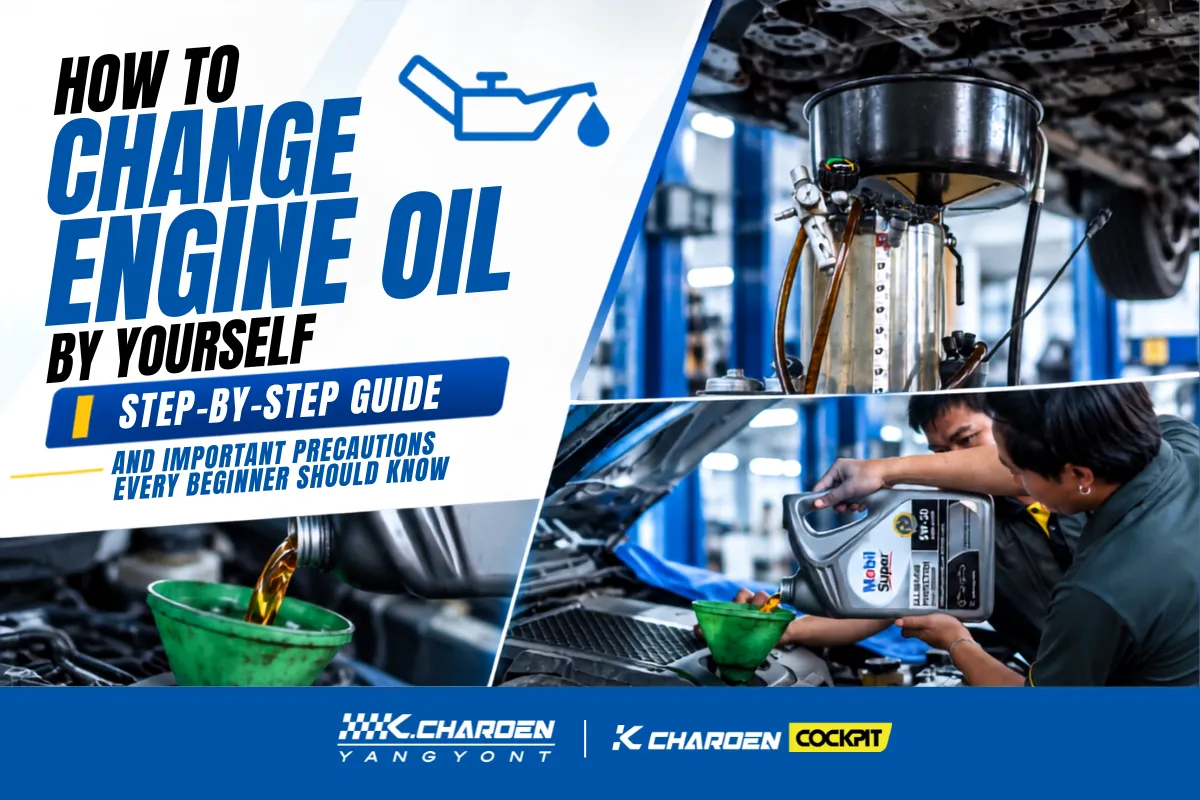
How to Change Your Car Engine Oil Yourself: A Step-by-Step Guide with Crucial Precautions for Beginners
Engine oil is often compared to the “blood” circulating through and sustaining an engine. It serves to lubricate friction-bearing parts, reduce wear and tear, and help dissipate heat from the system. If car owners allow engine oil to deteriorate without changing it at the scheduled intervals, the consequences include the engine working harder, increased fuel consumption rates, and potentially severe long-term damage.
Consequently, many drivers are interested in trying to change their engine oil themselves because they want to learn and understand their own vehicles better. At the same time, however, there are specific details and precautions that, if missed even slightly, could cause major issues for the engine. Therefore, this article will explain the step-by-step process of changing engine oil yourself in detail, while looking into common mistakes made by beginners, signs indicating an early oil change, and techniques for choosing the right engine oil for your car. This information will help you confidently decide whether to do it yourself or use a professional service center.
Preparation Before Starting: Necessary Equipment for Changing Engine Oil
The preparation stage is something that many beginners overlook. However, in reality, more than half of a mechanic’s success typically depends on proper preparation. Having all the equipment ready and of the correct type will help you work continuously without having to rush out to find tools midway. Most importantly, it reduces the risk of accidents.
The necessary equipment that must be prepared before getting to work includes:
- New engine oil (according to the specifications indicated in the car owner’s manual)
- A new oil filter that matches your specific car model
- A wrench for opening the engine oil drain plug
- An oil drain pan with a capacity of no less than 5 liters
- An oil filter wrench (in case the filter is too tight)
- A new drain plug washer
- An oil funnel
- Clean rags and oil-resistant gloves
If you check and find that you lack essential equipment, or if you do not have a safe working space, choosing an engine oil change service from a professional center will be a more convenient and cost-effective solution in the long run.
4 Detailed and Safe Steps for Changing Your Engine Oil
1. Engine Warming and Proper Vehicle Positioning
Many people mistakenly believe that they should change engine oil when the engine is completely cold for safety. However, in reality, warming up the engine slightly before draining is essential. This is because warm oil has lower viscosity, allowing it to flow out of the engine smoothly and carry along trapped contaminants.
The appropriate method is to start the engine and let it idle for about 3–5 minutes until the temperature gauge begins to move. After that, turn off the engine and wait for approximately 1–2 minutes to allow system pressure to decrease, ensuring the oil is not too hot to scald your skin. Furthermore, the vehicle must be parked on a level surface only. If the ground is sloped, old engine oil will remain trapped inside the system and fail to drain completely.
2. Opening the Drain Plug and Catching the Old Oil
This stage is considered the point that requires the utmost caution. If a mistake occurs, it could strip the plug or damage the threads, leading to major repair issues later on.
First, locate the drain plug underneath the engine oil pan. Position the drain pan directly underneath and allow extra room for the oil to splash when the initial pressure is released. Always select a wrench size that perfectly fits the plug; never use a loose wrench as it will instantly strip the bolt. Next, gently loosen the plug counterclockwise. Once the plug begins to loosen, switch to turning it by hand, and pull the plug away quickly when it is about to come off to avoid letting the warm oil pour onto your hand.
The old oil will take approximately 5–10 minutes to drain completely. While waiting, you should observe the characteristics of the oil. If you notice that it is pitch black, contains metallic debris, or carries a strong burnt odor, it may be a sign of engine problems that require inspection. Once the oil slows down to tiny drops, use a clean rag to wipe the drain hole and threads clean before moving to the next step.
3. Replacing the Oil Filter and Drain Plug Washer
Many people choose to change only the engine oil without replacing the filter, which is a mistake that allows dirt from the old filter to remain in the system. Therefore, every time you change the engine oil, you should replace both the filter and the plug washer at the same time.
To remove the old filter, you can spin it off by hand if it is not too tight. However, if the filter is stuck, use an oil filter wrench to assist. Once removed, a small amount of oil remaining inside the filter will pour out, which is completely normal. Before installing the new filter, apply a thin coat of new engine oil around the rubber seal of the filter. This small step is crucial because it helps the seal seat tightly against the engine, prevents oil leaks, and makes future removal much easier. When placing the new filter into position, spin it by hand until it feels snug. You do not need to use tools to tighten it further, as excessive force can deform the seal and cause leaks.
For the drain plug washer, never reuse the old one under any circumstances. Old washers have been compressed and deformed, and reusing them is a leading cause of oil leaks. After installing a new washer and reinstalling the plug, use a moderate amount of force—just enough to be secure without over-tightening. Overtightening can damage the threads, and an over-tightened plug might break or loosen during vehicle usage.
4. Adding New Engine Oil to the Specified Volume
Pouring in new engine oil seems like an easy task, but in reality, it requires a fair amount of precision because the volume added directly impacts the engine’s performance efficiency.
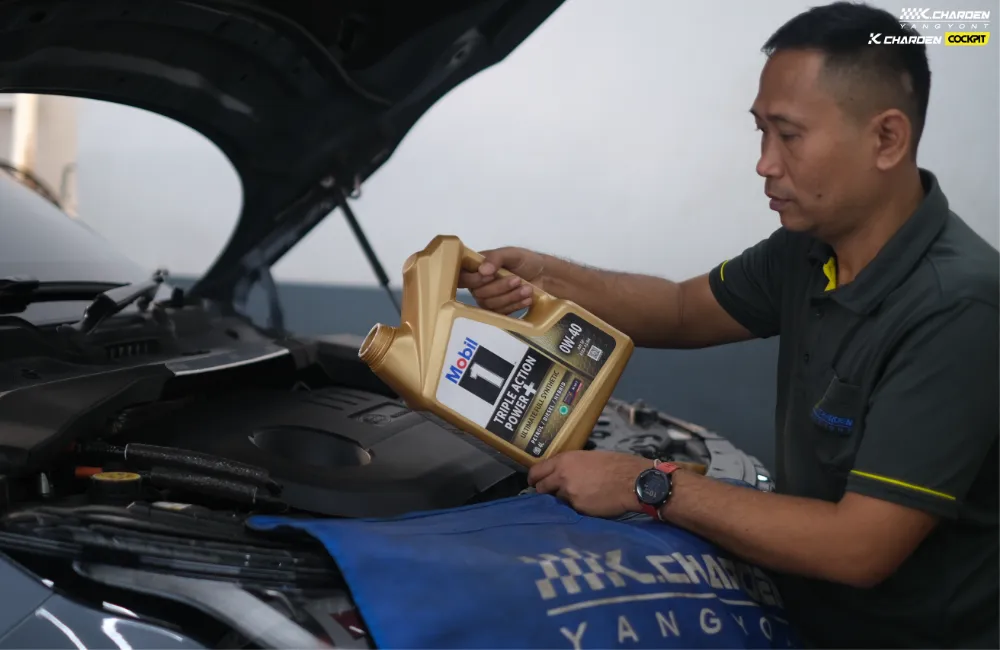
Before filling, you must check the car owner’s manual to see how many liters of oil the engine requires. Generally, passenger cars use about 3.5–5 liters depending on the engine size. Open the oil filler cap on top of the engine and use a funnel to prevent spills. Pour in about 80% of the specified volume first, then wait for 1–2 minutes to allow the oil to settle into the oil pan.
The next critical step is using the dipstick to check the level. Pull the dipstick out, wipe it clean, reinsert it fully, and pull it out again to read the oil level at the tip. The proper level must be between the Min and Max marks, close to the top line but not exceeding it. If it has not reached the required level, add a little more oil at a time and recheck until the desired level is achieved.
Once the oil level is correct, secure the filler cap tightly. Start the engine and let it run for 1–2 minutes to allow the oil to circulate throughout the system. Finally, turn off the engine and wait 5 minutes for the oil to settle back down into the pan, then use the dipstick to inspect the level one last time while checking for leaks around the drain plug and filter. If everything is correct, your engine oil change is complete.
Common Mistakes When Changing Engine Oil Yourself
Beginners who start doing this themselves often face similar mistakes. Some of these look like minor issues, yet they carry a massive long-term impact on the engine. The most common mistake involves the volume of oil added. Overfilling engine oil increases system pressure, causing the crankshaft to strike the oil and create air bubbles. Consequently, this reduces lubrication efficiency and can damage seals and gaskets. On the other hand, underfilling leads to insufficient lubrication, causing components to wear out rapidly and overheat abnormally.
Another mistake that many people overlook is neglecting to check for leaks after assembly is complete. Some individuals drive away immediately after filling the oil, without inspecting whether there is any oil seeping around the drain plug or the filter area. When they check again later, they might discover that the oil has leaked to a low level, affecting the lubrication system without the car owner’s knowledge.
Additionally, reusing components that have already been used—such as old drain plug washers, old oil filters, or even old engine oil that has been stored for too long—can trigger subsequent problems. Therefore, if you are unsure about the process or do not want to risk damaging an expensive engine, using the engine oil change service at K. Charoenyangyont and K. Charoen Cockpit will help eliminate these risks. Our professional mechanic team thoroughly checks for leaks across every point of the lubrication system.
When Should You Change Engine Oil Earlier Than Scheduled?
Although the car owner’s manual clearly defines engine oil change intervals—such as every 5,000–10,000 kilometers or every 6 months—in real-world usage, multiple factors can cause engine oil to deteriorate faster than expected. Relying solely on the scheduled intervals in the manual may not be enough. Instead, you must also learn to “read the signs” from your vehicle.
Warning signs indicating that you should change your engine oil immediately, without waiting for the scheduled interval, include:
- The engine oil drawn from the dipstick appears abnormally pitch black and thick or sludgy.
- The engine runs unevenly or makes louder noises than usual during acceleration.
- The fuel consumption rate increases without any other apparent cause.
- The engine oil warning light illuminates on the dashboard status display.
- You consistently drive in heavy traffic conditions or operate the vehicle in dusty areas.
Additionally, for cars that are left parked for a long time without being started, the engine oil can also deteriorate in quality. This happens due to sediment accumulation and oxidation with the air. Therefore, if you detect any of these signs, scheduling an inspection and engine oil change service will help maintain your engine in prime condition for the long term.
Guidelines for Choosing the Right Engine Oil for Your Car’s Usage Profile
Choosing the right engine oil is not just about picking a familiar brand or selecting the most expensive option. Instead, it requires evaluating compatibility with your engine’s technical specifications and your actual driving habits.
The first and most critical factor is “viscosity grade,” which is displayed as numbers such as 0W-20, 5W-30, or 10W-40. The front number followed by the letter ‘W’ (Winter) indicates low-temperature viscosity, whereas the rear number signifies viscosity at operating temperatures. Modern vehicles with narrow clearance between engine parts typically require low-viscosity oil, such as 0W-20. On the other hand, older models or larger engines might demand higher viscosity. Therefore, you must always refer to your car owner’s manual as the primary reference.
The next factor is the “type of engine oil,” which is divided into three primary categories:
- Mineral Oil: Budget-friendly but requires frequent replacement intervals.
- Semi-Synthetic Oil: Offers moderate pricing and intermediate performance efficiency.
- Fully Synthetic Oil: Provides maximum protection and an extended lifespan, making it ideal for high-performance vehicles and heavy-usage conditions.
Finally, consider engine oil standards, such as API (American Petroleum Institute) or ACEA (European Automobile Manufacturers Association), which indicate quality levels. At K. Charoenyangyont and K. Charoen Cockpit, we select Mobil 1, a globally recognized fully synthetic engine oil, combined with expert recommendations from our experienced mechanic team to choose the perfect specification for each car model. You can view additional details about our engine oil change and lubrication system inspection services here.
Conclusion
Changing engine oil yourself is a valuable skill that car owners can learn, provided they have the time, proper equipment, and a correct understanding of each step—from warming up the engine, opening the drain plug, and replacing the filter, to filling and checking the oil level.
However, the success of this mechanical task does not rely solely on following the steps. Instead, it depends on paying close attention to minor details—such as selecting the correct viscosity, replacing used components every time, tightening the plug with moderate force, and thoroughly checking for leaks after assembly. If missed, these critical points can significantly impact your engine in the long run.
For beginners who are still unsure of their skills, or car owners who prefer not to waste time and risk making mistakes, choosing an engine oil change service from the experts at K. Charoenyangyont and K. Charoen Cockpit is an excellent alternative. This ensures that your vehicle will be taken care of with premium Mobil 1 oil, along with thorough lubrication system and leak inspections conducted by a professional mechanic team.
Contact Us
K. Charoen Yangyont Branch
Address: K. Charoen Yangyont (Sukhumvit 91 Branch)
Opening Hours: Monday – Saturday, 8:30 AM – 6:00 PM
Phone: 02 331 9911, 02 331 8882-4
Line: @kc4418
K. Charoen Cockpit Branch
Address: K. Charoen Cockpit (Udomsuk 28 Branch)
Opening Hours: Monday – Saturday, 8:30 AM – 6:00 PM
Phone: 02 393 3356, 086 318 1401
Line: @kcockpit
SHARE THIS STORY


RELATES TAGS
More Post




Get to Know Car Tyres: The Essential Component That Makes Your Vehicle Perfect
Read More →

"Wheel Alignment and Balancing Near Me": How to Choose the Right Service for Your Vehicle
Read More →


On-Site Tyre Replacement Near Me by Expert Technicians – Fast Service (K Tyre Express)
Read More →