


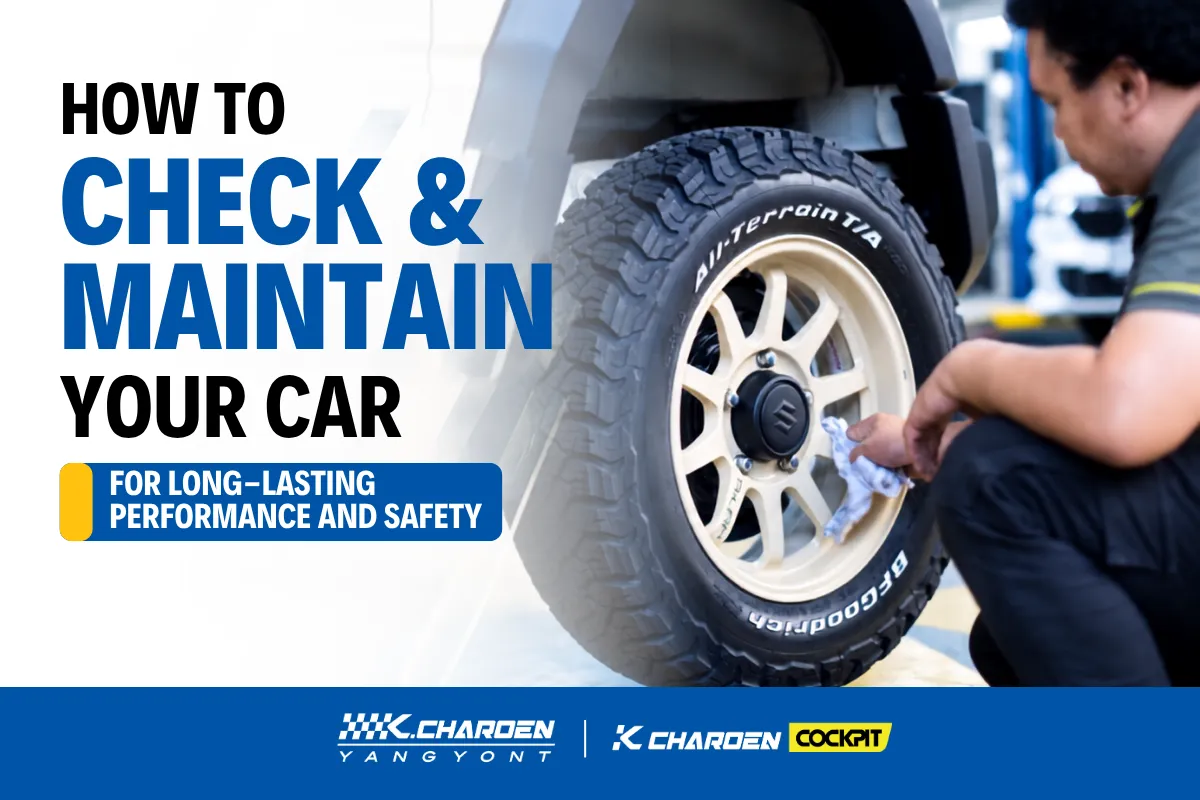
How to Maintain Your Car Tyres for Longevity and Cost Savings
Car tyres are the only contact point connecting your vehicle to the road surface. Therefore, proper tyre maintenance is not only vital for driving performance but also directly impacts the safety of you and your passengers. This article will introduce effective methods for maintaining, storing, and selecting the right tyres to ensure your tyres last longer and save you money in the long run.
Tyre problems are issues that often occur without our knowledge—whether it is a punctured tyre, a blowout, or a worn-out tyre midway through a journey. Consequently, these situations create inconvenience and driving hazards, especially during nighttime or in unfamiliar areas. Furthermore, many individuals may find it inconvenient to change a tyre themselves or simply do not know where to find a mechanic.
As a result, a “24-hour mobile tyre replacement near me” service has become an essential helper for modern drivers who require convenience, speed, and safety, without the need to drive all the way to a service center or waste time waiting for a long period.
Why Is Tyre Maintenance So Important?
Tyres in good condition help the vehicle grip the road surface better, provide confident braking, and offer safer handling, especially during rainy conditions or on slippery roads. Conversely, if tyres begin to deteriorate, maintain improper air pressure, or have too little tread depth remaining, it can lead to various problems such as:
- The vehicle braking slower and requiring longer stopping distances.
- The vehicle losing control more easily on wet roads.
- Increased fuel consumption rates.
- Uneven tyre wear, which forces you to replace them sooner than normal.
- An increased risk of accidents while driving.
Therefore, proper tyre maintenance is not merely a matter of saving on expenses, but it is ultimately a critical matter of safety for the driver and all passengers.
1. Inspect Tyre Pressure Regularly
Tyre pressure is the most critical foundation of car tyre maintenance. If tyre pressure is too low, the tyre tread will contact the road surface more than usual, causing the tyre to overheat easily, wear out faster, and consume more fuel. Conversely, if you inflate the tyres too hard, the center tread will wear out faster than other parts, and it can cause a harsh or bumpy ride.
Therefore, it is recommended to inspect your tyre pressure at least 1–2 times a month, or before every long journey. You should always check when the tyres are still cold, such as in the morning or after being parked for a sufficiently long period. This is because if you check immediately after driving, the tyre pressure readings may be higher than reality due to accumulated heat.
The appropriate tyre pressure values can be found in your car owner’s manual or on the sticker located on the driver’s side door frame. You should not rely on the maximum pressure written on the tyre sidewall, as that is typically the maximum load capacity, not the optimal value for your specific vehicle.
2. Rotate Tyres According to Service Intervals
Tyres in different positions wear out unevenly. Especially for the front pair, they typically bear more load than the rear tyres because they are directly involved with steering, braking, and supporting the engine’s weight. Consequently, rotating your tyres helps all four tyres wear out more evenly.
Generally, you should rotate your tyres every 8,000–10,000 kilometers, or follow the recommendations provided by your vehicle manufacturer. Regular tyre rotation helps extend tyre lifespan, reduces vibrations, and ensures consistent driving performance.
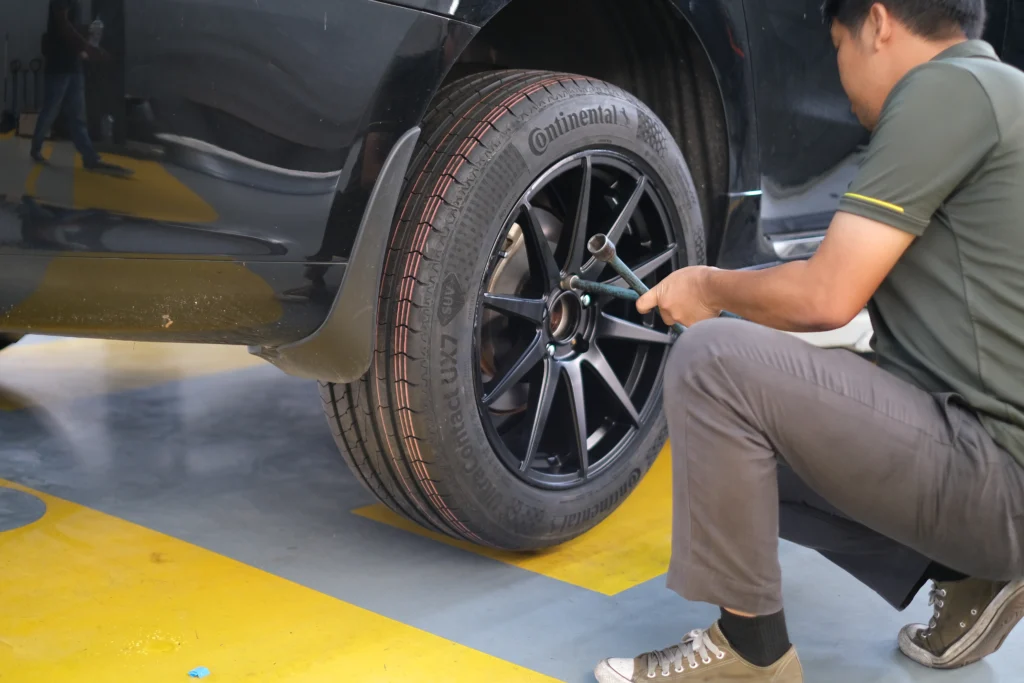
3. Inspect Tyre Tread Depth
Tyre treads serve to channel water away from the tread surface, enabling the vehicle to grip the road better, particularly when driving on wet roads. If the tread depth becomes too shallow, the vehicle will have a higher chance of skidding or experiencing hydroplaning easily.
Legally, tread depth should not be lower than 1.6 millimeters. However, in practice, since we operate in tropical environments with frequent heavy rain, you should consider replacing your tyres when the tread depth drops below 2–3 millimeters for greater safety.
In addition to checking tread depth, you should also observe whether the tyres wear evenly. If you notice uneven wear only on the inside, outside, or in a cupping pattern, it may be a sign that the car has wheel alignment issues, suspension problems, or improper tyre pressure.
4. Perform Wheel Alignment and Balancing When Necessary
If you drive and feel the car pulling to one side, the steering wheel sitting crooked, or the tyres wearing abnormally, it might be caused by incorrect wheel alignment. Performing a wheel alignment will help return the wheels to their proper angles, reduce tyre wear, and improve vehicle handling.
On the other hand, wheel balancing solves wheel imbalance issues, which typically cause the vehicle to vibrate when driving at high speeds. If left unaddressed for too long, it can cause spotty tyre wear and negatively affect your suspension system. Therefore, you should balance your wheels every time you replace tyres or whenever you feel abnormal vibrations while driving.
5. Avoid Driving Habits That Cause Rapid Tyre Wear
Your driving habits directly impact tyre lifespan. Harsh acceleration, sudden braking, fast cornering, or frequently hitting potholes all cause tyres to wear out much faster.
Driving smoothly, accelerating gently, braking gradually, and avoiding potholes or curbs whenever possible will preserve both your tyres and suspension system simultaneously. Furthermore, this practice helps improve fuel economy and reduces long-term maintenance expenses.
6. Park Your Vehicle in Appropriate Areas
Sunlight, heat, and humidity all affect tyre condition. If you consistently park your car under intense sunlight, the rubber can become hard, brittle, or develop cracks more quickly, especially for vehicles that are parked for long periods and rarely used.
If possible, you should park your car in the shade or use a car cover when parking outdoors for extended periods. Additionally, avoid parking near chemicals, oil, or high-heat areas, as these elements can accelerate rubber degradation.
7. Inspect the Tyre Sidewall for Abnormalities
Besides the tyre tread, the sidewall is another section that you should inspect regularly. If you find cracks, bulges, sidewall tears, hairline cracking, or deep cuts, you should have a mechanic inspect them immediately. This is because damage to the sidewall area is highly difficult to repair safely and carries a severe risk of a sudden blowout.
Particularly before a long trip, you should walk around the vehicle to check the condition of all four tyres, including the spare tyre, to ensure they are fully ready for actual use.
8. Choose the Right Tyres for Your Usage Profile
Each type of tyre is designed for different applications, such as city driving tyres, heavy-load truck tyres, fuel-saving eco tyres, or ultra-high-performance grip tyres.
For general usage under typical hot and rainy climates, you should select tyres that excel at water evacuation, road grip, and durability. Do not choose tyres based on price alone, because selecting the right tyres will provide a safer and more cost-effective driving experience over the long term.
9. When Should You Replace Tyres?
Even if some tyres appear to have remaining tread depth, the rubber compound can become hard and degrade if used for too long. Generally, car tyres have a service lifespan of approximately 3–5 years, depending on mileage, driving habits, road conditions, and proper maintenance.
Warning signs that indicate you should consider replacing your tyres include:
- Shallow or worn-out tread depth.
- Hairline cracking or dry rot across the rubber.
- Bulging or bubbling on the tyre sidewall.
- Uneven tyre wear across the surface.
- Vehicle vibrations or abnormal noises while driving.
- Frequent tyre pressure leaks without an apparent cause.
If you are unsure whether your tyres are still safe to use, it is best to have a professional mechanic inspect them thoroughly before continuing your journeys.
Conclusion: Regular Tyre Maintenance Saves More Than You Think
Tyre maintenance does not have to be complicated. Simply beginning with checking your tyre pressure, inspecting tread depth, observing for abnormalities, and driving cautiously will help your tyres last longer. Consequently, this practice reduces the expense of premature tyre replacement and increases your confidence every time you drive.
For those who do not have the time to visit a tyre shop or prefer a more convenient option, K. Charoenyangyont and K. Charoen Cockpit offers a comprehensive mobile tyre replacement service. We can provide on-site services directly to your home or workplace, accompanied by a professional mechanic team to inspect your tyre condition and provide expert guidance on selecting the perfect tyres for your vehicle.
Ultimately, if you want to maintain your tyres safely and get the most cost-effective usage out of them, performing regular checks and choosing professional services will provide you with greater peace of mind on every journey.
Contact Us
K. Charoen Yangyont Branch
Address: K. Charoen Yangyont (Sukhumvit 91 Branch)
Opening Hours: Monday – Saturday, 8:30 AM – 6:00 PM
Phone: 02 331 9911, 02 331 8882-4
Line: @kc4418
K. Charoen Cockpit Branch
Address: K. Charoen Cockpit (Udomsuk 28 Branch)
Opening Hours: Monday – Saturday, 8:30 AM – 6:00 PM
Phone: 02 393 3356, 086 318 1401
Line: @kcockpit
SHARE THIS STORY


RELATES TAGS
More Post


Get to Know Car Tyres: The Essential Component That Makes Your Vehicle Perfect
Read More →
"Wheel Alignment and Balancing Near Me": How to Choose the Right Service for Your Vehicle
Read More →
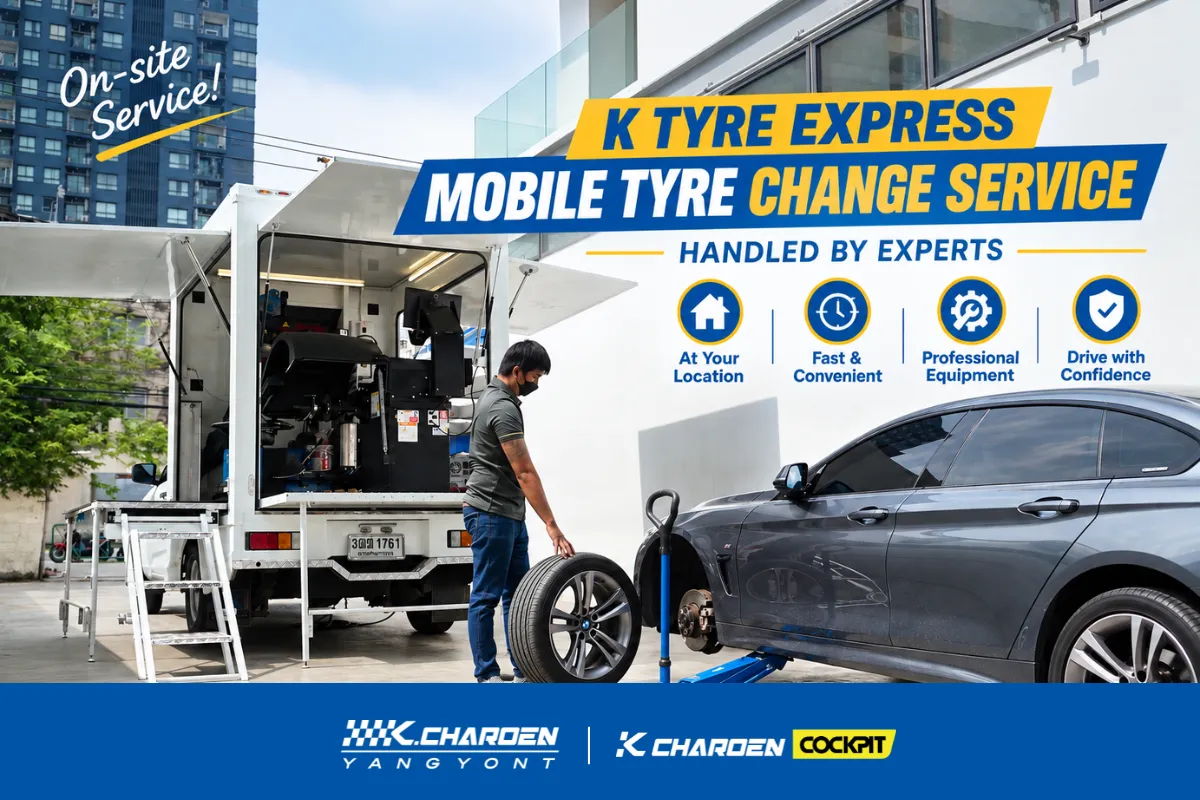
On-Site Tyre Replacement Near Me by Expert Technicians – Fast Service (K Tyre Express)
Read More →