


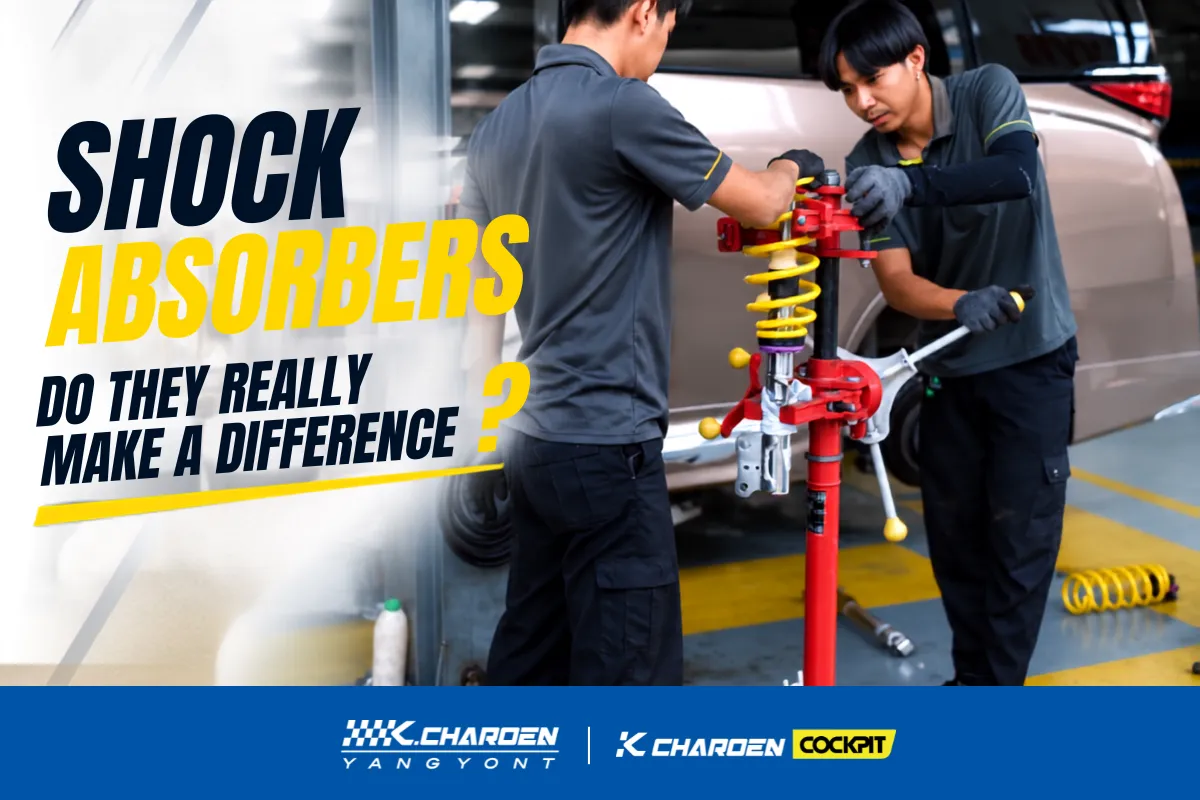
Do Shock Absorbers Really Improve Driving? A Complete Guide to Choosing the Best Value Shock Absorbers
Among the many components inside a vehicle, shock absorbers are one of the most important—and hardest working—parts of the entire car.
Every time you steer through a corner, brake suddenly, or drive across rough and uneven roads, your shock absorbers are constantly working in the background.
They play a major role in determining whether your car remains stable and controlled, or becomes difficult to handle and unsafe.
In this article, we will take you through everything you need to know about automotive shock absorbers, including how they work, why they matter, and practical tips for choosing the right replacement when the time comes.
Whether you are looking for better comfort, improved handling, or the best value for your money, this guide will help you make a smarter decision.
What Do Shock Absorbers Actually Do?
Many people believe that shock absorbers are responsible for supporting the vehicle’s weight.
In reality, that job belongs to the springs.
The true role of the shock absorber is to control how the springs move and compress, helping the suspension absorb weight and impacts smoothly without excessive bouncing or harsh movement.
Its main purpose is to keep the tyres in constant contact with the road surface at all times.
The result is:
- Better vehicle stability while cornering
- Shorter braking distances because the tyres stay planted on the road
- Improved ride comfort by reducing vibrations felt by both passengers and the driver
In simple terms, shock absorbers play a major role in both driving comfort and vehicle control.
Warning Signs: When Should You Replace Your Car Shock Absorbers? How to Check Them Yourself
Shock absorbers gradually wear out over time.
Because the change happens slowly, many drivers do not immediately notice the difference and become accustomed to the vehicle’s declining ride quality.
However, there are several warning signs that clearly indicate your shock absorbers may be failing.
One of the most noticeable symptoms appears when driving over speed bumps or bridge joints.
If the car continues bouncing up and down several times instead of settling immediately, this is a strong sign that the shock absorbers are losing their damping ability.
Other warning signs include:
- Oil leaks around the shock absorber body
- Uneven tyre wear
- Excessive body roll or vehicle instability
- The front of the car diving forward heavily during sudden braking
These symptoms suggest the shock absorbers can no longer keep the tyres firmly planted on the road surface.
As a result, braking distances may become longer and steering control may feel less stable and predictable.
If you notice any of these problems while driving, you should arrange for an inspection or replacement as soon as possible to maintain safety and driving performance.
3 Easy Ways to Check Your Shock Absorbers Yourself
You do not need to wait for a service appointment to inspect your shock absorbers.
You can perform a basic suspension check yourself using three simple methods commonly used by professional technicians.
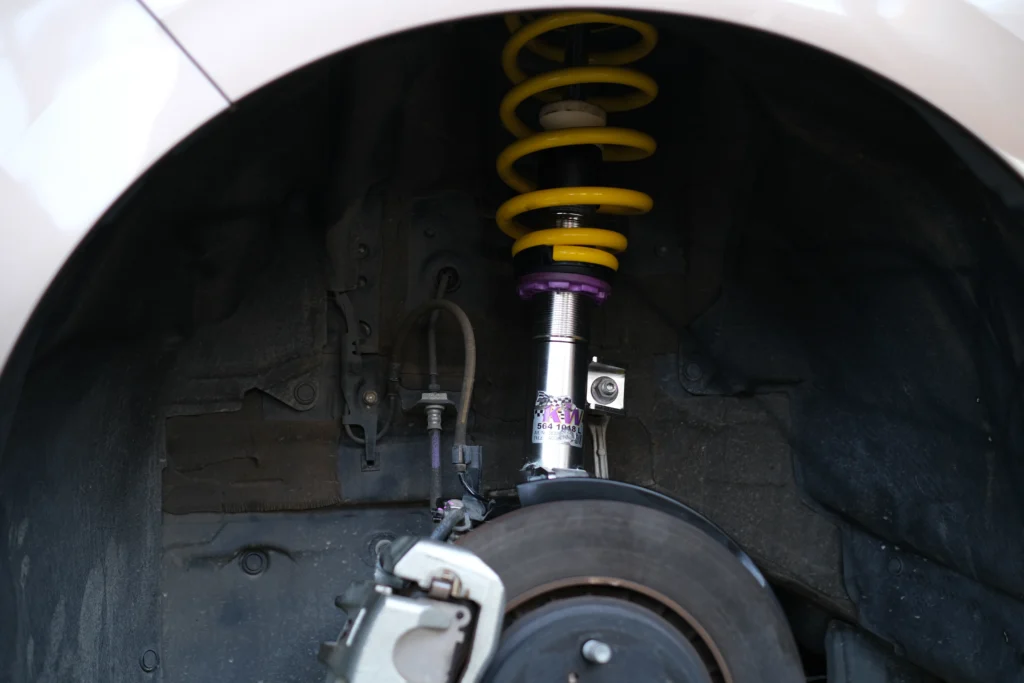
Check for Oil Leaks and Fluid Seepage
Start by looking at the shock absorber body and shaft.
If you notice yellow or light brown oil stains, wetness, or fluid leaking around the shock absorber, this is usually a sign that the internal seal is beginning to fail.
Leaking shock absorbers can no longer provide proper damping performance.
Perform the Bounce Test
Press down firmly on one corner of the vehicle, such as the bonnet or rear boot area, two or three times and then release it.
If the vehicle rises and settles immediately, the shock absorbers are likely still working properly.
However, if the car continues bouncing several times before stabilising, this is a strong sign that the shock absorbers are worn out.
Inspect the Tyre Tread Pattern
Walk around the vehicle and inspect all four tyres carefully.
If the tyre tread shows uneven wear, patchy wear, or scalloped patterns, the shock absorbers may no longer be controlling suspension movement correctly.
Worn shock absorbers allow the tyres to bounce excessively against the road surface, leading to irregular tyre wear.
How to Choose the Right Shock Absorbers for Your Driving Style
Once you have checked your suspension and confirmed that your shock absorbers need replacement, the next step is choosing the right new set.
When selecting shock absorbers, the most important factor is not simply the price or the brand name.
The best shock absorber depends on how you actually use your vehicle.
Different types of shock absorbers are designed to solve different driving needs and suspension problems.
To make things easier to understand, here are the main types of shock absorbers and who they are best suited for.
Oil Shock Absorbers
Oil shock absorbers use hydraulic oil alone to create damping force and absorb road impacts.
They are best suited for everyday passenger cars mainly driven in the city or for daily commuting.
The main advantage of oil shocks is their smooth and comfortable ride quality.
They absorb low-speed bumps and road imperfections well while remaining the most affordable type available on the market.
Things to Consider
During long-distance driving or continuous high-speed use, the oil inside the shock absorber can become very hot.
This heat may create air bubbles inside the fluid, temporarily reducing damping performance.
When this happens, the suspension may begin to feel soft, unstable, or floaty.
Gas Shock Absorbers
Gas shock absorbers were developed to improve the weaknesses of traditional oil shocks.
They combine hydraulic oil with pressurised nitrogen gas inside the shock body.
The gas pressure helps prevent the oil from foaming, even under high temperatures and heavy use.
As a result, damping performance remains more consistent.
Gas shocks typically provide a firmer and more stable driving feel while noticeably reducing body roll during cornering.
They also dissipate heat more effectively than oil shocks.
These are ideal for:
- Long-distance driving
- Higher-speed driving
- Family vehicles needing better stability and safety
Things to Consider
Gas shock absorbers usually feel slightly firmer than oil shocks.
You may notice more road feedback and vibration when driving over expansion joints, rough roads, or speed bumps.
Monotube and Adjustable Shock Absorbers
These are high-performance shock absorbers commonly found on sports cars, modified vehicles, or heavy-duty applications.
They are generally divided into two categories.
Monotube Shock Absorbers
Monotube shocks use a larger piston design, allowing more precise and responsive damping control.
They dissipate heat quickly and perform extremely well under demanding driving conditions.
They are highly durable and suitable for performance-focused driving.
Adjustable Shock Absorbers
Adjustable shocks allow the driver to manually change suspension stiffness.
Some models offer adjustment ranges from 8 settings up to 32 settings, allowing drivers to fine-tune ride comfort and handling according to personal preference or driving conditions.
These types of shock absorbers are ideal for:
- Performance driving enthusiasts
- Drivers who enjoy spirited handling
- Modified cars
- Pickup trucks carrying heavy loads
- Vehicles facing demanding road conditions
They provide a suspension setup that can be customised more precisely to match the driver’s needs.
Conclusion
Many drivers often wonder whether replacing their car shock absorbers really improves the driving experience.
By now, the answer should be quite clear—yes, it absolutely does.
New shock absorbers can significantly improve:
- Driving stability
- Vehicle safety
- Ride comfort
- Steering confidence
- Overall driving satisfaction
In addition, replacing worn shock absorbers can also help reduce unnecessary stress on other suspension and vehicle components, potentially extending their lifespan as well.
Investing in new shock absorbers is not just about comfort—it is an important investment in both safety and long-term vehicle performance.
Most importantly, always choose shock absorbers that match your actual driving style and daily usage.
And if you would prefer professional advice from experienced technicians, do not forget to visit K. Charoen Yangyont and K. Charoen Cockpit.
Contact Us
K. Charoen Yangyont Branch
Address: K. Charoen Yangyont (Sukhumvit 91 Branch)
Opening Hours: Monday – Saturday, 8:30 AM – 6:00 PM
Phone: 02 331 9911, 02 331 8882-4
Line: @kc4418
K. Charoen Cockpit Branch
Address: K. Charoen Cockpit (Udomsuk 28 Branch)
Opening Hours: Monday – Saturday, 8:30 AM – 6:00 PM
Phone: 02 393 3356, 086 318 1401
Line: @kcockpit
SHARE THIS STORY


RELATES TAGS
More Post


Get to Know Car Tyres: The Essential Component That Makes Your Vehicle Perfect
Read More →
"Wheel Alignment and Balancing Near Me": How to Choose the Right Service for Your Vehicle
Read More →
On-Site Tyre Replacement Near Me by Expert Technicians – Fast Service (K Tyre Express)
Read More →