


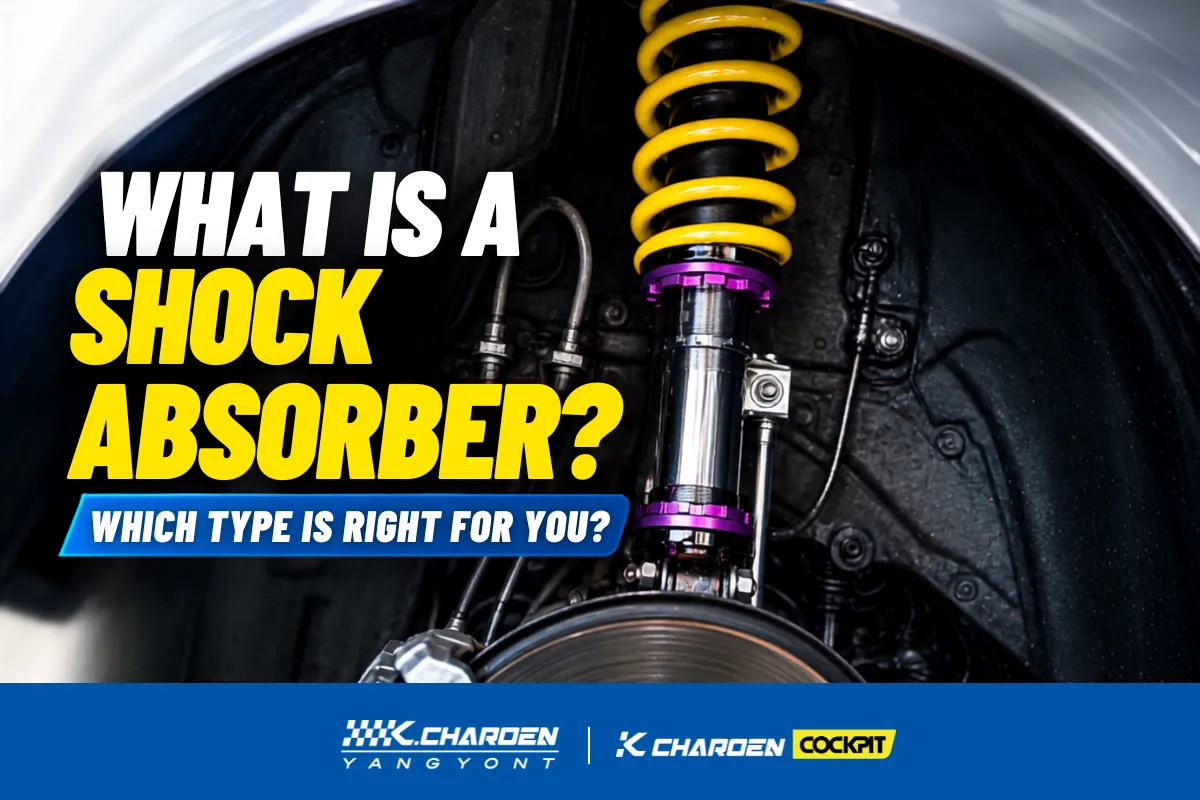
What Is a Car Shock Absorber? How Many Types Are There, and Which One Is Right for Your Car?
If you have ever driven over potholes and felt the car continue bouncing, or noticed excessive body roll while cornering, these may be warning signs that your shock absorbers are no longer performing properly. Many drivers overlook this component because it is hidden underneath the vehicle and not as visible as tyres or the battery.
In reality, car shock absorbers are one of the most important systems affecting both driving comfort and safety.
Today, K. Charoen Yangyont and K. Charoen Cockpit will explain the importance of shock absorbers, the different types available, and how to identify which type is most suitable for your vehicle.
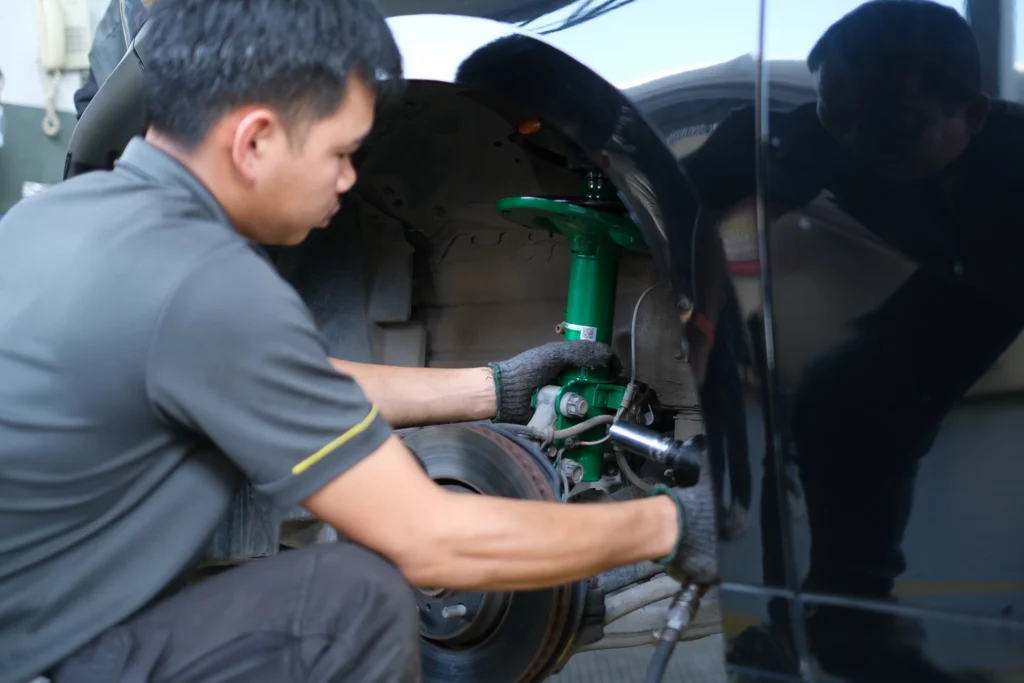
What Does a Car Shock Absorber Do, and Why Is It Essential?
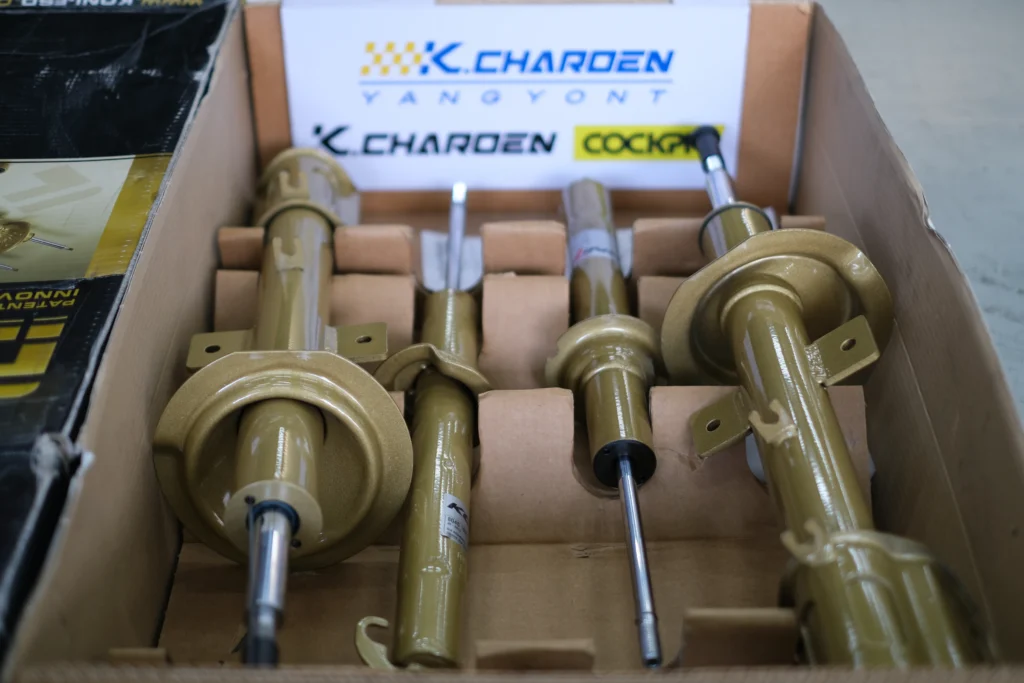
Simply put, a shock absorber, often called a car shock, helps absorb impacts from the road surface so that those forces do not transfer directly to the vehicle body and passengers.
At the same time, it helps keep the tyres in constant contact with the road. This means the better the shock absorber performs, the more effective your braking, steering, and overall vehicle control will be.
Shock absorbers work together with the suspension springs. While the springs support the vehicle weight and absorb impacts, the shock absorbers control and slow down the movement of the springs so the car does not continue bouncing up and down.
Without shock absorbers, the vehicle would keep oscillating like a spring after every bump. This would not only feel uncomfortable, but it would also be highly unsafe.
How Many Types of Shock Absorbers Are There, and Which One Is Best for You?
The two main types of car shock absorbers are oil shock absorbers and gas shock absorbers. Each type has clear strengths and limitations.
Oil Shock Absorbers – Smooth Ride and Great for Everyday Use
Oil shock absorbers use hydraulic fluid to control suspension movement. They are designed for comfort and smooth driving, making them ideal for city use or low to medium speeds.
They are also affordable, widely available, and a practical choice for drivers who prioritize ride comfort.
One limitation to note is that oil shock absorbers dissipate heat more slowly. During long-distance driving or under heavy suspension load, the fluid can overheat and form air bubbles, a condition known as cavitation.
When this happens, the shock absorber may feel weak or overly soft, reducing vehicle stability and control.
Gas Shock Absorbers – Better Grip and Ideal for Faster Driving
Gas shock absorbers contain nitrogen gas together with hydraulic oil inside the shock body.
This design allows them to respond faster, improve road holding, and release heat more efficiently than standard oil shocks. It also significantly reduces cavitation.
Gas shocks are ideal for drivers who travel at higher speeds or want sharper, more controlled handling.
They are commonly divided into two categories based on gas pressure.
Low-Pressure Gas Shock Absorbers
Low-pressure gas shocks are charged with nitrogen at approximately 142–213 PSI (around 10–15 kg/cm²).
They usually use a twin-tube design similar to oil shocks, but with added gas pressure to reduce cavitation.
They provide better control while still maintaining a relatively comfortable ride.
This type is suitable for drivers who want to upgrade from oil shocks without making the suspension feel too firm.
High-Pressure Gas Shock Absorbers
High-pressure gas shocks are charged at around 284–427 PSI (20–30 kg/cm²).
They are often built with a mono-tube design, which allows excellent heat dissipation, faster response, and higher load capacity.
These shocks are best for drivers who need serious performance, whether for modified cars, sporty driving, or vehicles that regularly carry heavy loads.
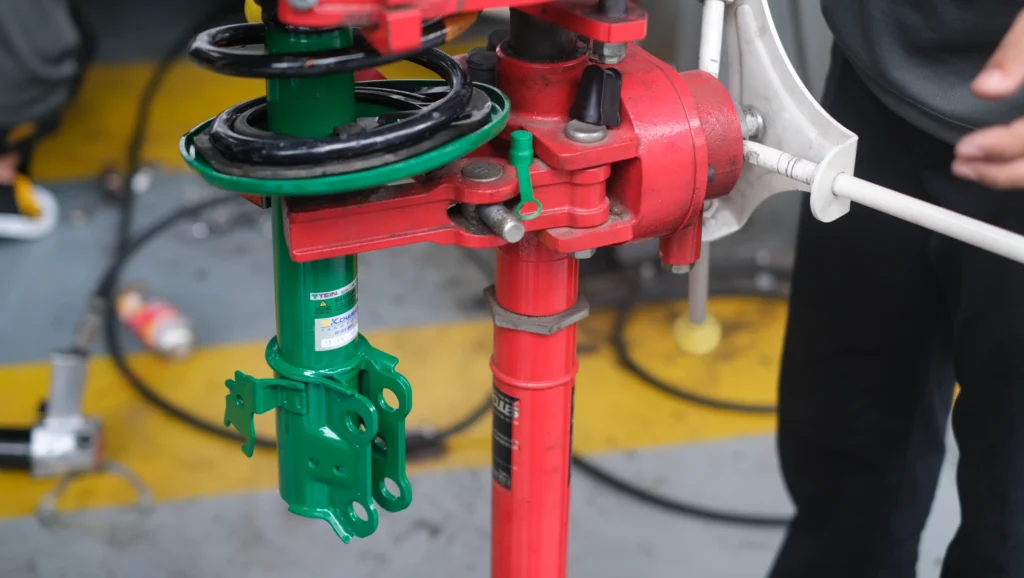
Warning Signs of Worn Shock Absorbers: Easy Checks You Can Do Yourself
Shock absorbers do not usually fail in a single day. They wear out gradually and quietly over time. Many drivers become so used to the change that they think, “The car has always driven like this,” even though its behavior has already changed.
Fortunately, there are several simple warning signs you can check yourself without needing advanced automotive knowledge.
The Car Keeps Bouncing After You Push It
One common basic test used by technicians is the bounce test.
Press down firmly on the front of the car using your body weight, then release it. The vehicle should rise back up and settle quickly. It should not bounce more than one or two times.
If the car continues moving up and down, or feels like it keeps wobbling before settling, the shock absorbers may be worn out.
This usually means they no longer have enough damping force to control suspension movement properly.
Oil Leaks or Uneven Tyre Wear
Look at the shock absorber body. If you notice wet oil stains, or thick dirt stuck to an oily surface, the internal seal may be leaking.
Another warning sign many drivers overlook is unusual tyre wear.
If the tread shows uneven patches, scalloped wear, or a pattern often called cupping wear, it may mean the wheel is bouncing excessively because the shock absorber can no longer control it properly.
If you notice these symptoms, it is best to have the suspension inspected as soon as possible.
How to Choose the Right Shock Absorbers for Your Driving Needs
Many customers who visit K. Charoen Yangyont and K. Charoen Cockpit often ask a simple question: “I want to replace my shock absorbers. Which one should I choose?”
It sounds straightforward, but there is no single answer. The best shock absorbers for an office worker who drives in the city every day may be very different from those suited for someone who regularly drives long distances or carries heavy loads.
Choosing the wrong type does not only waste money—it can also make the car feel worse to drive than before.
1. Always Start with Your Vehicle Model
Every shock absorber is designed for specific vehicles. Important details such as shaft length, mounting points, and damping settings (valving) are matched to the weight and suspension design of each model.
You cannot simply install shock absorbers from another vehicle without checking compatibility.
That is why the first information you should always give the technician is:
- Vehicle make and model
- Year of manufacture
Another helpful option is providing the chassis number so the correct specifications can be confirmed accurately.
2. Once Compatibility Is Confirmed, Choose Based on Driving Feel
After identifying the shock absorbers that fit your vehicle, you can then choose based on your driving style, comfort preference, and budget.
- Want the Same Comfortable Ride? Ask for OEM-spec shock absorbers or standard-grade oil shocks.
- Want Better Stability and More Confident Cornering? Choose gas shock absorbers or upgraded performance dampers.
- Want a Lowered or Lifted Setup? Choose aftermarket performance shocks designed specifically to work with lowering springs or lift kits.
3. Common Mistakes Technicians Often See
A common misunderstanding is assuming that the most expensive shock absorbers must be the best.
In reality, if you mainly drive slowly in the city and carry your family every day, installing extremely stiff racing-style shocks may make the car feel harsh and uncomfortable.
Many drivers end up replacing them again later.
The best shock absorbers are not the most expensive ones on the shelf—they are the ones that truly match how you use your vehicle.
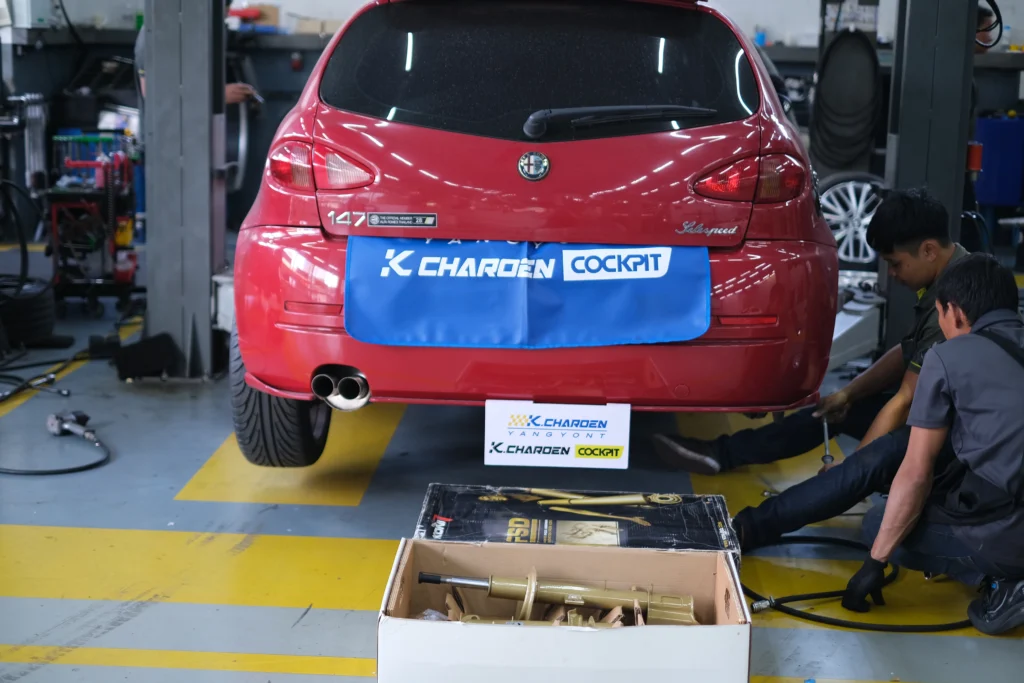
When Should Shock Absorbers Be Replaced, and How Long Do They Last?
There is no fixed answer for how many years shock absorbers will last. Their lifespan depends heavily on road conditions and driving habits. However, there are general guidelines that technicians commonly recommend.
At What Mileage Should You Start Checking Them?
Shock absorbers should be inspected every 20,000 kilometres, or at least whenever the vehicle comes in for scheduled maintenance.
The average lifespan of standard shock absorbers is around 50,000–100,000 kilometres, or approximately 3–5 years.
However, this estimate applies to normal road conditions. If you regularly drive on rough roads, broken pavement, or pothole-filled city streets, their lifespan can be significantly shorter.
Driving Habits That Wear Out Shock Absorbers Faster
Many drivers shorten the life of their shock absorbers without realizing it. The three most common causes are:
- Hitting Potholes at High Speed: Each heavy impact creates far more stress than many people expect. Repeated harsh impacts can wear out the shocks much faster than normal.
- Frequently Carrying Excessive Loads: Shock absorbers are designed to work within a certain load range. If the vehicle is overloaded regularly, the seals and internal components can wear out more quickly.
- Leaving the Car Parked for Long Periods: If a vehicle sits unused for too long, the rubber seals inside the shock absorbers may dry out, harden, and begin to leak.
This is especially common in hot climates like Thailand, where prolonged heat can accelerate rubber deterioration.
If you are concerned that your shock absorbers may be starting to fail, K. Charoen Yangyont and K. Charoen Cockpit provide complete brake and suspension inspection services.
Our services cover everything from checking brake pads, brake discs, and brake fluid to inspecting and replacing worn shock absorbers—all handled by a technician team with over 42 years of experience.
K. Charoen Yangyont (Sukhumvit 91 Branch)
Phone: 02 331 9911, 02 331 8882-4
Line: @kc4418
K. Charoen Cockpit (Udomsuk 28 Branch)
Phone: 02 393 3356, 086 318 1401
Line: @kcockpit
Frequently Asked Questions (FAQs) About Car Shock Absorbers
Whenever customers bring their vehicles in for inspection, they often have questions about shock absorbers. Today, our technicians would like to explain some of the most common concerns to help drivers understand them better.
Which Shock Absorbers Are Best for City Driving?
For drivers who mainly use their car in the city, where roads are generally smoother and speeds are lower, oil shock absorbers or low-pressure gas shock absorbers are usually more than sufficient.
They provide good ride comfort, reasonable pricing, and easy maintenance. There is usually no need to invest in high-performance shocks unless your driving style requires them.
Which Type Is Best for Vehicles That Carry Heavy Loads?
If your vehicle regularly carries heavy loads, such as a pickup truck used for cargo almost every day, it is best to choose high-pressure gas shock absorbers or models specifically designed for load-carrying applications.
Standard shock absorbers can wear out much faster when repeatedly exposed to excessive weight and may fail earlier than expected.
If a Shock Absorber Leaks, Should You Repair or Replace It?
When a shock absorber leaks oil, there are usually two options: repair it or replace it.
- Repair (Refill or Rebuild): This option is cheaper, often costing only a few hundred to around one thousand baht. However, the repair may only last around 3–6 months, and the driving feel may no longer match the original performance because internal parts are still worn.
- Replace with a New Unit: A new shock absorber costs more, but it restores proper factory-level performance and usually includes a warranty (commonly 1 year or 20,000 km). It is also a much safer long-term solution.
From a technician’s perspective, replacing the shock absorber is usually the better long-term value, especially if the original unit has already been used for many years.
Can You Replace Only Two Shock Absorbers, or Should You Replace All Four?
Yes, you can replace only two shock absorbers, but they should always be replaced in pairs—both front or both rear.
This keeps left and right damping balanced.
What should never be done is replacing only one shock absorber. Doing so creates uneven damping force between both sides of the car, which can cause the vehicle to pull during braking or lose balance while cornering. This can be more dangerous than many drivers realize.
Summary: Which Shock Absorber Offers the Best Value and Safety?
The best shock absorber is not the most expensive one—it is the one that matches how you actually use your vehicle.
If you mainly drive in the city and prioritize comfort, oil shock absorbers or low-pressure gas shock absorbers are usually more than enough.
If you need stronger performance or regularly carry heavy loads, upgrading to high-pressure gas shock absorbers is a better choice.
Shock absorbers should also be inspected every 20,000 kilometres. Do not wait until the car already feels “strange to drive,” because by that stage the shock absorbers are often already significantly worn.
At K. Charoen Yangyont and K. Charoen Cockpit, we provide professional inspection and replacement services for car shock absorbers, using trusted brands such as KYB and TEIN, handled by experienced technicians.
If you are unsure about the condition of your shock absorbers, it is always better to let a technician inspect them now rather than wait for a failure on the road.
What Do Our Customers Think About Our Shock Absorber Service?
“The technicians gave great advice. They understood that I use the car lightly, so they did not try to sell anything more expensive than necessary.
- Engine oil change
- Tyre replacement
- Shock absorber replacement according to actual service life.
The waiting area had snacks and drinks available, and the air conditioning was cool and comfortable.”
— Review by Chanchai K.
About the Author
The content in this article comes from the direct experience of the technician teams at K. Charoen Yangyont and K. Charoen Cockpit, who work with suspension systems and shock absorber replacement on a daily basis.
We clearly see the difference between vehicles that receive regular shock absorber maintenance and those left worn until handling becomes difficult.
From real workshop experience, our technicians do not look only at whether a shock absorber is still usable. We also focus on the right replacement timing, selecting the correct type for each vehicle and driving style, and inspecting related components so the suspension system can perform at its best while reducing long-term damage.
This article was written to share the practical knowledge our technicians use, think about, and encounter every day—so readers can make better decisions with greater confidence.
Contact Us for More Information
K. Charoen Yangyont Branch
Address: K. Charoen Yangyont (Sukhumvit 91 Branch)
Opening Hours: Monday – Saturday, 8:30 AM – 6:00 PM
Phone: 02 331 9911, 02 331 8882-4
Line: @kc4418
K. Charoen Cockpit Branch
Address: K. Charoen Cockpit (Udomsuk 28 Branch)
Opening Hours: Monday – Saturday, 8:30 AM – 6:00 PM
Phone: 02 393 3356, 086 318 1401
Line: @kcockpit
SHARE THIS STORY


RELATES TAGS
More Post


Get to Know Car Tyres: The Essential Component That Makes Your Vehicle Perfect
Read More →
"Wheel Alignment and Balancing Near Me": How to Choose the Right Service for Your Vehicle
Read More →
On-Site Tyre Replacement Near Me by Expert Technicians – Fast Service (K Tyre Express)
Read More →