



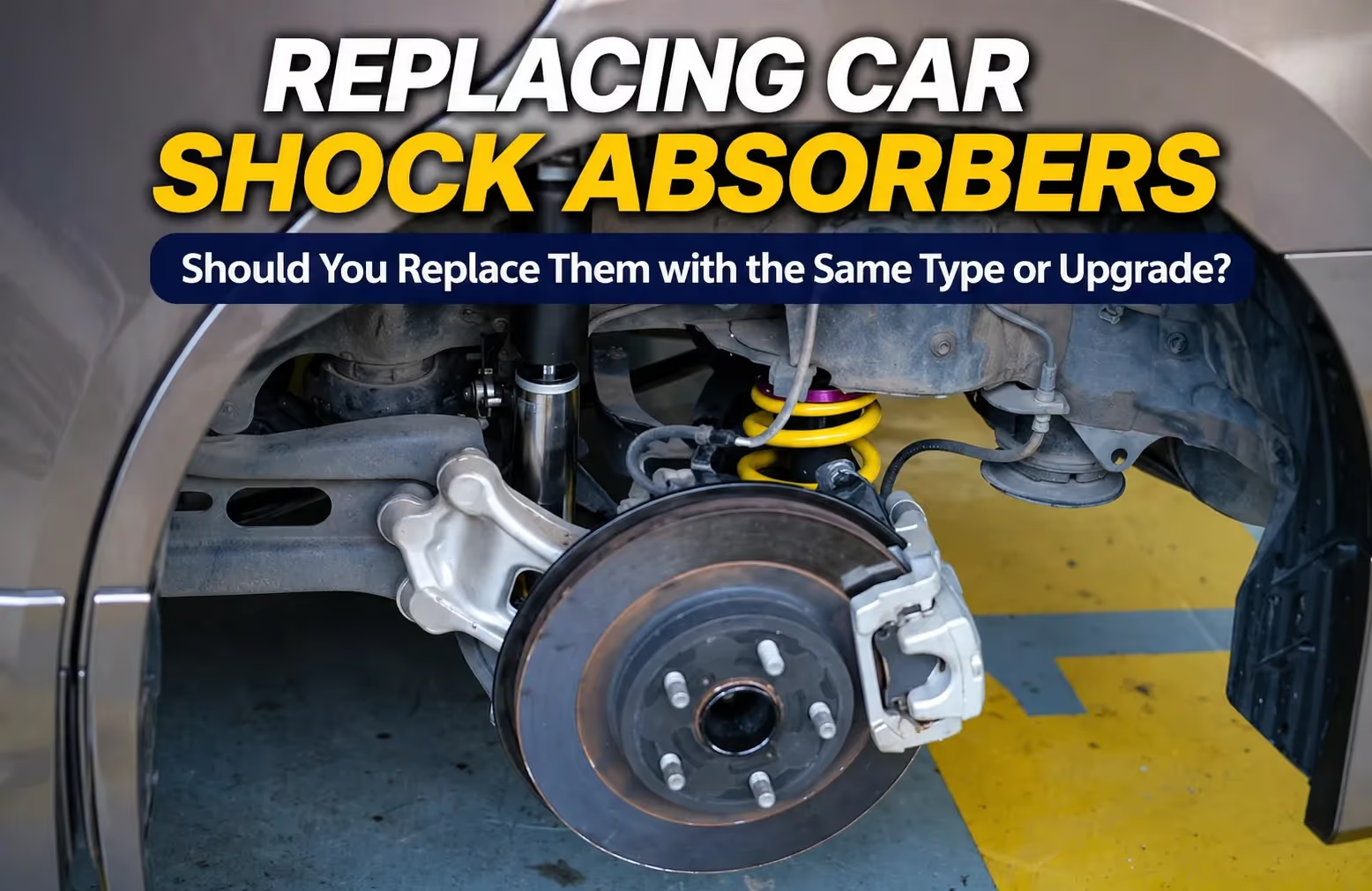
Upgrading your suspension with new car shock absorbers can improve comfort, handling, and safety.
Many drivers ask the same question: Should I replace ball joints and rubber bushings at the same time?
The answer depends on the condition of your suspension.
Shock absorbers do not work alone. Every suspension part works together. If one part wears out, the whole system suffers.
Replacing only the shock absorbers may not solve the problem completely.
This guide explains when to replace only the shocks and when to upgrade the full suspension system.
Why Replacing Only Shock Absorbers May Not Be Enough
Many drivers believe worn shock absorbers cause every suspension issue. That is not always true.
Loose ball joints, cracked bushings, and worn links can also create noise, poor handling, and instability.
If you install new shocks while old parts remain worn, several issues may continue.
- Suspension Noise May Stay
Knocking sounds often come from bushings or ball joints, not the shock absorbers. - Handling May Still Feel Poor
Soft bushings can reduce steering precision and body control. - Old Parts May Fail Faster
New shocks often place more load on ageing rubber parts.
When Should You Replace the Full Suspension System?
Sometimes replacing everything together saves more money in the long run.
High Mileage Vehicles
If your car has driven 80,000–100,000 km, many suspension parts may already be worn.
Replacing shocks, bushings, and joints together is often the smartest option.
Repeated Labour Costs
Replacing parts one at a time means extra labour charges later.
You may also need multiple wheel alignments.
Performance Upgrades
If you install stiffer aftermarket shocks, old bushings may become the weak point.
Many drivers upgrade to fresh OEM or urethane bushings.
Suspension Parts to Check with New Shock Absorbers
When technicians remove the shock assembly, they can inspect hidden suspension parts.
This is the best time to replace worn items.
Dust Boots
Dust boots protect the shock shaft from dirt, sand, and water.
A torn dust boot can damage the seal and cause oil leaks. Replace cracked or broken boots immediately.
Bump Stops
Bump stops cushion hard suspension impacts.
They help protect the shock absorber during severe compression.
Worn bump stops can damage the shock shaft or internal valves.
Strut Mount Rubber Insulators
These parts sit between the suspension and vehicle body.
They reduce vibration and noise entering the cabin.
Worn mounts often cause harshness and clunking sounds.
Stabilizer Link Ball Joints
These links connect the anti-roll bar to the suspension.
They help reduce body roll when cornering.
Worn links often create rattling noises on rough roads.
Control Arm Bushings
If shock absorbers manage vertical impacts, control arm bushings help control wheel movement in forward, rearward, and lateral directions.
These bushings serve as mounting points between the vehicle chassis and the wheel assembly, using thick rubber material to absorb vibration before it reaches the body.
Control arm bushings also help maintain proper wheel alignment angles while driving.
This is important during hard acceleration, sudden braking, and cornering forces.
Good bushings also reduce fine road vibration and prevent harshness or noise from entering the steering wheel and cabin.
Summary
Choosing to repair the suspension system by replacing only the shock absorbers may not always be the complete solution.
A vehicle’s suspension works as an interconnected system. If new shock absorbers with stronger damping must operate alongside loose ball joints or torn rubber bushings, the new shocks may never perform at their full potential.
In addition, the increased forces from the upgraded suspension can accelerate the failure of those ageing components.
This can lead to reduced driving performance, unwanted noise, poor handling, and premature wear of other related suspension parts.
Replacing multiple worn components at the same time often helps reduce hidden costs such as repeated labour charges and multiple wheel alignments.
Most importantly, it allows all suspension parts to work together properly, delivering the best comfort, control, and long-term reliability.
About the Author
This article was prepared by the expert technician team at K. Charoen Yangyont, established in 1983 from a passion for the automotive industry and a commitment to wholehearted service. Over the past 42 years, we have grown from a small tyre shop into two branches: K. Charoen Yangyont and K. Charoen Cockpit.
With decades of experience in the automotive industry, we understand that customers value convenience, speed, and quality. That is why we have developed our mobile tyre replacement service, bringing professional technicians and standard equipment directly to your location. Our goal is to make high-quality service more accessible and convenient for everyone. Whether you visit our shop or use our mobile service, we remain committed to delivering expert care with honesty and dedication.
Contact Us
K. Charoen Yangyont Branch
Address: K. Charoen Yangyont (Sukhumvit 91 Branch)
Opening Hours: Monday – Saturday, 8:30 AM – 6:00 PM
Phone: 02 331 9911, 02 331 8882-4
Line: @kc4418
K. Charoen Cockpit Branch
Address: K. Charoen Cockpit (Udomsuk 28 Branch)
Opening Hours: Monday – Saturday, 8:30 AM – 6:00 PM
Phone: 02 393 3356, 086 318 1401
Line: @kcockpit