


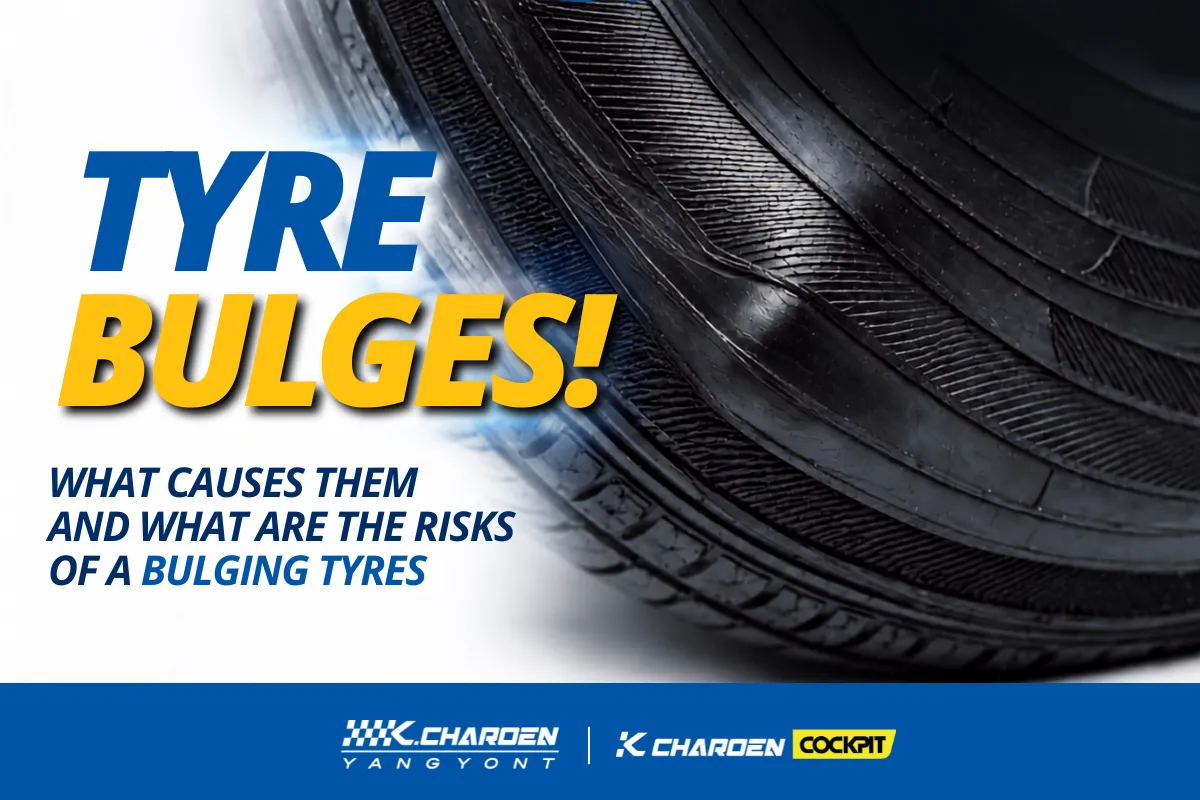
Can You Keep Driving with a Bulging Tyre? Is It Dangerous? How to Check It and What to Do
If you are driving normally and notice a lump or swollen area on the tyre sidewall, or someone points it out before you notice it yourself, this is a warning sign of a bulging tyre that should never be ignored.
The most common questions drivers ask are:
“Can I still drive with a bulging tyre?”
“Is a swollen car tyre really dangerous?”
In this article, the technician team at K. Charoen Yangyont and K. Charoen Cockpit will explain everything you need to know—from the root causes to the correct way to deal with the problem.
What Is a Bulging Tyre? Why Does the Sidewall Form a Lump?
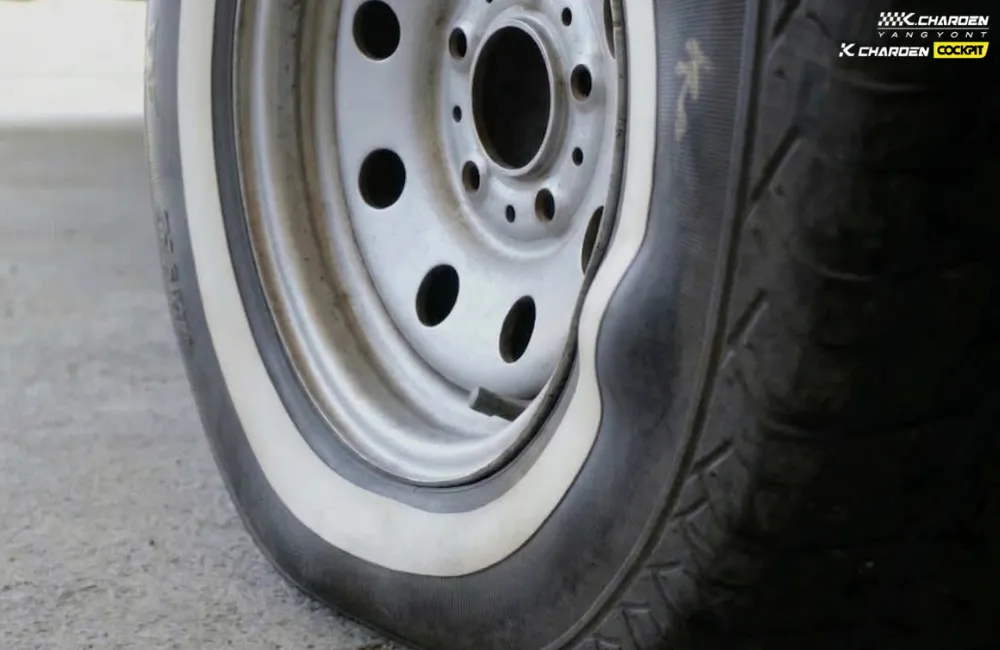
A bulging tyre happens when the internal cord layers (carcass) inside the tyre become damaged, broken, or separated.
When this happens, the air pressure inside the tyre pushes outward against the weakened outer rubber layer, creating a visible lump or swollen area on the tread or sidewall.
The most important thing to understand is that this damage happens inside the tyre structure.
It is not just a cosmetic scratch or minor surface mark that looks harmless from the outside.
That means a tyre can still hold air pressure and have good-looking tread, yet its internal structure may already be seriously compromised.
This is why the question “Is a bulging tyre dangerous?” has a very clear answer:
Yes—extremely dangerous.
A bulging tyre carries a high risk of sudden failure, blowout, or immediate loss of vehicle control, especially while driving at speed.
What Causes a Bulging Tyre? 5 Major Reasons
Before knowing how to fix a bulging tyre, it is important to understand why it happens.
In many cases, the cause comes from driving habits that people repeat without realising the damage being done.
Hitting Potholes Hard or Scraping Curbs
This is the most common cause.
When a vehicle hits a pothole hard or the wheel strikes a curb while parking or turning, the impact force can be strong enough to damage the internal tyre cords instantly.
The tyre may still look normal on the outside, but a bulge may appear a few days later.
Incorrect Tyre Pressure
Tyres with low pressure flex more than normal during impacts.
This forces the internal structure to absorb the shock directly instead of the air cushion inside the tyre.
The more often you drive with underinflated tyres, the higher the chance of internal cord damage.
On the other hand, overinflated tyres become too stiff and cannot absorb impacts effectively.
Overloading the Vehicle
Every tyre has a load rating set by the manufacturer.
If the vehicle regularly carries more weight than the tyre is designed for, the internal structure becomes fatigued much faster.
This increases the risk of a bulge forming after road impacts.
Poor Tyre Repairs or Moisture Inside the Tyre
Improper puncture repairs can also lead to tyre damage.
Using the wrong repair materials or patching only from the outside instead of properly repairing the inside may allow air or moisture to enter the tyre structure.
Over time, moisture can weaken the internal layers and cause a bulging tyre.
Old or Ageing Tyres
Even if the tread still looks usable, older tyres may have weakened internal cord layers.
As tyres age, the internal structure becomes more brittle and less flexible.
An impact that a newer tyre could handle may cause an old tyre to bulge immediately.
Can You Keep Driving with a Bulging Tyre? When Should You Stop Immediately?
The answer from professional technicians is clear:
You should not continue driving with a bulging tyre, no matter how small or large the bulge appears.
We need to be direct about this because once the internal tyre structure is damaged, no one can accurately predict how long it will hold.
Sometimes a tyre may last for many more kilometres.
Other times, it may fail after only a few more metres.
If a tyre blows out while driving—especially at high speed—the risk of a serious accident increases dramatically.
Is a Bulging Tyre Dangerous?
Imagine a tyre failure while driving on an expressway at 120 km/h.
The vehicle can lose control instantly, putting both you and other road users at serious risk.
Warning Signs That Mean You Should Stop Immediately
- A visible bulge on the sidewall or tread, regardless of size
- Unusual vibration while driving
- The steering wheel pulls to one side
- Abnormal noise coming from the wheel area
- The tyre looks flat or misshapen
What Should You Do If It Happens on the Road?
If you notice any of these warning signs while driving:
- Gradually reduce speed
- Move to a safe location
- Stop the vehicle carefully
- Contact roadside assistance or a tyre service provider
If you need a tyre replacement but do not want to risk driving to a shop, K. Charoen Yangyont and K. Charoen Cockpit offer mobile tyre replacement service with experienced technicians and professional tyre fitting and balancing equipment, so you do not have to continue driving on a dangerous bulging tyre.
K. Charoen Yangyont (Sukhumvit 91 Branch)
Phone: 02 331 9911, 02 331 8882-4
Line: @kc4418
K. Charoen Cockpit (Udomsuk 28 Branch)
Phone: 02 393 3356, 086 318 1401
Line: @kcockpit
SHARE THIS STORY


RELATES TAGS
More Post


Get to Know Car Tyres: The Essential Component That Makes Your Vehicle Perfect
Read More →
"Wheel Alignment and Balancing Near Me": How to Choose the Right Service for Your Vehicle
Read More →


On-Site Tyre Replacement Near Me by Expert Technicians – Fast Service (K Tyre Express)
Read More →