


Where Should You Get Your Car Checked? What Is Inspected, How Much Does It Cost, and What to Know Before Booking
Many cars may appear to be running normally, while some components have already started to deteriorate without the driver noticing. These may include cracked tyres, worn brake pads, leaking shock absorbers, a weakening battery, or incorrect wheel alignment. Regular vehicle inspections can help identify these issues before they develop into problems that affect safety and increase long-term costs.
If you are deciding where to get your car checked, choose a service centre that can inspect the key systems according to your vehicle’s condition. The team should explain the inspection results clearly and provide a list of recommended work and costs before proceeding. No additional parts should be replaced without the vehicle owner’s approval.
For drivers who want to check their tyres, wheels, brakes, suspension, battery, and other basic systems related to driving, you can book a vehicle inspection with K. Charoen Yangyont and K. Charoen Cockpit. Simply provide your vehicle model, any symptoms you have noticed, and your preferred branch. Our team can then help determine the appropriate inspection items for your vehicle.
Where Should You Get Your Car Checked? What Should You Consider?
A vehicle inspection can range from a general pre-trip check to diagnosing a specific system. The right service centre therefore depends on the problem and the driver’s needs. You should not choose a shop based only on the lowest price or the closest location.
Before booking, consider the following points.
A Clear Inspection Checklist
The service provider should clearly explain which systems are included in the inspection. These may include tyres, brakes, suspension, battery, engine oil, or other fluids.
Terms such as “free vehicle inspection” or “complete vehicle inspection” may cover different items at different service centres.
Able to Inspect the Specific Problem
If your vehicle has symptoms such as steering wheel vibration, pulling to one side, brake noise, or suspension noise, choose a service centre that can inspect the relevant system directly.
Clear Explanation of the Inspection Results
After the inspection, the technician should explain what was found. They should tell you which parts are still usable, which items should be monitored, and which problems should be addressed first.
The explanation should be easy to understand and avoid unnecessary technical jargon. This helps vehicle owners understand the information and make decisions with confidence.
Prices Provided Before Repairs or Parts Replacement
Finding a problem does not mean the service centre should begin repairs immediately. The vehicle owner should receive information about parts, labour costs, and any additional charges before making a decision.
Services That Match the Vehicle and How It Is Used
Cars used mainly in the city, vehicles driven long distances, vehicles carrying heavy loads, and cars regularly driven on rough roads may require different inspection items.
Telling the technician how you normally use your vehicle can help them recommend a more appropriate inspection.
Vehicle Inspection at K. Charoen Yangyont and K. Charoen Cockpit
Drivers who want to check their vehicle before a trip, or identify the cause of an unusual symptom, can book a vehicle inspection with K. Charoen Yangyont and K. Charoen Cockpit.
Our vehicle inspection covers 35 items across key systems. These include tyres and wheels, brakes, suspension, shock absorbers, battery, vehicle fluids, filters, and other basic components that affect driving safety.
Before your appointment, we recommend providing the following information:
- Vehicle make, model, and year
- Current mileage
- Symptoms you have noticed
- When the symptoms occur, such as during braking, cornering, or driving at speed
- Whether any warning lights appear on the dashboard
- Any previous repairs or parts replacements
- Whether you need a general inspection, diagnosis of a specific symptom, or a pre-trip check
This information helps the technician plan the inspection more accurately and check the relevant areas in greater detail.
Benefits of a Comprehensive Vehicle Inspection
One vehicle symptom can be caused by several different systems. For example, steering wheel vibration may come from wheel imbalance, tyre deformation, suspension problems, or worn steering components.
If only one area is checked, the actual cause may be missed.
A comprehensive inspection across several systems helps provide a clearer picture of the vehicle’s overall condition. It also helps identify which repairs or maintenance items should be prioritised to reduce the risk of problems during use.
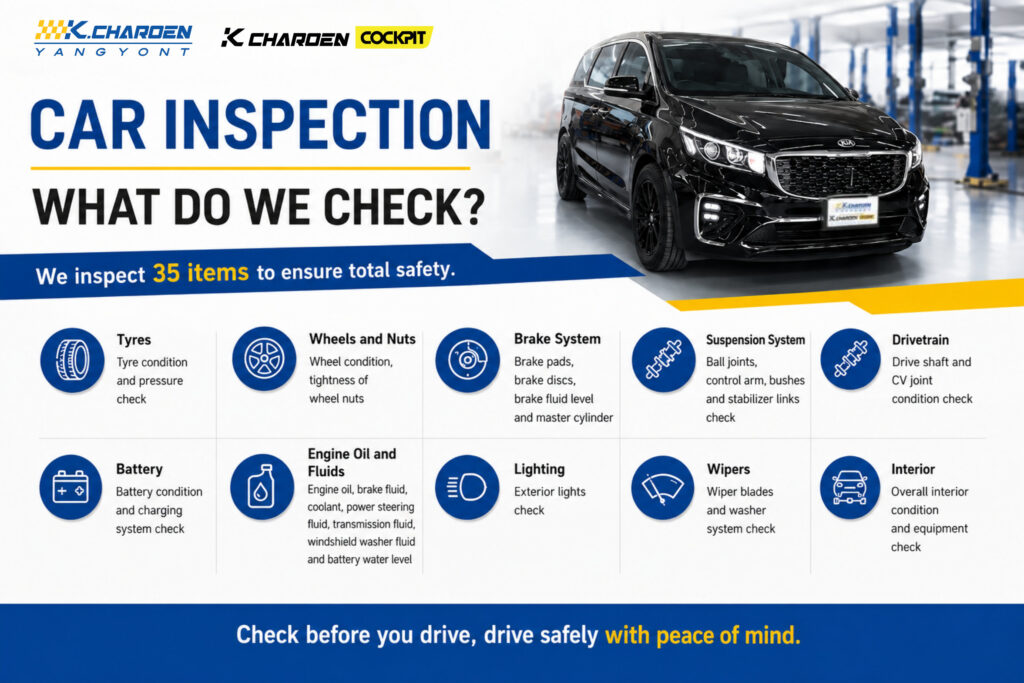
What Is Included in a Vehicle Inspection?
The inspection items may vary depending on the vehicle model, mileage, and how the car is used. In general, K. Charoen Yangyont and K. Charoen Cockpit provide vehicle inspections that cover the following key systems.
| System Checked | Inspection Items |
| Tyres and wheels | Tyre pressure, tread condition, tyre age, wheel condition, wheel nuts, spare tyre |
| Fluids and engine-related items | Engine oil, transmission fluid, brake fluid, clutch fluid, power steering fluid, coolant, windscreen washer fluid, battery water |
| Battery system | Battery condition and basic operation |
| Filters and basic equipment | Air filter, windscreen wipers |
| Suspension and steering system | Wheel bearings, ball joints, dust boots, bushes, drive shaft boots, leaf spring bushes |
| Shock absorber system | Shock absorber dust boots, shock absorbers, top mounts |
| Brake system | Brake pads, brake discs, brake hoses, brake cylinders |
| Underbody inspection | Leaks, damage, and loose or worn components |
Tyre Inspection
Tyres are the only parts of the vehicle that are in direct contact with the road. They should therefore be checked for tread condition, cracks, bulges, puncture damage, and tyre pressure.
It is not enough to check only whether there is tread remaining. Older tyres or tyres with structural damage may no longer be suitable for use, even if the tread still looks acceptable.
The wear pattern of all 4 tyres should also be checked. Wear on the inner edge, outer edge, or feathered wear may indicate problems with wheel alignment, suspension, or incorrect tyre pressure.
Wheel and Wheel Alignment Inspection
If the vehicle does not drive straight, the steering wheel is off-centre, or the car pulls to one side, the cause may involve wheel alignment, tyres, or suspension components.
Performing wheel alignment without checking the suspension first may not completely solve the problem. This is especially true if bushes, ball joints, or mounting points are already loose.
Steering wheel vibration at certain speeds may also be caused by wheel imbalance, tyre deformation, or a bent wheel. The cause should be identified before choosing the appropriate repair.
Brake System Inspection
The brake system should be inspected if there is unusual noise, vibration while braking, an abnormal brake pedal feel, or longer braking distances.
The inspection may include brake pads, brake discs, brake fluid, and related components.
Brake pad condition should not be judged by mileage alone. Service life depends on driving habits, road conditions, vehicle weight, and the type of brake pads used.
Shock Absorber and Suspension Inspection
If the vehicle bounces repeatedly after going over a speed bump, makes knocking noises, feels unstable, or shows unusual tyre wear, the shock absorbers and suspension should be checked together.
This may include bushes, ball joints, control arms, and other suspension components.
Suspension noise does not always mean the shock absorbers are faulty. It may come from top mount rubbers, stabiliser links, bushes, or loose mounting points.
Battery and Basic Electrical System Inspection
If the vehicle is slow to start, makes a clicking sound, has dim headlights, or the battery frequently goes flat, the battery, battery terminals, and basic charging system should be checked before replacing the battery.
A vehicle that will not start is not always caused by the battery. The problem may also involve the battery terminals, electrical wiring, alternator, or starter motor.
Engine Oil and Fluid Inspection
The level and condition of engine oil, coolant, brake fluid, and other vehicle fluids should be checked.
If the level drops abnormally, the cause should be investigated. Simply topping up the fluid without checking for leaks or damage may not solve the problem.
Fluid types and replacement intervals should follow the vehicle owner’s manual or manufacturer’s recommendations. Specifications may vary between vehicle models.
Filters, Windscreen Wipers, and Underbody Inspection
In addition to the main systems, the air filter, windscreen wipers, and vehicle underbody should also be inspected.
This helps identify leaks, damage, or components that are beginning to wear. Finding these issues early can help you plan vehicle maintenance before they develop into larger problems.
How Much Does a Vehicle Inspection Cost?
At K. Charoen Yangyont and K. Charoen Cockpit, we offer a free 35-point vehicle inspection with no service charge. The inspection covers key systems such as tyres and wheels, brakes, suspension, shock absorbers, battery, engine oil, and other vehicle fluids.
If any parts require repair, replacement, or additional maintenance, our team will explain the details and costs before proceeding. This allows the vehicle owner to review the information and make an informed decision.
Free Basic Vehicle Inspection
For vehicles that need a general check before a trip, before heavy use, or when there are no clear symptoms, K. Charoen Yangyont and K. Charoen Cockpit offer a free 35-point vehicle inspection.
The inspection covers key areas such as:
- Tyres and wheels
- Brake system
- Suspension and shock absorbers
- Battery
- Engine oil and other vehicle fluids
- Windscreen wipers, filters, and other important inspection points
Regular inspections help you understand the current condition of your vehicle. They also make it easier to plan maintenance before problems occur during use.
Free Scheduled Maintenance Inspection
This is suitable for vehicles that have reached their scheduled maintenance interval. This may include engine oil changes, filter replacement, brake system checks, battery checks, fluid checks, and other routine maintenance items.
If additional parts or maintenance are required, the cost will depend on the parts, consumables, and products selected by the customer. Our team will provide the details and price before carrying out any work.
Free Inspection for Specific Vehicle Symptoms
This is suitable for vehicles with clear symptoms such as:
- Vehicle or steering wheel vibration
- Vehicle pulling to one side
- Brake noise or vibration while braking
- Knocking noises from the suspension
- Difficulty starting or frequent battery failure
- Warning lights on the dashboard
- Unusual noises or smells while driving
You can bring your vehicle in for a free initial inspection to assess its condition and identify areas that may require further checking.
If any parts need to be replaced, our team will provide the details and costs before proceeding.
Free Pre-Trip Vehicle Inspection
This is suitable for drivers planning a long-distance trip, travelling to another province, or carrying several passengers and heavy luggage.
The inspection should focus on safety-related systems such as:
- Tyres and tyre pressure
- Brake system
- Suspension
- Battery
- Engine oil and other fluids
- Vehicle lights
- Windscreen wipers
- Emergency equipment
A pre-trip inspection helps you understand the basic condition of your vehicle and plan any necessary maintenance in advance.
If any parts or items need to be replaced, the cost will depend on what is required. Our team will always provide the price before carrying out any work.
What Costs May Apply If a Problem Is Found?
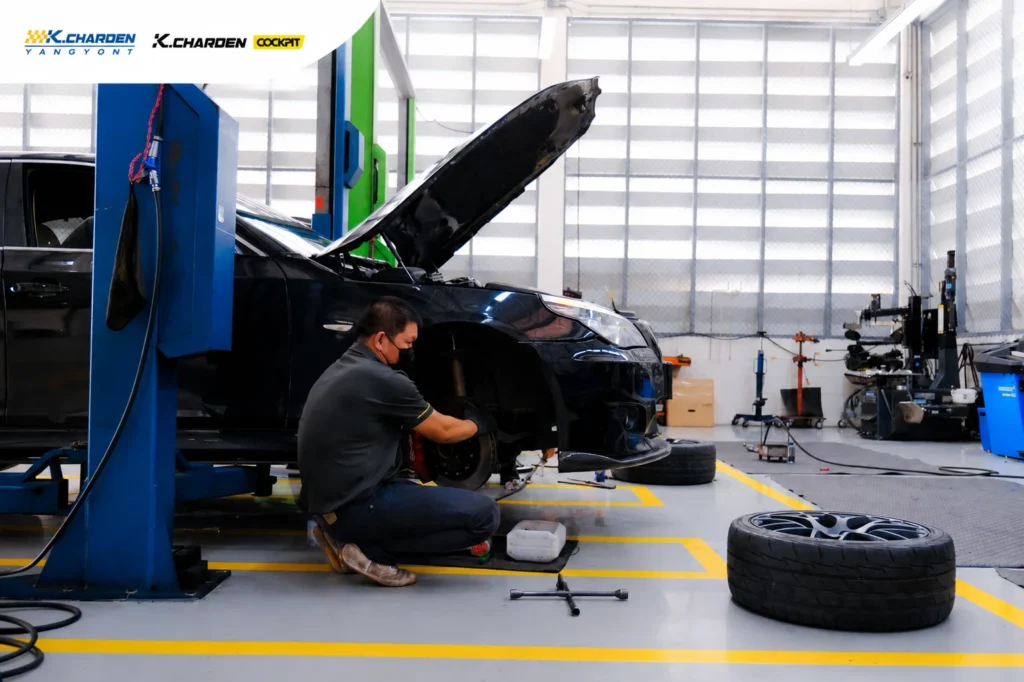
As mentioned above, we offer a free 35-point vehicle inspection with no service charge. If a problem is found, the technician will explain the inspection results and recommend suitable repair or replacement options. The vehicle owner can review the information before deciding whether to proceed.
Costs Depend on the Parts That Need Replacement
If worn or damaged components are found, the cost will depend on the parts and consumables that need to be replaced. These may include brake pads, shock absorbers, batteries, tyres, or vehicle fluids.
Details and Prices Are Provided Before Any Work Begins
Before any repair or parts replacement is carried out, our team will explain the inspection results, recommended work, and costs. This allows customers to review the information and make a decision before proceeding.
Only Necessary Items Are Replaced
If the inspection shows that some components are still in good working condition, they do not need to be replaced immediately. Our team will recommend only the repairs or replacements that are appropriate for the vehicle’s actual condition.
This helps vehicle owners plan maintenance and manage costs more effectively.
What Vehicle Symptoms Should Be Checked as Soon as Possible?
Do not wait until the next scheduled maintenance if you notice symptoms that may affect vehicle control or safety, such as:
- Steering wheel vibration or the vehicle pulling to one side
- Brake noise, vibration while braking, or changes in braking distance
- Knocking or metallic noises from the suspension
- Excessive bouncing or body roll
- Uneven tyre wear, bulges, or cracks
- Tyre pressure dropping unusually quickly
- Slow engine starting or frequent battery failure
- Warning lights appearing on the dashboard
- Fluid leaking underneath the vehicle
- Burning smells, fuel smells, or other unusual odours
- New or unusual noises that were not present before
If the vehicle becomes difficult to control, the brakes show serious problems, the tyre is damaged, or any component becomes loose or detached, do not continue driving.
Stop the vehicle in a safe location or use our KTYRE EXPRESS mobile service
How Often Should You Have Your Vehicle Checked?
The inspection interval should follow the vehicle owner’s manual, mileage, vehicle age, and how the car is used. The same interval should not be applied to every vehicle. In general, you should have the vehicle checked at the following times.
According to the Recommended Mileage or Time Interval
Even if the vehicle is not used often, fluids, tyres, and some components can still deteriorate over time. The vehicle should therefore be inspected according to the manufacturer’s recommended schedule. This helps keep the car ready for use and reduces the risk of hidden wear.
For customers who use our services, we keep a record of their service history. We also send SMS reminders when the next inspection or maintenance interval is due. This helps vehicle owners avoid missing the appropriate maintenance schedule.
Before a Long-Distance Trip
Before travelling, check the tyres, tyre pressure, brakes, battery, vehicle fluids, lights, and windscreen wipers. This is especially important before long journeys, driving in mountainous areas, or carrying several passengers and heavy luggage.
After Hitting a Pothole or Experiencing a Strong Impact
If the vehicle hits a pothole, strikes a kerb, or experiences a strong impact, check the tyres, wheels, wheel alignment, and suspension. This should be done even if there is no obvious external damage.
When You Notice Unusual Symptoms
Do not wait until the next scheduled inspection if the vehicle starts making unusual noises, vibrating, pulling to one side, braking differently, or showing warning lights. Have the vehicle inspected to identify the cause.
Before Buying or Selling a Used Car
A vehicle inspection can help assess the condition of the tyres, brakes, suspension, battery, and any items that may require repairs later.
However, a complete used-car inspection should also include the vehicle history, body structure, engine, and other systems as appropriate.
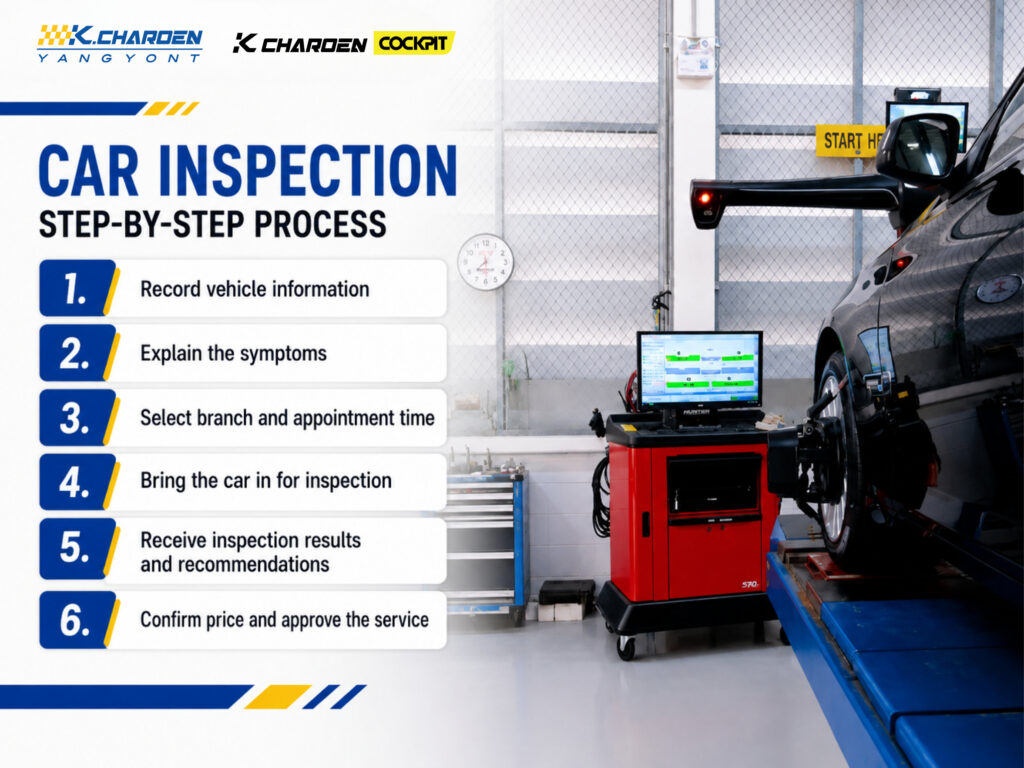
Steps for Booking a Vehicle Inspection
Preparing the relevant information before your appointment helps the team assess your vehicle and select the most appropriate inspection items.
1. Provide Vehicle Information
Provide the make, model, year, mileage, and engine type. If the vehicle has a specific system, such as Start-Stop or a hybrid system, mention this as well.
2. Describe the Symptoms
Explain when the symptoms occur, such as during acceleration, braking, cornering, driving over rough roads, or driving at speed. Also mention whether the symptoms happen continuously or only occasionally.
3. Choose a Branch and Appointment Time
Check which branch can provide the required inspection and choose a convenient time. If several systems need to be checked, ask for an estimated inspection time before travelling to the branch.
4. Bring the Vehicle in at the Scheduled Time
The team will inspect the vehicle based on the agreed checklist or the symptoms you reported. If additional checks are required, the reason should be explained before proceeding.
5. Review the Inspection Results and Recommendations
Ask for the results to be divided into 3 groups:
- Items that are still in good working condition
- Items that should be monitored
- Items that should be repaired or addressed first
6. Confirm the Price and Make a Decision
Before any repairs or parts replacement, check the parts prices, labour costs, warranty terms, and estimated completion time.
Checklist: Questions to Ask Before Using the Service
Before booking a vehicle inspection, you should ask the service centre the following questions:
- What inspection items are included?
- Is the inspection free, or is there a service charge?
- Is an appointment required?
- How long does the inspection usually take?
- Does the service centre support this vehicle model?
- If damage is found, will the price be provided before repairs begin?
- How are parts and labour costs charged?
- Is there a warranty for the service or replacement parts?
- Can I receive the inspection results or a list of recommendations?
These questions help you compare services more accurately and reduce misunderstandings about costs later.
Book a Vehicle Inspection with K. Charoen Yangyont and K. Charoen Cockpit
If your vehicle starts to vibrate, the steering wheel is off-centre, the brakes make noise, the suspension is noisy, the tyres are wearing unevenly, or you are planning a long-distance trip, you can book a vehicle inspection with K. Charoen Yangyont and K. Charoen Cockpit.
Before booking, we recommend preparing your vehicle model, mileage, any symptoms you have noticed, and your preferred branch. This helps our team recommend the most appropriate inspection items for your vehicle.
Frequently Asked Questions (FAQs) About Vehicle Inspections
A: Choose a service centre that can inspect the systems related to your vehicle’s symptoms. It should also provide a clear inspection checklist, explain the results, and give you the price before any repairs or parts replacement. If you need tyres, wheels, brakes, suspension, and the battery checked, choose a service centre that can inspect all of these systems in one place.
A: Choose a service centre that can reproduce the symptoms and inspect the related systems. For example, suspension noise should be checked together with the shock absorbers, bushes, ball joints, mounting points, and wheels. Parts should not be replaced based on sound alone.
A: K. Charoen Yangyont and K. Charoen Cockpit offer a free 35-point vehicle inspection with no service charge. If any parts require repair or replacement, our team will provide the details and costs before carrying out any work.
A: A basic inspection may not take long. However, it may take longer if the vehicle needs a test drive, several systems need to be checked, or some components need to be removed for inspection. You should describe the symptoms and ask for an estimated inspection time before your visit.
A: Yes. The vehicle should be inspected according to the maintenance schedule in the owner’s manual. An additional inspection is also recommended before a long-distance trip. Some components may begin to deteriorate before clear symptoms appear.
A: Check the tyres and tyre pressure, brakes, suspension, battery, engine oil, other fluids, vehicle lights, windscreen wipers, and emergency equipment. Additional items may need to be checked depending on the age and condition of the vehicle.
A: Not necessarily. Ask the service centre to separate the findings into items that affect safety and should be addressed first, items that should be monitored, and items that can still be used. Prices should also be provided before you make a decision.
A: Follow the vehicle owner’s manual because maintenance intervals vary between models. Time, driving conditions, and vehicle symptoms should also be considered. Do not wait until the scheduled mileage if you notice an abnormal symptom.
A: Check the tyre pressure, tyre condition, wheel balancing, bent wheels, wheel alignment, and suspension system. Steering wheel vibration can have several causes and may appear only at certain speeds.
A: It depends on the cause and severity. If the brake noise is accompanied by vibration, abnormal brake pedal feel, longer braking distances, or a warning light, stop using the vehicle and have it inspected as soon as possible. Do not continue driving long distances.
Interested in a vehicle inspection? Contact us at:
K. Charoen Yangyont Branch
Address: K. Charoen Yangyont (Sukhumvit 91 Branch)
Opening Hours: Monday – Saturday, 08:30 – 18:00
Tel: 02 331 9911, 02 331 8882-4
LINE: @kc4418
K. Charoen Cockpit Branch
Address: K. Charoen Cockpit (Udomsuk 28 Branch)
Opening Hours: Monday – Saturday, 08:30 – 18:00
Tel: 02 393 3356, 086 318 1401
LINE: @kcockpit
SHARE THIS STORY


RELATES TAGS
More Post


Get to Know Car Tyres: The Essential Component That Makes Your Vehicle Perfect
Read More →
"Wheel Alignment and Balancing Near Me": How to Choose the Right Service for Your Vehicle
Read More →
On-Site Tyre Replacement Near Me by Expert Technicians – Fast Service (K Tyre Express)
Read More →