


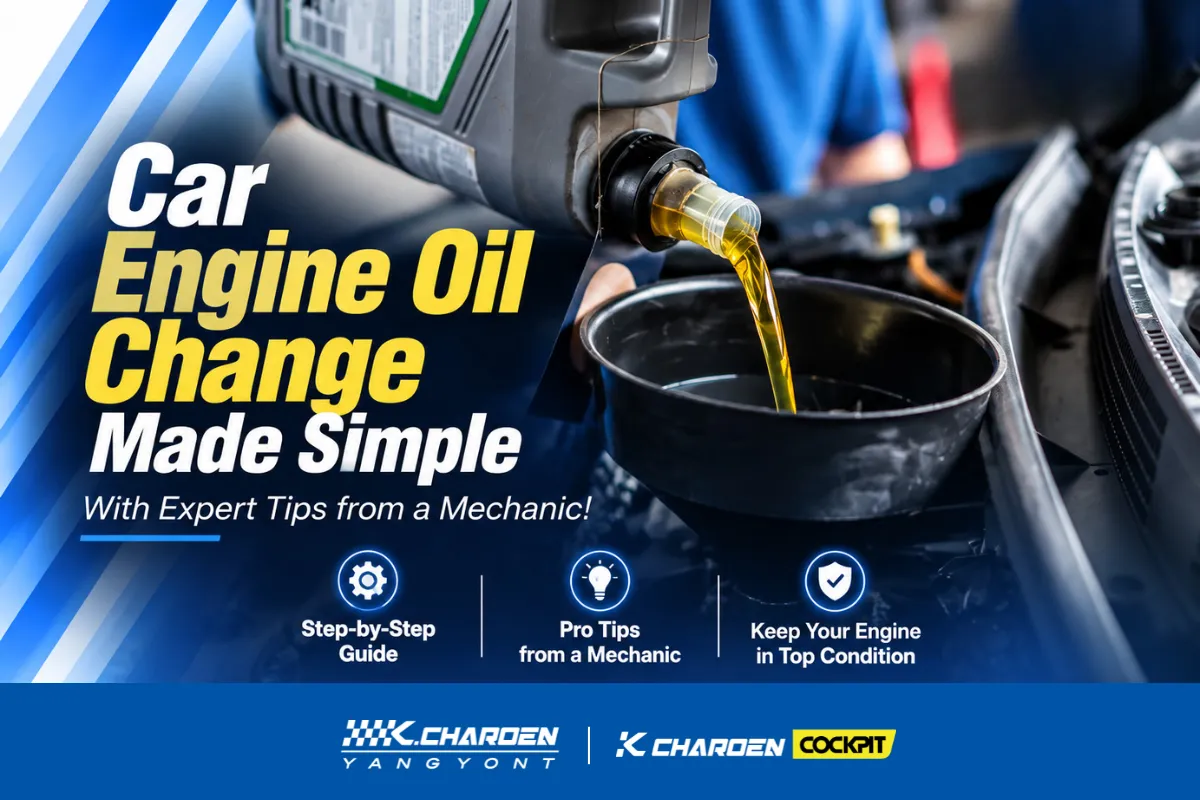
How to Change Your Car Engine Oil: A Simple Guide
Changing engine oil is a fundamental maintenance task that directly affects your engine’s lifespan. If you delay this service, the oil degrades and forces the engine to work harder. This neglect often leads to expensive repair costs later.
In this article, K. Charoenyangyont and K. Charoen Cockpit explain why engine oil is essential. We will cover the best time for a change and provide the exact steps professional technicians use. This guide helps every car owner understand the process and make the right decisions for their vehicle.
What is Engine Oil and Why is it Essential?
Engine oil is a vital fluid that lubricates moving parts, reduces friction, and manages heat within your vehicle. It also carries dirt and debris away from internal components. If the oil degrades, your engine will experience immediate and severe wear.
Professional technicians observe a clear difference in vehicles with regular oil changes. These cars run smoothly, maintain a quiet idle, and keep a steady operating temperature.
In contrast, vehicles with neglected oil often show early warning signs. You might notice a louder engine noise or a significant drop in power. For instance, the car may fail to accelerate quickly, forcing you to press the gas pedal harder than usual. Ignoring these signs eventually leads to unexpectedly high repair bills.
When is the Best Time to Change Your Engine Oil?
The best time for an oil change is every 5,000–10,000 km. or every 6 months. Manufacturers recommend following whichever comes first. At this point, the oil naturally begins to degrade based on your actual driving conditions.
Professional experience shows that city driving affects oil life significantly. Frequent short trips, heavy traffic, and constant idling cause oil to deteriorate faster than the odometer suggests. These conditions create high heat and incomplete combustion within the engine.
Therefore, technicians often recommend a “time-based” schedule for city drivers. Instead of waiting for the mileage limit, you should prioritize the 6-month interval. This ensures your engine remains protected even if you do not drive long distances.
What Happens if You Delay Your Oil Change?
When engine oil degrades, its lubricating properties drop immediately. This causes internal components to rub against each other more than usual. The resulting issues go beyond a loud engine or a rough drive. Over time, these problems accumulate and damage your engine’s long-term performance.
Based on real-world workshop experience, here are the most common impacts:
- Faster Engine Wear
Poor lubrication causes metal parts to friction directly. This leads to much faster wear and tear than normal. - Reduced Power and Acceleration
Increased friction forces the engine to work harder. You will feel the car becoming sluggish, requiring more gas pedal pressure to maintain speed. - Overheating Issues
Old oil fails to manage heat effectively. High internal temperatures can eventually damage seals, gaskets, and other critical components. - Sludge and Debris Buildup
Used oil contains carbon and metal particles. If you do not drain it, these contaminants block oil passages and prevent proper lubrication. - Increased Fuel Consumption
The engine consumes more energy to overcome internal friction. Consequently, your car burns more fuel than necessary. - High Long-Term Repair Costs
Neglecting oil changes can lead to damaged pistons, bearings, or complete engine failure. These repairs cost significantly more than a simple oil change.
Many serious engine issues start with a simple delay in maintenance. Car owners often notice these problems only after the damage becomes severe. Regular oil changes prevent these hidden costs and keep your vehicle reliable.
How to Check Your Engine Oil Level Yourself
Checking your engine oil level is a simple task that prevents major engine problems. You should perform this check while the engine is cool and the car is on level ground. Regular inspections help you spot issues before they cause damage.
How to Change Your Engine Oil Like a Professional
Changing your engine oil correctly requires attention to detail. Based on our workshop experience, most DIY mistakes happen during small tasks. Common issues include unsafe vehicle support, incorrect bolt tightening, or skipping the final check after starting the engine. Follow these steps carefully to achieve professional-grade results.

Step 1: Prepare Your Equipment and Safety Gear
Gather all necessary tools before you start to prevent errors. Our technicians emphasize vehicle safety and protection from hot oil. You will need:
- Correct Engine Oil: Refer to your manual for the right grade and standards.
- New Oil Filter: Always replace the filter with the oil.
- Wrench Set: Use a proper wrench for the drain plug and filter.
- Drain Pan and Funnel: These tools help keep your workspace clean.
- Safety Gear: Wear gloves, safety glasses, and have a rag ready.
- Jack and Jack Stands: Never work under a car supported only by a jack.
Step 2: Prepare the Vehicle and Open the Oil Cap
Turn off the engine and let it cool slightly. Technicians recommend warming the engine briefly before starting, as warm oil flows more easily and carries away more dirt. Open the hood and remove the oil filler cap. This allows air to enter the system, helping the old oil drain more smoothly.
Step 3: Drain the Old Oil Patiently
Place the drain pan directly under the oil pan. Carefully loosen the drain plug with your wrench. Be mindful of the initial pressure and heat as the oil begins to flow. Let the old oil drain completely. Avoid rushing to reinstall the plug, as leaving old oil behind reduces the efficiency of your new oil.
Step 4: Replace the Oil Filter Every Time
Once the oil stops dripping, remove the old oil filter. Technicians always recommend a new filter to prevent old contaminants from entering the engine. Before installing the new filter, tighten it by hand until it is snug. Avoid over-tightening to make future removals easier. Wipe away any excess oil to help you check for leaks later.
Step 5: Refill with New Engine Oil
Reinstall the drain plug and tighten it firmly. Pour the new engine oil into the filler hole using a funnel. Always refer to your owner’s manual for the exact capacity. Pour the oil slowly and use the dipstick to check the level regularly. Do not overfill, as excessive oil can cause abnormal pressure within the engine.
Step 6: Start the Engine and Final Inspection
Start the engine and let it idle for a short time. This allows the fresh oil to circulate throughout the system. Check underneath the car for any leaks around the drain plug or oil filter. Finally, turn off the engine, wait a few minutes, and verify the oil level on the dipstick one last time.
DIY vs. Professional Service: Which is Better for You?
After learning the process, many drivers wonder whether to change the oil themselves or visit a service center. There is no single answer, as the best choice depends on your tools, workspace, and confidence.
The Pros and Cons of DIY Oil Changes
Changing your own oil is ideal if you have the right equipment and a safe workspace. The main benefits include saving on labor costs and choosing your preferred oil brand. However, you must take full responsibility for every detail. From securing the vehicle to ensuring no leaks occur after starting the engine, even a small mistake can lead to serious issues later.
Why Choose K. Charoenyangyont and K. Charoen Cockpit?
Professional service offers more than just an oil change. When you visit a service center, technicians perform a comprehensive vehicle health check. They inspect for leaks and monitor the levels of your gear oil and brake fluid. This proactive approach prevents long-term problems, especially for daily drivers or older vehicles.
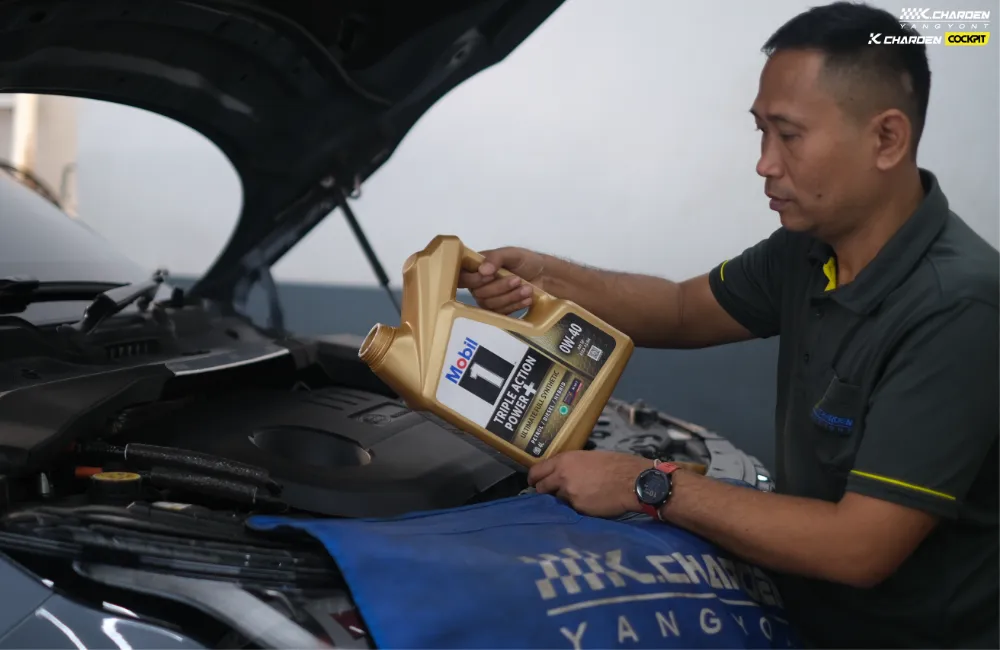
At K. Charoenyangyont and K. Charoen Cockpit, we use premium products like Mobil 1 for every oil change. Our experts also perform the following checks:
- Lubrication System Inspection: We check for any signs of leaks or damage.
- Fluid Level Verification: We ensure your gear oil and brake fluid are at optimal levels.
- Safety Assurance: We verify that your car is safe and ready for the road before it leaves our center.
If you have the skills and tools, DIY is a great option. However, if you want peace of mind and complete vehicle care, professional maintenance remains a valuable long-term investment.
How to Properly Dispose of Used Engine Oil
After completing your oil change, you must handle the old oil responsibly. Never pour used engine oil onto the ground, into drains, or into natural water sources. These actions cause severe environmental damage and contaminate local water supplies.
Frequently Asked Questions (FAQs) About Engine Oil Changes
Should I follow mileage or time intervals for an oil change?
You should monitor both and follow whichever comes first. The general guideline is every 5,000–10,000 kilometers or every 6 months. If you drive mostly in heavy city traffic or leave your car parked for long periods, time becomes more important than mileage.
Is it okay to delay an oil change past the due date?
A slight delay is acceptable in rare cases, especially if you drive very little. However, you should not make this a habit. Degraded oil fails to lubricate internal parts correctly, leading to hidden engine wear. Over time, this damage accumulates and often becomes difficult to repair.
Do I really need to replace the oil filter every time?
Yes, technicians recommend replacing the filter during every oil change. Old filters trap soot and debris from previous use. If you keep the old filter, it immediately contaminates your fresh oil, reducing its ability to protect the engine fully.
Are there any downsides to changing oil too frequently?
Frequent oil changes do not harm the engine directly. However, changing oil too often results in unnecessary spending. If you select the correct oil grade and follow the recommended intervals, your engine will receive optimal protection and provide the best long-term value.
Conclusion: Maintain Your Engine for the Long Run
Changing your engine oil is a fundamental task that directly affects your car’s lifespan and performance. When you choose the right oil and follow the recommended intervals, your engine runs smoothly, stays quiet, and operates at peak efficiency.
Whether you prefer a DIY approach or professional service at K. Charoenyangyont and K. Charoen Cockpit, the key is consistency. Always understand the process, perform thorough checks, and never let your oil degrade beyond its limit. Remember, these small, regular maintenance steps prevent major engine damage and save you significant repair costs in the future.
About the Authors
The content in this article comes directly from the hands-on experience of the technician teams at K. Charoenyangyont and K. Charoen Cockpit. Every day, our experts perform professional oil changes and routine vehicle maintenance. We observe a clear difference between engines that receive regular care and those suffering from neglected, degraded oil.
In our daily workshop operations, we look beyond just the basic steps. We prioritize the correct timing, precise methods, and comprehensive inspections to ensure your engine operates at peak efficiency while reducing long-term damage.
We wrote this article to share the real-world insights, professional logic, and actual challenges our technicians encounter on the job. Our goal is to provide you with the knowledge and confidence to maintain your vehicle like an expert.
For more information, please contact us at:
K. Charoenyangyont
Location: K. Charoenyangyont (Sukhumvit 91 Branch)
Operating Hours: Monday – Saturday, 08:30 – 18:00
Tel: 02 331 9911, 02 331 8882-4
Line: @kc4418
K. Charoen Cockpit
Location: K. Charoen Cockpit (Udom Suk 28 Branch)
Operating Hours: Monday – Saturday, 08:30 – 18:00
Tel: 02 393 3356, 086 318 1401
Line: @kcockpit
SHARE THIS STORY


RELATES TAGS
More Post




Get to Know Car Tyres: The Essential Component That Makes Your Vehicle Perfect
Read More →

"Wheel Alignment and Balancing Near Me": How to Choose the Right Service for Your Vehicle
Read More →


On-Site Tyre Replacement Near Me by Expert Technicians – Fast Service (K Tyre Express)
Read More →