


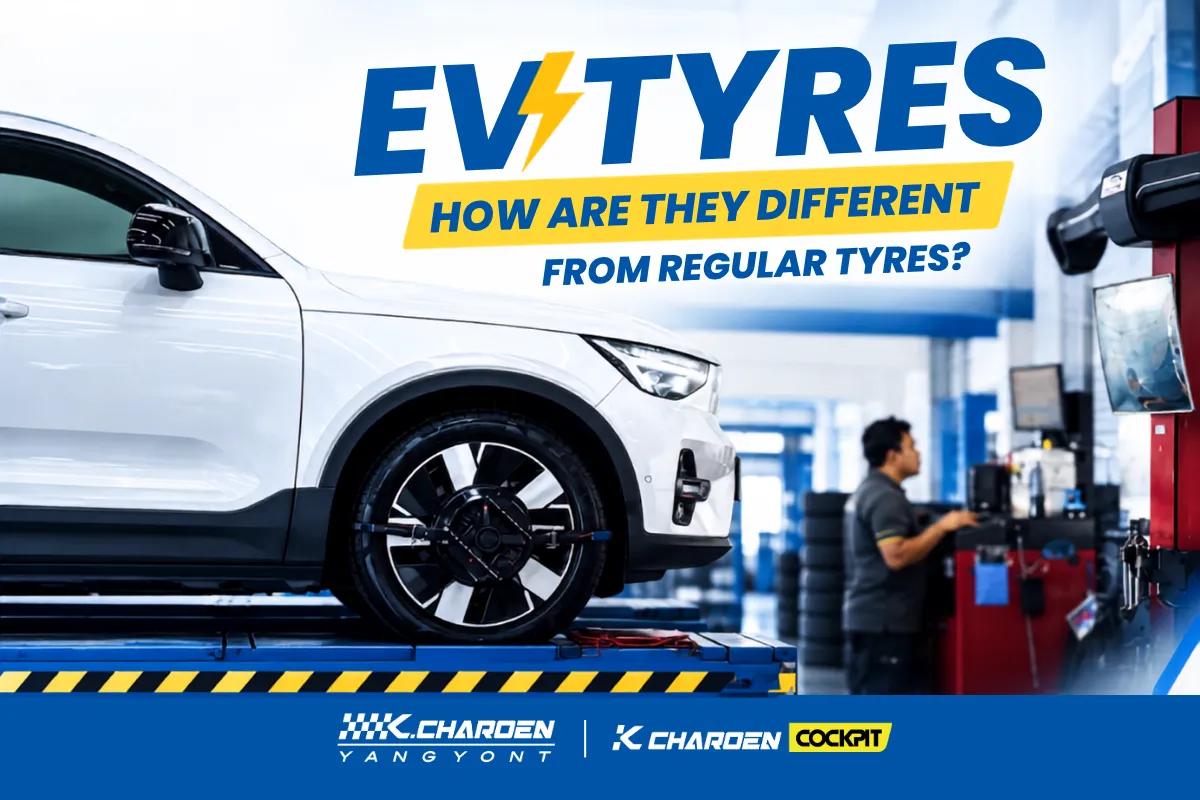
How Are EV Tyres Different from Regular Tyres? What Every EV Owner Should Know About Choosing and Maintaining Them
Today, electric vehicles have rapidly become part of everyday life for many drivers in Thailand. With their quiet operation, instant acceleration, and lower energy costs, EVs are transforming the driving experience in ways traditional vehicles never could.
However, one important detail many first-time EV owners often overlook is the importance of EV tyres.
At first glance, EV tyres may look almost identical to standard car tyres. But in reality, tyres designed specifically for electric vehicles are engineered with completely different technologies to support the unique characteristics of EVs — especially the instant torque produced by electric motors and the significantly heavier vehicle weight caused by large battery packs.
This article will explore everything EV owners need to know about EV tyres, including:
- How EV tyres differ from conventional tyres
- Why electric vehicles require specialised tyre technology
- How to choose the right tyres for your EV
- Essential maintenance tips to improve tyre lifespan and safety
By understanding these differences, EV owners can enjoy better performance, greater efficiency, improved comfort, and safer long-term driving.
Why Do Electric Vehicles Need Specialised EV Tyres?
Using standard tyres on an electric vehicle may lead to more than just faster tyre wear.
In many cases, it can also affect driving safety, ride quality, and even reduce the vehicle’s driving range more significantly than many owners expect.
There are three major reasons why electric vehicles require tyres specifically designed for EVs.
- Heavier Vehicle Weight
One of the biggest differences between electric vehicles and conventional cars is battery weight.
EV battery packs are extremely heavy, which means most electric vehicles weigh approximately 20–30% more than comparable petrol-powered vehicles.
Because of this additional weight, EV tyres require:
– Stronger internal construction
– Reinforced sidewalls
– Higher load-bearing capability
These features help the tyres safely support the increased pressure and maintain stability during daily driving. - Instant Torque from Electric Motors
Unlike petrol engines, electric motors deliver maximum torque immediately when the accelerator is pressed.
This instant power delivery creates much stronger friction between the tyre surface and the road.
As a result:
– Tyres experience higher stress during acceleration
– Tread wear can occur much faster
– Standard tyres may wear out significantly quicker on EVs
EV-specific tyres are therefore engineered with specialised rubber compounds and tread designs to better handle the intense torque produced by electric motors. - Quieter Cabin Requires Better Noise Reduction
One of the most distinctive characteristics of electric vehicles is their quiet cabin environment.
Without engine noise masking road sounds, the remaining noises drivers hear mostly come from:
– Wind resistance
– Tyre contact with the road surface
Because of this, EV tyres are designed with advanced noise-reduction technology to help preserve the smooth and quiet driving experience expected from modern electric vehicles.
Many EV tyres include:
– Noise-absorbing foam inside the tyre
– Low-noise tread patterns
– Special rubber compounds that reduce vibration and road noise
These technologies help maintain the premium silence that has become one of the key advantages of EV ownership.
5 Key Differences That Make EV Tyres Stand Out from Regular Tyres
At first glance, EV tyres may look very similar to conventional car tyres.
However, beneath the surface, nearly every aspect of their engineering has been redesigned to meet challenges that traditional tyres were never originally built to handle.
Here are the five major differences that make EV tyres unique compared to regular tyres.
1. Reinforced Sidewall Construction
EV tyres are commonly marked with HL (High Load) ratings or feature specially reinforced sidewalls.
Because electric vehicles are significantly heavier due to their battery packs, tyres must support much higher loads during:
- Cornering
- Sudden braking
- High-speed driving
The reinforced sidewall structure helps prevent tyre deformation and improves overall stability under heavy vehicle weight.
If you would like to learn more about tyre sidewall technology, you can click to read further details.
2. Lower Rolling Resistance
To maximise driving range from a single battery charge, EV tyres are designed with extremely low rolling resistance.
This allows the vehicle to move more efficiently while reducing energy loss caused by tyre friction.
Benefits include:
- Improved battery efficiency
- Longer driving range
- Reduced energy consumption
Low rolling resistance has become one of the most important design priorities for modern EV tyres.
3. Specialised Rubber Compounds
Electric motors produce strong instant torque, which places much greater stress on tyre surfaces during acceleration.
To handle this, EV tyres use specially engineered rubber compounds containing advanced materials such as:
- Silica compounds
- Performance resins
- High-durability polymers
These materials help improve:
- Tyre durability
- Heat resistance
- Tread wear performance
compared to standard tyres.
4. Noise-Reducing Tread Design
Because electric vehicles operate so quietly, tyre noise becomes much more noticeable inside the cabin.
Leading tyre manufacturers therefore incorporate advanced noise-reduction technologies into EV tyres, including:
- Acoustic foam inside the tyre cavity
- Special tread patterns with variable pitch sequencing
- Vibration-reducing tread designs
These innovations help minimise road noise and maintain the refined cabin quietness expected from modern EVs.
5. Enhanced Grip and Stability
Electric vehicles often deliver extremely fast acceleration, especially during 0–100 km/h performance runs.
To safely manage this instant power delivery, EV tyres are designed with contact patches and tread patterns that provide:
- Stronger road grip
- Better traction
- More precise vehicle control
This enhanced grip is essential for maintaining stability and safety during both acceleration and emergency manoeuvres.
How to Choose the Right EV Tyres for Maximum Value and Safety
Once you decide to step into the world of electric vehicles, choosing the right tyres becomes one of the most important parts of maintaining your car properly.
A single set of tyres can directly affect:
- How far your EV can travel on one charge
- How quiet the cabin feels
- How safely the vehicle performs during sudden braking under heavier vehicle weight
Choosing tyres for an electric vehicle is no longer just about selecting a familiar brand or matching wheel size.
Modern EV tyre selection requires drivers to consider both their driving lifestyle and the tyre’s technical specifications to ensure the best balance between performance, comfort, efficiency, and long-term value.
If you would like expert guidance, the team at K. Charoen Yangyont and K. Charoen Cockpit is always ready to help recommend the most suitable tyres for your vehicle and driving needs.
Check for EV-Specific Tyre Markings
Look for tyres specifically designed for electric vehicles.
Many manufacturers now include special markings or EV-specific codes indicating that the tyre has been engineered to support the unique demands of EV driving.
These tyres are typically optimised for:
- Higher load capacity
- Lower rolling resistance
- Better noise reduction
- Improved durability under instant torque
Verify the Load Index
Always check your vehicle manual to confirm the correct Load Index recommended by the manufacturer.
Because EVs are heavier than conventional vehicles, using tyres with insufficient load ratings can negatively affect:
- Driving stability
- Tyre durability
- Braking performance
- Overall safety
Never choose tyres with a lower load index than the original factory specification.
Choose Energy-Efficient Tyres
To maximise driving range, select tyres with high energy-efficiency ratings whenever possible.
Tyres rated:
- Grade A
- Grade B
for rolling resistance efficiency can help improve battery performance and allow the vehicle to travel further per charge.
This becomes especially important for drivers who frequently travel long distances or want to optimise EV efficiency.
Comfort vs Performance: Choose According to Your Driving Style
Your driving style should also influence your tyre selection.
If you prefer:
- Fast acceleration
- Sharper handling
- Sportier driving dynamics
then Performance EV tyres may be the better choice.
However, if your driving mainly involves:
- Daily city driving
- Comfortable commuting
- Quiet cabin refinement
then Comfort EV tyres will usually provide a smoother and quieter driving experience better suited for everyday use.
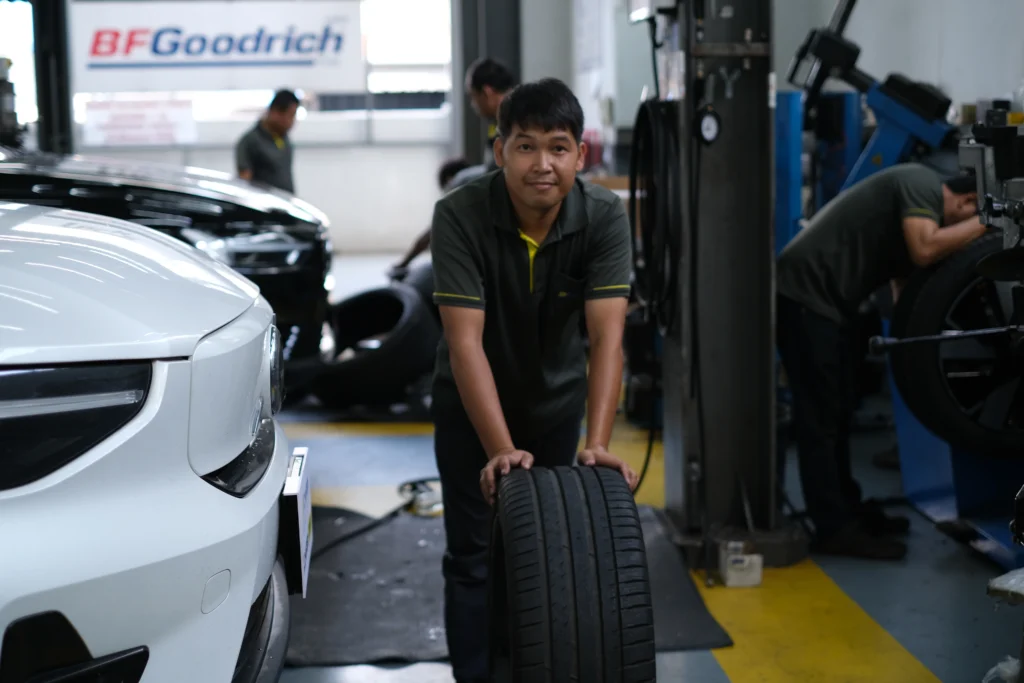
Tips for Maintaining EV Tyres and Extending Their Lifespan
Because EV tyres typically cost around 10–20% more than conventional tyres — and sometimes significantly more for premium models — proper tyre maintenance is not only important for safety, but also for managing long-term ownership costs.
Taking care of your EV tyres correctly can help prevent premature wear and reduce the need for expensive replacements earlier than expected.
Check Tyre Pressure Regularly
Underinflated tyres increase rolling resistance, causing:
- Higher battery consumption
- Reduced driving range
- Uneven tyre wear
To maintain optimal efficiency and tyre performance, it is recommended to check tyre pressure at least 1–2 times per month.
Proper tyre pressure also helps improve vehicle stability and overall driving comfort.
Rotate Tyres at Recommended Intervals
Many electric vehicles use:
- Rear-wheel drive systems
- All-wheel drive systems
which distribute power differently across the tyres.
Because of this, tyre wear may occur unevenly between the front and rear tyres.
Rotating the tyres approximately every 10,000 kilometres helps ensure more even tread wear across all four tyres, extending overall tyre lifespan.
Avoid Aggressive Acceleration
The instant torque of electric vehicles can feel extremely exciting to drive.
However, frequent hard acceleration is one of the biggest causes of rapid tyre wear on EVs.
Repeated full-throttle launches create intense friction between the tyres and road surface, which can quickly reduce tread depth.
Driving more smoothly can significantly extend tyre lifespan while also improving energy efficiency.
Maintain Proper Wheel Alignment and Balancing
Because EVs are heavier than conventional vehicles, their suspension systems can sometimes become misaligned more easily over time.
If you notice symptoms such as:
- The vehicle pulling left or right
- Uneven tyre wear
- Steering instability
you should have the wheel alignment and balancing inspected as soon as possible.
Proper alignment helps maintain:
Longer tyre life overall
Even tyre wear
Better driving stability
Improved handling performance
Conclusion
Choosing tyres specifically designed for electric vehicles is not simply a marketing trend — it is directly related to performance, safety, efficiency, and long-term driving comfort.
Investing in high-quality EV tyres can help your vehicle:
- Travel further on a single charge
- Deliver a quieter driving experience
- Improve braking confidence and road grip
- Maintain better overall driving stability
For EV owners, understanding how EV tyres work and why they differ from conventional tyres is essential for unlocking the vehicle’s full potential.
Proper tyre selection and maintenance can also help reduce unnecessary long-term costs caused by premature tyre wear and reduced efficiency.
As electric vehicles continue becoming more advanced in 2026 and beyond, choosing the right tyres will remain one of the most important parts of maintaining both safety and driving performance.
Contact Us
K. Charoen Yangyont Branch
Address: K. Charoen Yangyont (Sukhumvit 91 Branch)
Opening Hours: Monday – Saturday, 8:30 AM – 6:00 PM
Phone: 02 331 9911, 02 331 8882-4
Line: @kc4418
K. Charoen Cockpit Branch
Address: K. Charoen Cockpit (Udomsuk 28 Branch)
Opening Hours: Monday – Saturday, 8:30 AM – 6:00 PM
Phone: 02 393 3356, 086 318 1401
Line: @kcockpit
SHARE THIS STORY


RELATES TAGS
More Post

Get to Know Car Tyres: The Essential Component That Makes Your Vehicle Perfect
Read More →
"Wheel Alignment and Balancing Near Me": How to Choose the Right Service for Your Vehicle
Read More →
On-Site Tyre Replacement Near Me by Expert Technicians – Fast Service (K Tyre Express)
Read More →