


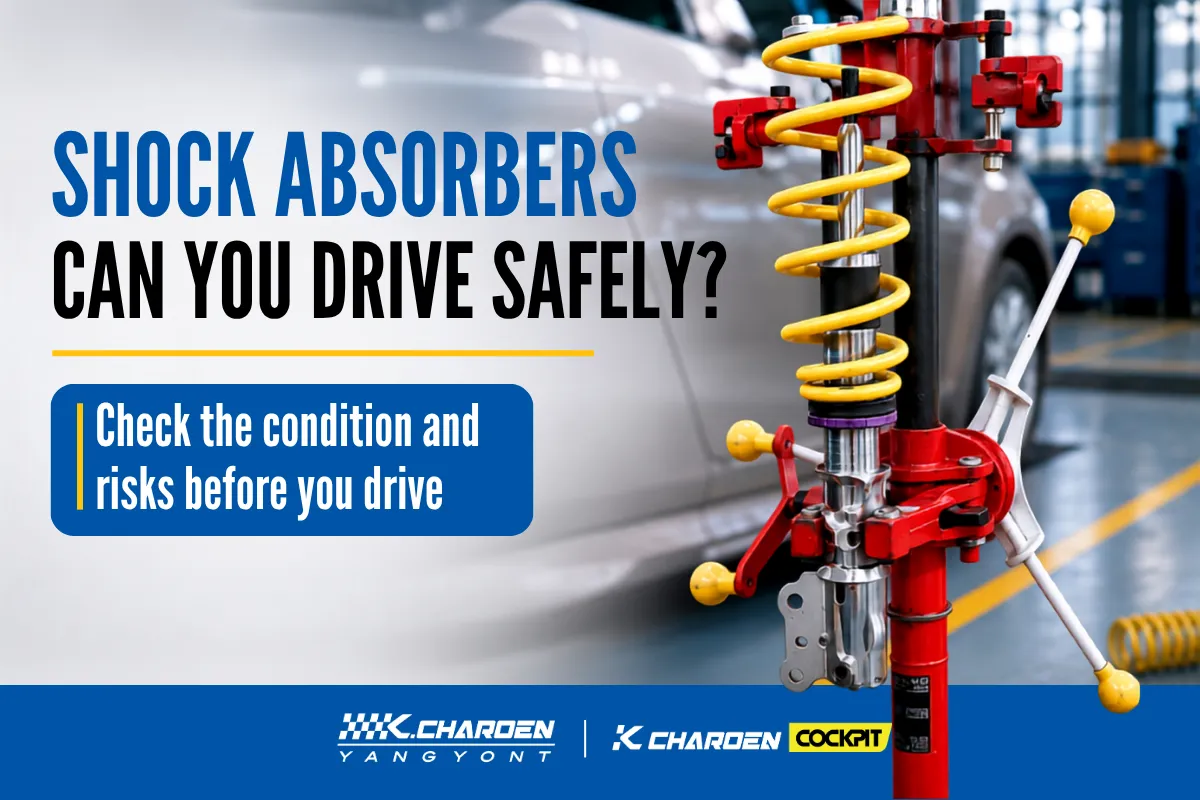
Can You Drive with a Broken Shock Absorber? How Dangerous Is It and What Should You Do?
Can you drive with a broken shock absorber? In some cases, the vehicle may still be able to move. However, you should not continue driving for a long distance. Shock absorbers help control the compression and rebound of the springs. They also help keep the tyres in contact with the road and improve vehicle stability during braking, cornering, and driving over uneven surfaces.
When a shock absorber is leaking, worn, or damaged, the vehicle may still run normally because the engine and transmission are unaffected. However, vehicle control can become less effective. This is especially noticeable at high speeds, during sudden braking, while cornering, or on wet roads.
If the vehicle bounces excessively, leans to one side, makes unusual suspension noises, becomes difficult to steer, or the tyre rubs against the wheel arch, stop in a safe place. You should then choose a vehicle inspection centre and have the vehicle inspected. Do not continue driving unnecessarily.
What Does a “Broken Shock Absorber” Mean?
คำThe term “broken shock absorber” is commonly used by drivers to describe several types of shock absorber problems, such as:
- Oil leaking from the shock absorber body
- Worn shock absorber seals that can no longer maintain pressure
- A bent or damaged shock absorber rod
- A shock absorber that can no longer control spring compression
- Damaged shock absorber mounts, bushes, or top mount rubbers
- A shock absorber that is broken or detached from its mounting point
Therefore, if you notice oil around the shock absorber, you should not immediately assume how severe the damage is. It should be checked together with other symptoms, such as excessive bouncing, poor vehicle stability, unusual noises, or abnormal tyre wear.
Is a Leaking Shock Absorber Dangerous?
If you ask, “Is a leaking shock absorber dangerous?”, the answer depends on how severe the leak is and how much damping performance remains.
If there is only a slight film of oil, the vehicle may not show any obvious symptoms yet. However, if oil is visibly running down the shock absorber or the shock can no longer control impacts effectively, it can directly affect driving safety.
What Happens If You Continue Driving with Worn Shock Absorbers?
Shock absorbers play an important role in vehicle stability and reducing vibration. If they become worn or start leaking and are not inspected or replaced when necessary, driving performance may be affected. Other components may also wear out faster than normal.
Vehicle Control May Decrease
When shock absorbers no longer work effectively, the vehicle may become less stable. This is especially noticeable when cornering, changing lanes, or driving on rough roads. As a result, the driver may feel less confident in controlling the vehicle.
Braking Performance May Be Reduced
Shock absorbers help keep the tyres in contact with the road. If they are worn, the wheels may bounce or lose contact with the road for short moments. This can reduce braking performance, especially on wet or uneven roads.
Tyres and Suspension Components May Wear Faster
Vibrations that are not properly absorbed by the shock absorbers are transferred to the tyres, ball joints, bushes, rubber mounts, and other suspension components. This can cause faster wear and may shorten the service life of these parts.
Ride Comfort May Decrease
The vehicle may bounce, sway, or transmit more road impact than usual. This can make driving less comfortable for both the driver and passengers, especially on long journeys.
Repair Costs May Increase
If worn shock absorbers continue to be used, other suspension components may also be affected. It is therefore advisable to have the vehicle inspected when unusual symptoms first appear. This can help reduce the risk of further damage.

How Far Can You Drive with a Broken Shock Absorber?
There is no single safe driving distance that applies to every vehicle. It depends on the level of damage, road conditions, speed, vehicle load, and how the car behaves at the time.
If the vehicle still feels normal to control, there are no severe impact noises, no loose components, and the wheel or tyre is not rubbing against the vehicle, you may be able to drive slowly for a short distance to a safe location or the nearest repair centre.
However, if the shock absorber is broken or clearly worn, you should not continue driving for a long distance. Have the vehicle inspected or repaired as soon as possible. A damaged shock absorber can affect vehicle control, especially when driving over potholes, on wet roads, during sudden braking, or when changing lanes quickly.
What Symptoms Mean You Should Stop Driving Immediately?
Stop the vehicle in a safe location and avoid continuing to drive if you notice any of the following:
- The vehicle is visibly leaning to one side
- A wheel or tyre is rubbing against the wheel arch
- Loud metallic impact noises are coming from the suspension
- The vehicle keeps bouncing and becomes difficult to control
- The steering wheel vibrates severely or the vehicle pulls strongly to one side
- The shock absorber rod, mounting point, or another suspension component has come loose
- A large amount of shock absorber oil is leaking
- The vehicle becomes unstable during braking or cornering
- The tyre is damaged together with the suspension system
If you are unsure about the condition of the vehicle, use a tow truck or ask for assistance instead of continuing to drive. Suspension damage may not always be fully visible from the outside.
Warning Signs That Your Shock Absorbers May Be Worn or Leaking
Shock absorber wear often develops gradually, so many drivers may not notice it at first. If you experience any of the following symptoms, have the vehicle inspected by an experienced technician. The shock absorbers and the overall suspension system should be checked together.
The Car Bounces Several Times After Going Over a Speed Bump or Pothole
Shock absorbers in good condition help the vehicle settle quickly. If the car continues to bounce several times after passing over a bump or pothole, the shock absorbers may be starting to wear.
Oil Stains Around the Shock Absorber Body
Oil around the shock absorber body may indicate that the seal is starting to deteriorate or leak. Have a technician inspect it to determine whether the shock absorber can still be used or should be replaced.
The Car Sways or Rolls More Than Usual
If the vehicle leans more than usual when cornering, changing lanes, or driving through bends, the shock absorbers may not be working at full efficiency. Another sign is when the vehicle takes longer than usual to return to a stable position.
The Front Dips Excessively During Braking or the Rear Squats During Acceleration
If the front of the vehicle dips noticeably when braking, or the rear lowers excessively during acceleration, the cause may involve the shock absorbers, springs, or other suspension components. Further inspection is recommended to identify the actual cause.
Abnormal Tyre Wear
Tyres that show wavy, feathered, or uneven wear may be affected by several factors. These can include the shock absorbers, suspension system, wheel alignment, or tyre pressure.
The entire system should therefore be inspected rather than judging the problem from tyre condition alone.
Unusual Suspension Noises
Knocking, impact, or other unusual noises from the suspension may not come from the shock absorbers alone. Ball joints, bushes, rubber mounts, and other suspension components may also be involved.
The vehicle should be inspected to identify the cause accurately.
How to Perform a Basic Shock Absorber Check Yourself
Drivers can look for basic warning signs themselves. However, a visual inspection cannot fully confirm the internal condition of a shock absorber.
Check for Leaks
Look around the shock absorber body for wet oil marks, sticky dirt build-up, or oil running down the surface. If you notice clear signs of leakage, have the vehicle inspected.
Check the Vehicle Height
Park the vehicle on a level surface and check whether it is leaning or sitting noticeably higher or lower on one side. Uneven vehicle height may be related to the springs, shock absorbers, or suspension mounting points.
Observe How the Car Behaves While Driving
Notice whether the vehicle bounces more than usual after speed bumps. Also check whether it sways during cornering or the front dips excessively while braking.
Check the Tyre Wear Pattern
Look for even tread wear. If the tyres show wavy, feathered, or uneven wear, the shock absorbers, wheel alignment, and suspension should all be inspected.
Pressing down on the vehicle body and releasing it, commonly known as a Bounce Test, may provide only a rough indication. It should not be used to confirm that the shock absorbers are in good condition. Spring stiffness and suspension design vary between vehicle models.
Do Leaking Shock Absorbers Need to Be Replaced in Pairs?
In general, when one shock absorber fails, it is recommended to inspect and consider replacing both shock absorbers on the same axle. This means replacing either the front pair or the rear pair. Doing so helps keep the damping force balanced on both sides of the vehicle.
However, this does not mean that all 4 shock absorbers must always be replaced. The technician should first check the age and condition of the shock absorber on the opposite side. The springs, top mounts, and other suspension components should also be inspected before recommending repairs.
After replacing the front shock absorbers, or removing components that affect wheel angles, the wheel alignment should also be checked. This helps the vehicle drive straight and reduces uneven tyre wear.
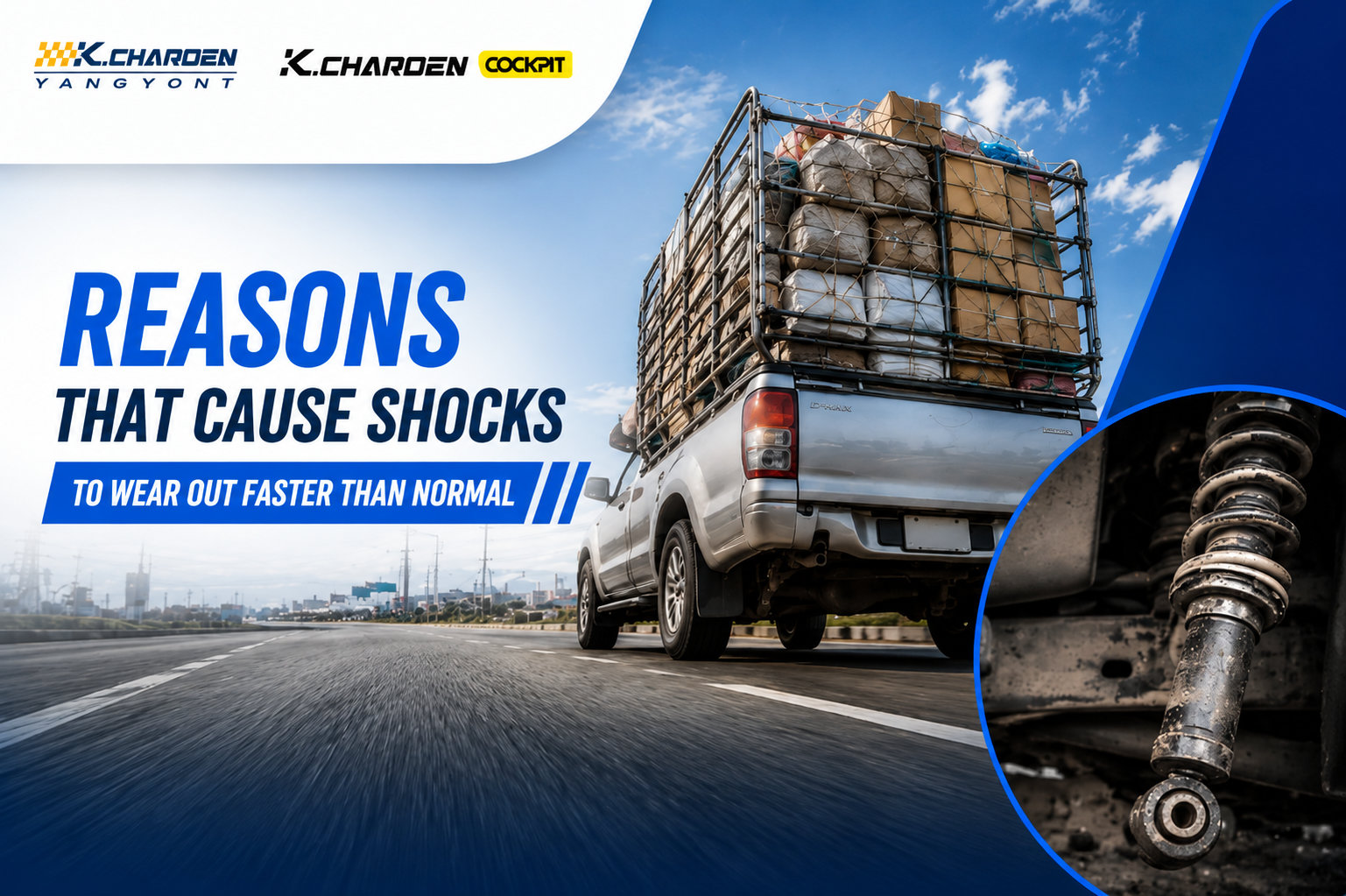
Causes of Premature Shock Absorber Wear
The lifespan of shock absorbers does not depend on mileage alone. It is also affected by driving conditions and road surfaces. Common causes include:
- Driving over potholes or speed bumps at high speed
- Overloading the vehicle or regularly carrying heavy loads
- Driving on rough roads for long periods
- Seals and internal components deteriorating with age
- A scratched or bent shock absorber rod caused by impact
- A torn dust boot that allows dirt and debris to damage the seal
- Worn mounting points, bushes, or shock absorber top mounts
- Using shock absorbers that are not suitable for the vehicle’s weight and characteristics
How Should You Drive If You Need to Move a Car with a Shock Absorber Problem?
If you need to move the vehicle to a safe location or the nearest service centre, and the symptoms are not severe, drive with extra caution:
- Reduce your speed and keep a safe distance from the vehicle ahead
- Avoid sudden braking
- Do not change lanes or turn the steering wheel quickly
- Avoid potholes, speed bumps, and rough road surfaces
- Avoid carrying heavy loads or unnecessary passengers
- Avoid expressways and high-speed driving
- If the vehicle becomes difficult to control, stop and call a tow truck
These steps are only intended to reduce risk while moving the vehicle. They are not a solution for a damaged shock absorber.
What Should Be Inspected When a Shock Absorber Is Damaged?
A shock absorber inspection should not focus only on the component with visible oil stains. The problem may also involve other parts of the suspension system. At a minimum, the technician should inspect:
- Both shock absorbers on the front axle or both on the rear axle to compare their condition and performance
- Springs and spring pads
- Shock absorber top mounts and top mount bearings
- Suspension mounting points and nuts
- Tyre condition and tread wear patterns
- Wheel alignment and wheel angles
- Components that may have been damaged by potholes or impacts
Inspecting the entire system helps identify the actual cause of the problem. It also reduces the chance of the same symptoms returning after the shock absorbers are replaced.
If Your Shock Absorber Is Broken, Don’t Keep Driving — Have the Suspension Inspected
In summary, a vehicle with a broken or leaking shock absorber may still be able to move. However, you should not continue driving for a long distance. The problem can affect vehicle stability, braking, cornering, and tyre contact with the road.
If there is only a small oil leak and the vehicle still feels stable, you may be able to drive slowly to the nearest inspection or repair centre. However, if the vehicle is leaning, bouncing severely, making metallic impact noises, or becoming difficult to control, stop driving and use a tow truck.
You can bring your vehicle to K. Charoen Yangyont and K. Charoen Cockpit for an inspection of the shock absorbers, tyres, and suspension system. Our team can assess the actual condition before you decide on repairs or parts replacement. This helps ensure that the problem is addressed correctly and according to how your vehicle is used.
Frequently Asked Questions (FAQs) About Broken and Leaking Shock Absorbers
A: The vehicle may still be able to move if the damage is not severe. However, you should drive slowly and only for a short distance to a safe location or repair centre. Avoid long-distance and high-speed driving.
A: It can be. A leaking shock absorber may reduce its ability to control vehicle movement. This can cause increased body roll, changes in braking performance, and uneven tyre contact with the road.
A: The vehicle should be inspected to determine whether it is only slight seepage or a leak that has already reduced performance. If the car is bouncing, swaying, or showing abnormal tyre wear, do not continue using it without an inspection.
A: In some cases, only one shock absorber can be replaced. However, it is generally recommended to replace both front shock absorbers or both rear shock absorbers at the same time.
This helps keep the damping performance balanced between the left and right sides. It also supports better vehicle stability and control. The condition of the shock absorber on the opposite side should still be inspected before replacement.
A: Yes. It may cause feathered, wavy, or uneven tyre wear because the wheel can bounce and lose consistent contact with the road. However, wheel alignment, tyre pressure, and other suspension components should also be checked.
A: Not necessarily. Slight oil seepage is different from oil visibly running down the shock absorber. The leak and the shock absorber’s actual performance should both be inspected before deciding whether replacement is necessary.
A: It may be caused by worn shock absorbers, but the springs, top mounts, and other suspension components can also be involved. The entire suspension system should be inspected to identify the actual cause.
Interested in shock absorber replacement services? Contact us at:
K. Charoen Yangyont Branch
Address: K. Charoen Yangyont (Sukhumvit 91 Branch)
Opening Hours: Monday – Saturday, 08:30 – 18:00
Tel: 02 331 9911, 02 331 8882-4
LINE: @kc4418
K. Charoen Cockpit Branch
Address: K. Charoen Cockpit (Udomsuk 28 Branch)
Opening Hours: Monday – Saturday, 08:30 – 18:00
Tel: 02 393 3356, 086 318 1401
LINE: @kcockpit
SHARE THIS STORY


RELATES TAGS
More Post


Get to Know Car Tyres: The Essential Component That Makes Your Vehicle Perfect
Read More →
"Wheel Alignment and Balancing Near Me": How to Choose the Right Service for Your Vehicle
Read More →

On-Site Tyre Replacement Near Me by Expert Technicians – Fast Service (K Tyre Express)
Read More →