


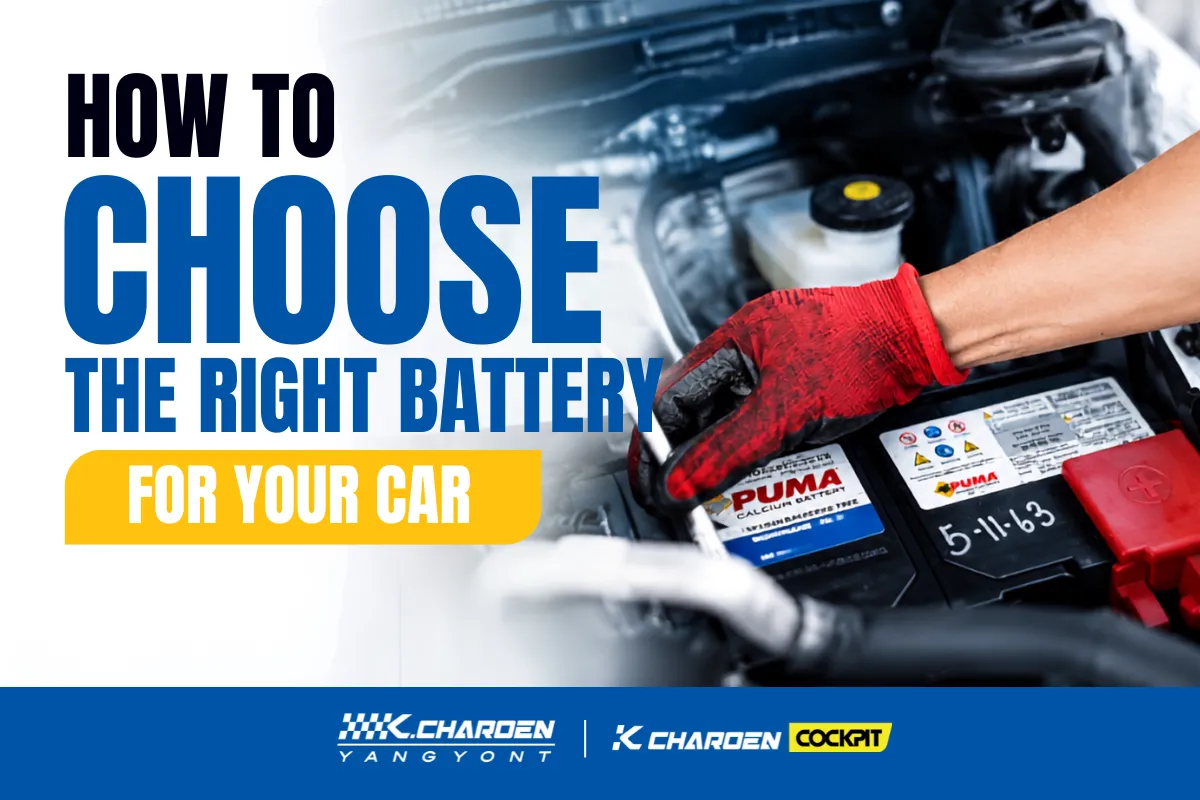
How to Choose the Right Car Battery for Your Vehicle to Avoid Mistakes
A car battery is a critical component responsible for supplying electrical energy to your vehicle’s systems—whether it is starting the engine, powering headlights, or running various electronic devices. However, many drivers are often unaware that car batteries have a limited lifespan. Consequently, when a battery eventually deteriorates, it can cause the vehicle to fail to start completely unexpected.
When a battery begins to exhibit abnormal symptoms, many people often make hasty decisions to purchase a new one without carefully evaluating the technical specifications first. As a result, they end up with a battery that is completely incompatible with their car, or they unknowingly pay an excessively high price over necessity.
Therefore, this article by K. Charoenyangyont and K. Charoen Cockpit compiles everything you must know before replacing a car battery—ranging from how to read specifications to crucial precautions that many people frequently overlook.
Before Making a Purchase, You Must Know if Your Old Battery Is Truly Ready for a Replacement
Many drivers hastily replace their batteries even though it is not yet necessary, while others continue driving on a severely weakened battery when they should have replaced it already. Therefore, critical warning signs you should evaluate before deciding to buy a new one include a slower engine crank during startup, inconsistent headlight brightness, or a battery lifespan that has already exceeded three years.
Fortunately, you can thoroughly inspect all of these indicators in our comprehensive guide: [9 Signs of a Failing Car Battery: Easy Self-Check Guide].
Crucial Factors to Evaluate Before Purchasing a Car Battery
1. Match the Battery Size and Code with Your Vehicle
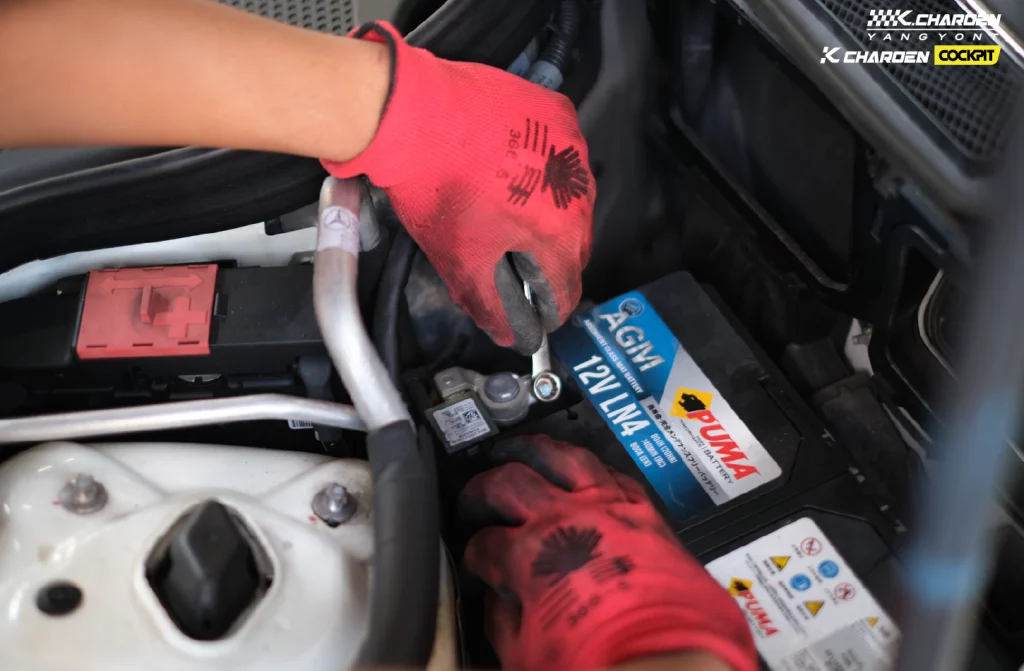
Car batteries come in various physical sizes, and each vehicle model is engineered with a specific battery tray dimensions. If you purchase the wrong size, the battery may not fit or the cable terminals might not align correctly. Therefore, the easiest method is to check the code on your old battery—such as 55B24L or 80D26R—and purchase the identical code or the alternative recommended in your car owner’s manual.
2. Understand the Numbers Displayed on the Battery
Reading battery codes is not as complicated as it seems. There are two primary metrics you must know:
- CCA (Cold Cranking Amps): This metric indicates the maximum current the battery can deliver to start the engine.
- Ah (Ampere-Hour): This metric signifies the overall capacity of the battery.
A higher number means the battery can deliver more power for a longer duration. However, you should always select values that match your vehicle’s specific requirements, rather than assuming that the most expensive option is always the best.
3. Choose Between Conventional Flooded and Maintenance-Free Batteries
Modern car batteries are primarily divided into two main categories:
- Conventional Flooded (Wet Cell) Batteries: These are more budget-friendly but require routine topping up of distilled water. Consequently, they are ideal for drivers who use their cars frequently and enjoy performing self-maintenance.
- Maintenance-Free (MF) Batteries: These are completely sealed units that require no water refilling. Although they offer greater convenience, they come at a higher price point. This type is perfect for drivers who prefer a hassle-free ownership experience.
Most modern vehicles recommend using Maintenance-Free batteries because they offer effortless operation and consistent electrical performance.
4. Verify the Production Date Carefully Before Buying
Batteries can deteriorate even when they have never been installed, especially if they have been sitting on a shop shelf for more than six months. Therefore, you should select a battery manufactured within the past 3–6 months. The production date is typically displayed as an alphanumeric code on the battery casing, or you can request the retailer to clarify the date before finalizing your decision.
5. Select Reliable Brands with Solid Warranties
Popular battery brands in Thailand that meet international quality standards include GS, Yuasa, Panasonic, Bosch, and Amaron. You should always select a brand that provides a clear product warranty of at least one year and has accessible service centers. This choice will ensure ultimate peace of mind if any issues arise later on.
Common Pitfalls and Precautions That Many Drivers Miss
Avoid purchasing suspiciously cheap batteries: Batteries with abnormally low prices usually possess lower capacities than specified or utilize low-quality materials that deteriorate rapidly. Consequently, choosing an inferior battery can become more expensive in the long run than purchasing a high-quality one from the start.
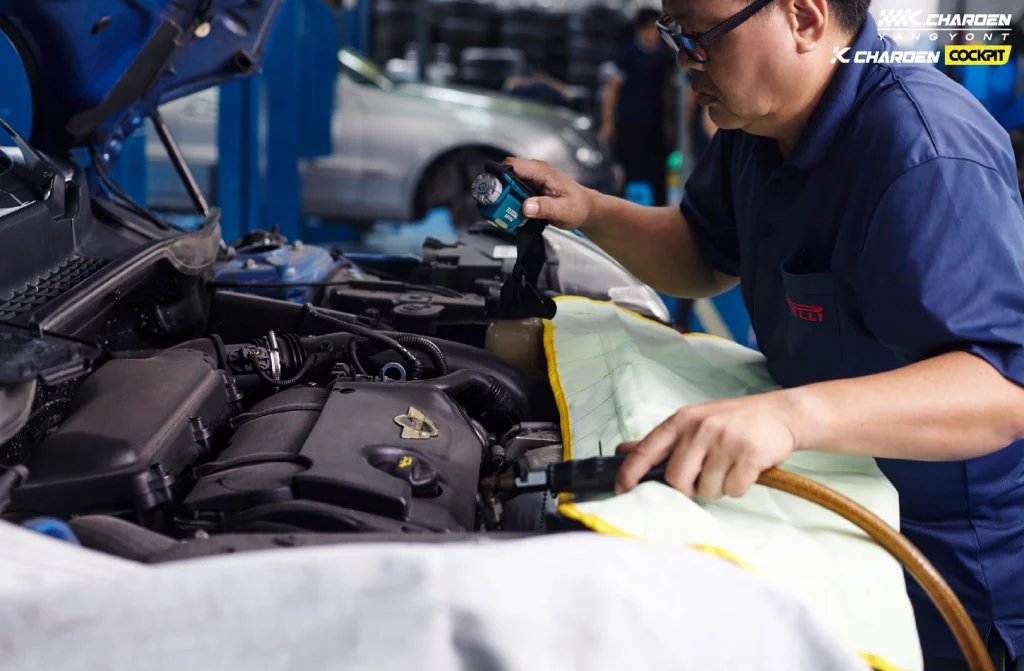
Always verify the charging system before installing a new battery: If your alternator has underlying issues, even a brand-new battery will degrade rapidly just like the old one. Therefore, you should always request a mechanic to inspect the entire charging system simultaneously during the replacement.
Dispose of your old battery correctly: Car batteries contain lead and hazardous sulfuric acid, meaning they must never be thrown into regular waste bins. Fortunately, most reputable battery shops will accept your old battery for recycling or provide dedicated disposal points for environmental safety.
What Should You Do When Your Car Battery Expires?
When a car battery expires or begins to deteriorate, it is vital that you do not force it to continue operating over an extended period. This is because a battery that can no longer hold an electrical charge efficiently may cause your vehicle to fail to start suddenly, especially during urgent situations when you need to use your car the most.
Consequently, the most appropriate solution is to take your vehicle for a professional battery health check to evaluate its electrical levels and performance efficiency. If the inspection confirms that the battery has truly degraded, replacing it with a new unit will restore your vehicle’s electrical systems to peak efficiency. Furthermore, this preventive measure significantly minimizes the risk of your car stalling or failing to start during journeys.
When replacing, you should select a battery that perfectly matches your car model and driving habits, while also verifying the production date to ensure you receive a brand-new unit for an extended lifespan. Ultimately, if you are unsure about which battery type to choose, consulting with specialists or an experienced service center will make your decision much easier, ensuring that the battery replacement is handled correctly and safely.
Conclusion: Once the Battery Is Replaced, Do Not Forget Continuous Maintenance
Selecting a high-quality battery is merely half the battle. The other half involves performing continuous maintenance to ensure your new battery lasts as long as possible. Therefore, you should establish good habits such as avoiding leaving your car parked idle for too extended periods, turning off all electrical accessories every time you shut down the engine, and inspecting the battery terminals periodically.
Fortunately, you can explore deeper details on how to protect your investment in our comprehensive guide:[11 Tips to Maintain a Car Battery and Prevent Premature Failure].
Battery Inspection and Replacement Services at K. Charoenyangyont and K. Charoen Cockpit
If you begin to notice warning signs of a deteriorating car battery—such as a difficult engine start, dimmed headlights, or an unstable vehicle electrical system—having your battery inspected as quickly as possible will prevent unexpected starting failures at critical moments. Although many drivers can easily learn how to identify an expired car battery and perform basic self-checks, having a professional mechanic conduct a thorough diagnostic inspection will ultimately provide greater confidence regarding its actual operational condition.
At K. Charoenyangyont and K. Charoen Cockpit, we offer comprehensive battery health inspection services delivered by our highly experienced mechanic team. We are fully prepared to provide expert guidance regarding your battery’s current condition and assist you in selecting the ideal battery replacement tailored specifically to your vehicle. Consequently, if the inspection reveals that your battery has expired or started to degrade, our service centers provide top-quality battery replacement services, accompanied by a correct, precise, and safe installation process.
Contact Us
K. Charoen Yangyont Branch
Address: K. Charoen Yangyont (Sukhumvit 91 Branch)
Opening Hours: Monday – Saturday, 8:30 AM – 6:00 PM
Phone: 02 331 9911, 02 331 8882-4
Line: @kc4418
K. Charoen Cockpit Branch
Address: K. Charoen Cockpit (Udomsuk 28 Branch)
Opening Hours: Monday – Saturday, 8:30 AM – 6:00 PM
Phone: 02 393 3356, 086 318 1401
Line: @kcockpit
SHARE THIS STORY


RELATES TAGS
More Post

Get to Know Car Tyres: The Essential Component That Makes Your Vehicle Perfect
Read More →
"Wheel Alignment and Balancing Near Me": How to Choose the Right Service for Your Vehicle
Read More →
On-Site Tyre Replacement Near Me by Expert Technicians – Fast Service (K Tyre Express)
Read More →