



What is Wheel Balancing? Why Your Car Feels Smoother Instantly
When you drive and feel the steering wheel vibrate, the car feels unstable, or you lose confidence at high speeds, you might think your suspension has a problem. However, the true cause often starts with something more fundamental: “unbalanced wheels.” In this article, K. Charoenyangyont and K. Charoen Cockpit will help you understand what wheel balancing is, what problems it solves, how it differs from wheel alignment, and when you should do it. Our goal is to help your car return to a stable, comfortable, and safe driving condition for the long term.
What is Wheel Balancing and What Symptoms Can It Fix?
Wheel balancing is the process of adjusting the weight distribution of the tyre and wheel assembly to be equal around the entire circumference. This ensures the wheel rotates consistently without abnormal centrifugal forces. The most noticeable result is that the car becomes instantly more stable, especially at medium to high speeds.
When wheels are properly balanced, symptoms such as steering wheel vibration, rhythmic vehicle shaking, or a “lack of stability” during long-distance driving significantly decrease. Additionally, it helps tyres maintain consistent contact with the road, reducing unnecessary wear and protecting suspension components simultaneously.
Why Do Wheels Lose Balance Even When Tyres Look Normal?
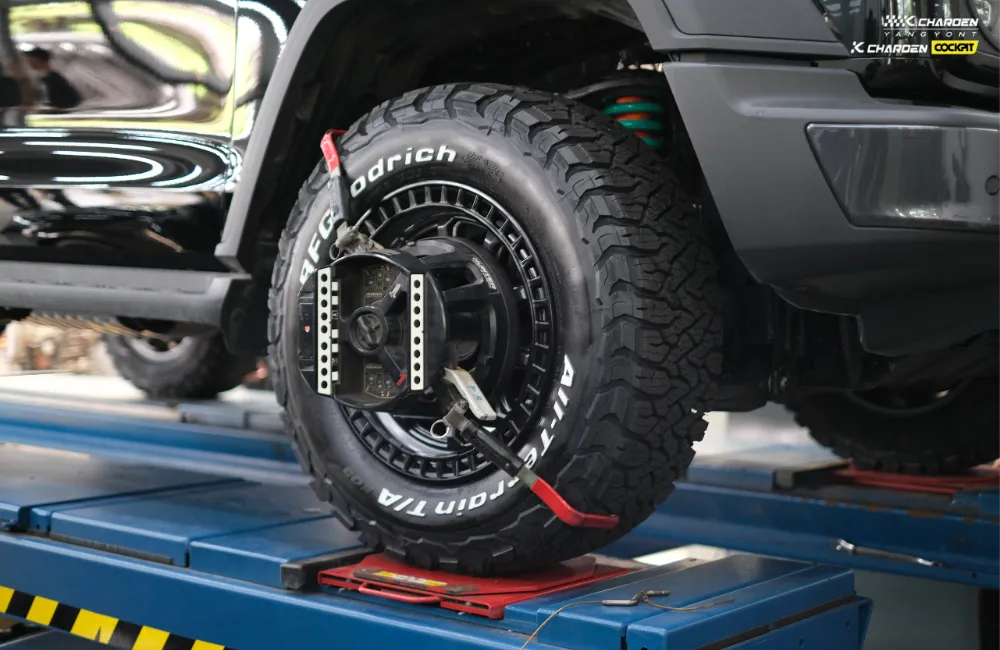
Even if tyres look new or have great tread, wheels can still be unbalanced. Every tyre and rim inherently has unequal weight distribution straight from the factory, making it necessary to balance them before actual use.
Furthermore, several factors can slightly change a wheel’s weight:
- Tyre Maintenance: Removing, installing, or repairing a tyre (patching) can shift the balance.
- Valve Replacement: Changing the tyre valve affects the overall weight distribution.
- Road Impacts: Hitting potholes or curbs can cause minor weight shifts.
These tiny differences in weight will start to cause noticeable vibrations as your driving speed increases.
When Should You Balance Your Wheels? Don’t Wait for Vibrations
Based on our technicians’ on-site experience, many vehicles begin to vibrate slightly for a while before the owner clearly notices it. By the time the symptoms become severe, they have already begun affecting the suspension system. In reality, checking and balancing your wheels at the early stages can prevent a significant amount of unnecessary damage.

Common Misconceptions: What is the Difference Between Wheel Balancing and Wheel Alignment?
Wheel balancing and wheel alignment are different types of maintenance that solve different problems. They are not interchangeable. When performed in the correct order, your car will be stable, easy to control, and the tyres will wear evenly. If the wrong service is applied to the wrong problem, the vehicle’s performance will remain incomplete.
A common misunderstanding is thinking that “vibration = alignment” or “pulling = balancing.” From a technical perspective, these two tasks have distinct functions and must be analyzed based on the actual symptoms of the vehicle.
What Problems Does Wheel Balancing Solve?
Wheel balancing fixes vibrations that occur while the vehicle is moving, especially symptoms that appear or become clearer at sustained high speeds. The main cause is an imbalance in the weight of the wheel and tyre, which creates centrifugal force as the wheel rotates.
In real-world scenarios, customers often describe “rhythmic steering wheel vibrations” or “feeling that the car is not stable even on smooth roads.” Once the wheels are balanced, they rotate smoothly, the centrifugal force disappears, and the car instantly becomes stable again. These vibrations are not related to wheel angles or the direction of travel.
What Problems Does Wheel Alignment Solve?
Wheel alignment solves issues regarding the vehicle’s travel direction, such as the car pulling to the left or right, an off-center steering wheel, or uneven tyre tread wear on the inner or outer edges. This is caused by wheel angles drifting away from the manufacturer’s standard specifications.
A clear symptom is when you drive on a flat road and release the steering wheel, but the car drifts to one side, or the steering wheel sits at an angle even when the car is driving straight. These issues will not disappear with wheel balancing; they must be fixed by aligning the wheels to their correct positions.
Should You Align or Balance First, or Do Both Together?
Technically, if you have just installed new tyres, you should always perform wheel balancing first. Removing and installing tyres changes the wheel’s weight distribution. Once balanced, you should then perform a wheel alignment to adjust the directional angles to standard specifications.
In cases where the vehicle exhibits both vibrations and pulling, performing both wheel balancing and wheel alignment together will solve all issues comprehensively. This reduces tyre wear and ensures your car returns to a stable, confident driving condition.
What is Wheel Misalignment and Why Does the Car Pull After Changing Tyres?
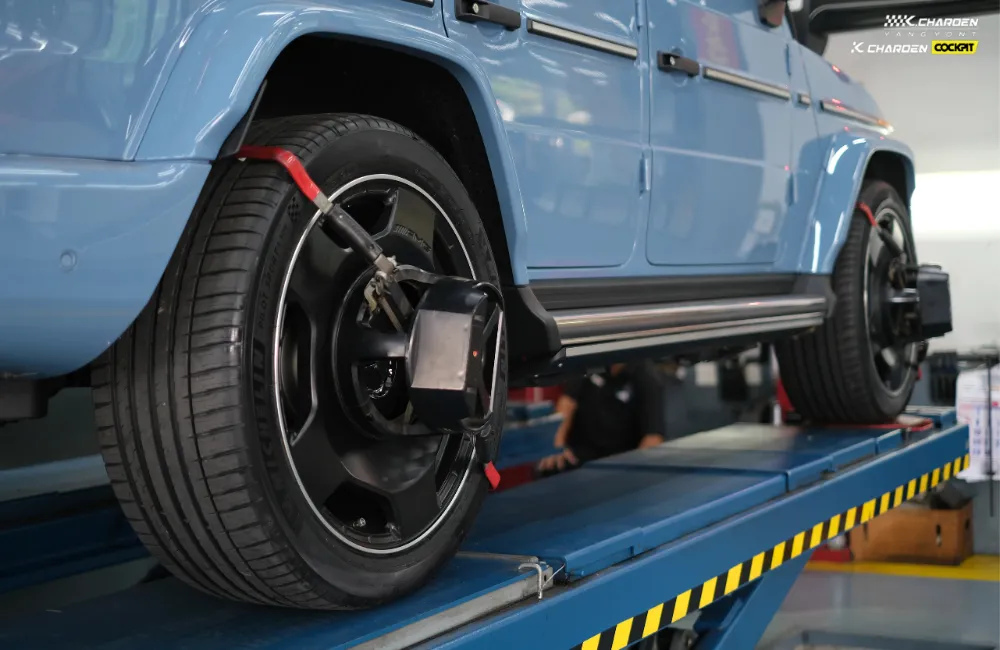
Wheel misalignment is a condition where the wheel angles have been off for a long time. With old tyres, the tread gradually wears down to match the incorrect alignment, which often prevents the driver from noticing any issues. When you install new tyres with a fresh, even tread, the misaligned angles are immediately exposed. As a result, the car may start pulling to the left or right, even if it seemed to drive straight before the change. This is exactly why technicians usually recommend a wheel alignment after every tyre replacement.
Warning Signs Your Car Needs Wheel Balancing or Alignment
If your vehicle starts exhibiting unusual symptoms, ignoring them can turn a minor issue into a major problem. These signs are warnings that your wheel balancing or alignment should be inspected:
- Steering Wheel Vibrations
This is usually caused by unbalanced wheels, especially at sustained speeds. Even on smooth roads, the steering wheel will shake rhythmically. If left unaddressed, it not only makes driving uncomfortable but also places unnecessary stress on wheel bearings and suspension. - Vehicle Drifting Left or Right
When driving on a flat road and releasing the steering wheel, if the car still drifts to one side, it indicates misaligned wheel angles. Wheel alignment is the solution for this, not wheel balancing. - Uneven Tyre Wear
Tread wear on the inner or outer edges, or “cupping” (patchy wear), is a critical sign that should not be overlooked. This means the wheels are not contacting the road surface correctly. If fixed too late, new tyres will quickly suffer the same wear patterns. - Feeling of Instability
The car may not vibrate clearly but feels “floaty” and difficult to control, especially during cornering or lane changes. This type of symptom often relates to both wheel balance and alignment issues. - Off-Center Steering Wheel on Straight Roads
If the car travels straight but the steering wheel is tilted, the wheel alignment is off. Ignoring this causes abnormal tyre wear and makes vehicle handling feel unnatural.
What Happens During a Professional Wheel Balancing Service?
Based on our technicians’ daily wheel balancing experience, every vehicle presents different symptoms and causes. Some vibrate clearly, while others have only minor shakes. Without a systematic inspection, these symptoms often persist or return. Therefore, effective wheel balancing must follow a specific sequence rather than simply putting the wheel on a machine. The standard professional process includes the following steps:
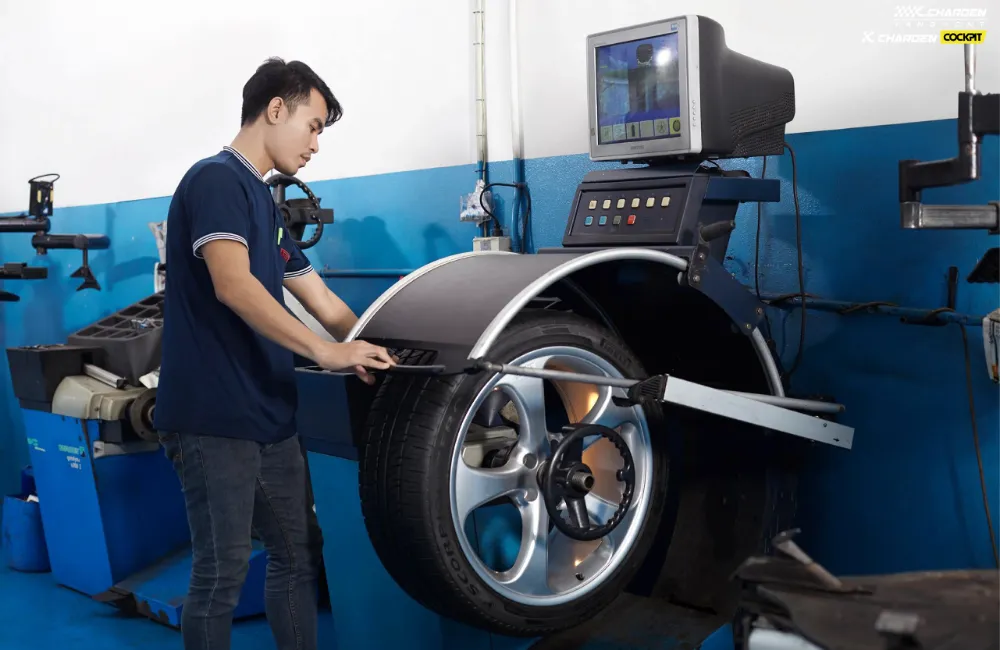
1. Mounting the Wheel on the Balancing Machine
The technician removes each wheel from the vehicle and mounts it onto the balancing machine.
This allows for a detailed inspection of each individual wheel’s balance rather than checking the entire vehicle at once.
2. Configuring Settings Based on Actual Wheel and Tyre Size
The balancing machine is programmed with the specific wheel size, width, and tyre type of that particular vehicle.
This ensures that the measured values are accurate for real-world use rather than being mere approximations.
3. Identifying Weight Imbalance Points
The machine rotates the wheel to identify positions where the weight is too heavy or too light.
It then displays the required weight and the exact positions where the counterweights should be installed.
4. Applying Weights and Re-testing Until the Value is Zero
The technician installs the balancing weights according to the machine’s recommendations.
The wheel is re-tested multiple times until the technician is certain it rotates perfectly smooth.
Only once the balance is confirmed do we reinstall the wheel onto the vehicle.
These steps ensure that every wheel is balanced, preventing vibrations or pulling forces during actual driving.
Long-Term Benefits of Proper Wheel Balancing and Alignment
Correct wheel balancing and alignment provide more than just an initial feeling of a “smoother ride.” These services offer long-term benefits for the entire vehicle, affecting everything from driving dynamics and tyre wear to daily safety. When the wheel system functions in perfect harmony, your car gains several clear advantages:
- Extended Tyre Life: The tyre tread maintains consistent contact with the road surface. This prevents edge wear or “cupping,” extending the service life of your tyres and reducing the need for premature replacements.
- Smoother, Quieter, and More Stable Drive: Reducing wheel vibrations eliminates shaking and shuddering throughout the car. This makes long-distance driving significantly more comfortable.
- Precise Handling and Control: The steering wheel responds accurately to your input. The car remains stable without pulling or feeling “floaty,” providing confidence during cornering, lane changes, or sudden maneuvers.
- Long-Term Fuel Savings: When the car does not have to fight against abnormal forces from imbalanced wheels or misaligned angles, the engine works less. This reduces unnecessary energy loss and improves fuel efficiency.
- Enhanced Driving Safety: A stable and easy-to-control vehicle reduces the risk of accidents. This is especially critical at highway speeds or when navigating imperfect road conditions.
How to Check Your Wheel Balancing: Where to Get the Best Results?
Getting effective wheel balancing is more than just putting a car on a machine; it requires a deep understanding of vehicle symptoms, proper balancing techniques, and technician expertise. Identifying the right issue from the start ensures your car truly becomes stable and prevents unnecessary expenses.
In practice, if you have just installed new tyres, you should always perform wheel balancing to ensure optimal performance. If you start feeling the steering wheel vibrate, wheel balancing should be your first priority, as it is the most common cause. However, if the car pulls to one side or the steering wheel is off-center, you should also have a wheel alignment checked to solve the problem comprehensively.
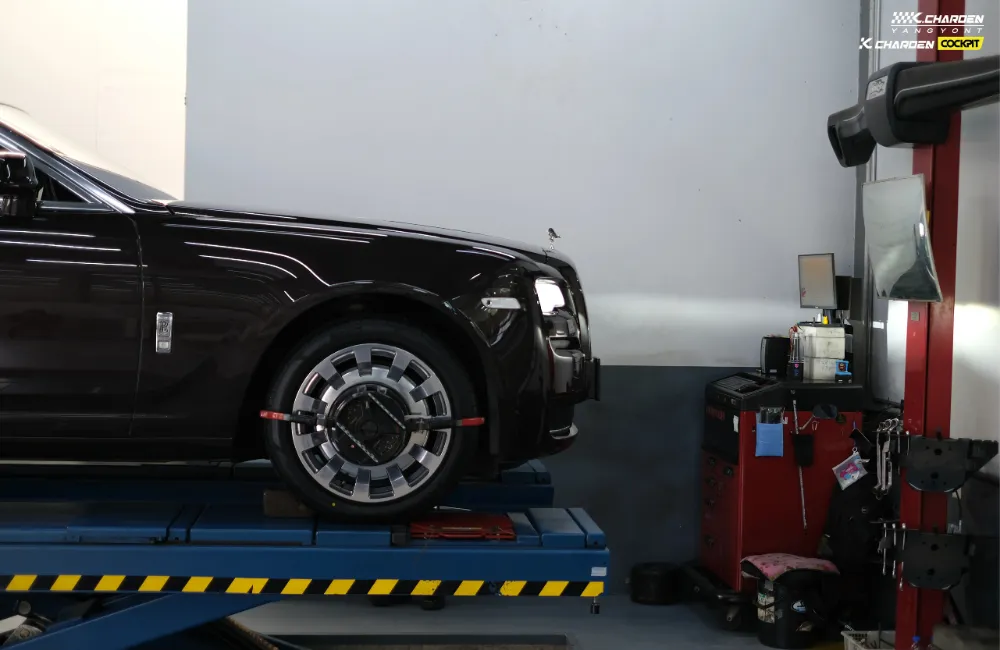
A quality service center should begin by asking about your actual driving symptoms rather than rushing through a standard procedure. Technicians should be able to explain the specific balancing requirements for your wheel type and vehicle model, followed by a final inspection before returning the car to ensure the results work effectively on the road.
At K. Charoenyangyont and K. Charoen Cockpit, we prioritize analyzing symptoms before every balancing service. We work with a philosophy of not rushing, not guessing, and not performing unnecessary tasks. We explain every step to our customers to ensure their vehicles return to a stable, safe, and cost-effective condition.
K. Charoenyangyont Branch
Tel: 02 331 9911, 02 331 8882-4
Line: @kc4418
K. Charoen Cockpit Branch
Tel: 02 393 3356, 086 318 1401
Line: @kcockpit

Frequently Asked Questions (FAQs) About Wheel Balancing
Do I need to perform wheel balancing and alignment together every time?
It is not always necessary to do both at once; it depends on your car’s symptoms. If the main issue is vibration, it is likely caused by unbalanced wheels, so you should start with wheel balancing. However, if the car pulls to the left or right, the steering wheel is off-center, or the tyres are wearing unevenly, a wheel alignment is required. In cases of installing new tyres, technicians usually recommend performing both to ensure the vehicle is in its best possible condition.
How long does wheel balancing take?
Generally, wheel balancing is a quick process if there are no other complications, usually taking around 20–30 minutes. The total time depends on the number of wheels being balanced, the condition of the rims, and the technician’s thoroughness in re-testing. Quality-focused service centers will re-test until they are certain the wheels rotate perfectly before returning the car.
How many wheels should be balanced? Should I do them one by one or the whole set?
Generally, you should balance every wheel that has been removed, reinstalled, or is showing symptoms of vibration. We do not recommend balancing only one wheel because each wheel has its own unique weight and balance. If only one wheel is balanced, the car may still vibrate or feel unstable while driving.
When installing new tyres or removing the entire set, technicians recommend balancing all 4 wheels. This ensures the balance of the entire vehicle works in harmony, resulting in a stable ride, even tyre wear, and reducing the chance of having to return for further repairs.
Summary: What is Wheel Balancing and Why is it Important?
Wheel balancing is a fundamental task that directly affects a vehicle’s stability, comfort, and safety. When performed at the right time and with the correct methods, it extends tyre life, reduces the burden on the suspension system, and increases driving confidence every day, whether for short or long distances.
The key is understanding that vehicle vibrations, pulling, or abnormal tyre wear do not all stem from the same cause. Solving the problem accurately by choosing between wheel balancing and wheel alignment helps reduce unnecessary expenses and prevents small issues from escalating into major problems in the future.
Regularly maintaining your wheels and tyres does more than just improve today’s drive; it extends the service life of many critical components in the long run. A car that is stable, easy to control, and responsive is the foundation of safety that should never be overlooked on any journey.
What Our Customers Think About Our Wheel Balancing Service
Real feedback from our customers reflects the quality and precision we deliver at our service centers:
“Excellent service, precise wheel alignment and balancing, truly professional.”
Review by Thanutphat H.
“Very good service, clean facility, and I trust this shop 100% with my tyres. Their wheel alignment and balancing meet very high standards.”
Review by Aphiwut N.
About the Author
This article was compiled by the expert technician team at K. Charoenyangyont, a tyre and suspension service center established in 1983. Founded with the intention of being a small tyre shop that provides full attention to every customer, we now have over 42 years of experience in tyres, wheel systems, and suspension. We have expanded our services to K. Charoen Cockpit (our second branch) to support our growing customer base with advanced tools, expert technicians, and high service standards.
The content in this article is shared from our technicians’ real-world experience, including both in-center services and on-site mobile services conducted continuously over decades. We aim to explain technical topics in a way that is easy to understand, direct, and practical for use. One thing that has remained unchanged for over 42 years is our commitment to being a tyre shop that cares for customers in every detail, just like the small shop we were on our very first day.
Contact Us
K. Charoenyangyont Branch
Location: K. Charoenyangyont Branch (Sukhumvit 91)
Hours: Monday – Saturday, 08:30 AM – 06:00 PM
Tel: 02 331 9911, 02 331 8882-4
Line: @kc4418
K. Charoen Cockpit Branch
Location: K. Charoen Cockpit Branch (Udom Suk 28)
Hours: Monday – Saturday, 08:30 AM – 06:00 PM
Tel: 02 393 3356, 086 318 1401
Line: @kcockpit
SHARE THIS STORY


RELATES TAGS
More Post



Get to Know Car Tyres: The Essential Component That Makes Your Vehicle Perfect
Read More →
"Wheel Alignment and Balancing Near Me": How to Choose the Right Service for Your Vehicle
Read More →


On-Site Tyre Replacement Near Me by Expert Technicians – Fast Service (K Tyre Express)
Read More →